Session: CSDDD and the AV supply chain: burden, or the start of a level playing field?

What the EU due diligence directive asks of companies, why small suppliers outside its scope still feel it, and how Sony and Velvet Lighting are preparing.
- Event: ISE 2026
- From session: Corporate Sustainability Due Diligence
- Speakers:
- Paulino Cuevas, Managing Director, ALIA
- Jaime Razkin, Brand Manager, Velvet Lighting
- Barbara Rosseel, Strategic Marketing Lead, Sony
- Asia Jarzyna, Founder and CEO, Willco
- Estimated read time: 8 minutes
- Watch the full session
Quick read summary
- CSDDD makes large companies prevent and mitigate environmental and human rights risks across their value chain, and that duty travels down to their suppliers.
- The omnibus package cuts the legal scope to the very largest firms, yet smaller AV companies still meet the same demands through customers and tenders.
- The duty is best effort, so a documented system and a plan to improve count for more than a perfect score.
- The panel split on whether the directive levels the field with Asian rivals or loads extra cost onto European firms.
A broadcaster’s tender arrives asking where your products are made, how long they last and what carbon they carry. You are a 25-person company, and nobody has told you that you are in scope of any new law. That is the position many AV and lighting suppliers are in with CSDDD, the EU corporate sustainability due diligence directive. Its legal reach has narrowed, but the questions are already arriving, sometimes as a request for a carbon footprint report.
At ISE 2026, a panel moderated by Asia Jarzyna, Founder and CEO of Willco, set out to test whether that pressure is a burden or an opening. With her were Paulino Cuevas, Managing Director of ALIA, Jaime Razkin, Brand Manager of Velvet Lighting, and Barbara Rosseel, Strategic Marketing Lead at Sony.
What does CSDDD ask a company to do?
CSDDD asks companies not only to monitor and report, but to prevent and mitigate the risks their activities pose to the environment and to human rights. It turns long-standing United Nations standards from voluntary into legally binding.
It also brings compulsory transition plans compatible with the Paris Agreement, and civil liability, so anyone harmed can seek justice in court. And it applies across the whole value chain, which is where most AV businesses come in.
Jarzyna sees the gap between green gestures and real impact at first hand. As a sustainable production supervisor on film sets, she watches crews use refillable bottles and recycling bins while fuel generators run at full power behind the set.
So I think this sustainable due diligence, it is still a lot about invisible decisions.
The regulation, she said, is not there to kill profitability, creativity or competitiveness. It is there to make those invisible decisions visible inside companies.
Who is still caught after the CSDDD omnibus?
After the CSDDD omnibus, only the very largest companies remain legally in scope. Jarzyna explained that the original threshold was 450 million in yearly turnover and 1,000 employees. Under the omnibus package it moves to one and a half billion in revenue, which she said leaves 80 per cent of companies outside the law.
Those companies are left out only legally. Because the duty runs through the value chain, they will probably still be affected commercially, by the customers they sell to.
The pressure is arriving through tenders, not regulators
For a small supplier, the directive shows up first in customer questions. Razkin said Velvet Lighting, based in Barcelona, has only 25 employees, and its products were designed from the start to be durable and repairable.
Broadcasters ask for efficient lights, for repairable lights and for information on how products are made, so Velvet chooses European suppliers. In French tenders, European products and highly efficient lights earn extra points, and productions in France already have to show a carbon report to receive subsidies. Razkin has had two or three requests for a full carbon report, which Velvet can answer from what it already measures.
He was clear that Velvet’s position is not typical. Lighting rental houses and private production companies, in his view, are aware but not ready.
How far down the chain does a big brand’s due diligence reach?
At Sony, due diligence reaches past direct suppliers to third-party manufacturers. Rosseel said Sony still does not know if it is fully in scope, but it is fully prepared. The Sony code of conduct sets the company’s own standards, and a supply chain code of conduct binds every supplier Sony works with anywhere in the world.
That is human rights due diligence in practice. Suppliers must comply and show the checks are being made, and hotlines let anyone report a possible human rights infringement so Sony can act.
Does "best effort" let anyone off the hook?
Best effort does not mean optional. Cuevas explained it as a genuine, provable effort: "It means that you have to do all what is in your power to be sustainable."
The protection comes from paperwork. If something goes wrong, a company that can show its commitment and the protocols behind it will be covered. Rosseel said the aim is not to be perfect, but to show improvement.
Jarzyna sharpened the commercial point. A company can be excluded from contracts not for poor performance, but because it cannot prove it is doing well. The first step, she said, is a system and documentation: "how you identify your risk, and how you measure your carbon footprint." Everything else builds on that.
Burden or advantage: where the panel split
The panel agreed due diligence should be an advantage, then argued over whether it will be. Cuevas made the case for a level playing field. Much cutting-edge technology now comes from Asia, a panellist noted. Under the directive, Cuevas said, a company from any country selling or renting in Europe must comply.
Jarzyna pushed back. Non-European companies are assessed only on the business they do in Europe, so the load may fall harder on European firms. She then turned the cost argument round. Companies count the cost of sustainability but rarely the cost of inaction. As resources get scarcer, businesses that build circularity and more efficient production will be more resilient.
Rosseel, looking at Sony’s circular model, put it simply: "if you’re going this way, then you can have a competitive advantage."
A small company cannot do this alone. Jarzyna framed due diligence as a collective action problem, and Rosseel pointed to the Media Climate Accord, which brings NGOs, productions, broadcasters and manufacturers together.
Technology can carry part of the load too. Rosseel said a study with Sony Pictures found virtual production can save up to 80 per cent of carbon emissions. ISE has looked at whether the virtual production business model is sustainable, and at why sustainability is becoming a broadcast business issue.
A supplier’s checklist before the next tender
- A plain statement: what you do, how you do it, and your risks to environment, biodiversity and human rights.
- A measured footprint: a protocol for measuring carbon, so a customer request can be answered from data you already hold.
- Supplier terms: a code your own suppliers sign, reaching third-party manufacturers where you use them.
- A way to report: a hotline or channel for anyone to flag a possible human rights infringement.
FAQ
- Is a 25-person AV company covered by CSDDD? Not legally. After the omnibus package, CSDDD applies only to the very largest companies, leaving 80 per cent of firms outside its scope. A small AV company is still affected commercially, because large customers pass their due diligence duties down the value chain.
- Why do broadcasters ask suppliers for a carbon footprint report? Broadcasters want efficient, repairable lights and need to know how products are made, Jaime Razkin of Velvet Lighting said. French tenders award extra points for European-made, highly efficient lights, and productions in France already need a carbon report to receive subsidies.
- Can a company comply without being perfect? Yes. The corporate sustainability due diligence directive sets best-effort obligations, so the test is a documented system and visible improvement. Paulino Cuevas of ALIA said a company that can show its commitment and protocols will be protected if something goes wrong.
The generator behind the set
The sharpest image of the session came in its first minutes. A film set with recycling bins and refillable bottles, and behind it a generator at full power, feeding a few LED lights and a coffee machine. That is what Jarzyna meant by invisible decisions, and it is what CSDDD is built to drag into view.
The law itself now touches very few companies directly. That matters less than it sounds. Sony’s codes already reach third-party manufacturers, and French broadcasters already score tenders on where lights are made and how much power they draw. A 25-person lighting maker in Barcelona is answering carbon questions today. The duty has moved from the statute book into the purchase order.
The panel’s quieter warning is the one to act on. A supplier is less likely to lose a contract for performing badly than for being unable to prove anything at all. For the AV companies that do it now, the directive may turn out to be what Cuevas hoped, a rule that holds every competitor to the same standard.
About the speakers
Paulino Cuevas
Managing Director, ALIA
Cuevas leads ALIA and brings experience of both rental companies and manufacturers.
Jaime Razkin
Brand Manager, Velvet Lighting
Razkin works for Velvet Lighting, a 25-person Barcelona lighting maker whose products are built to be repairable.
Barbara Rosseel
Strategic Marketing Lead, Sony
Rosseel works on strategic marketing at Sony, where she explained the company’s codes of conduct and industry partnerships.
Asia Jarzyna
Founder and CEO, Willco
Jarzyna runs Willco, which provides software for film production, and works as a sustainable production supervisor on film sets. She moderated the panel.
More on responsible business at ISE
Supply chain rules are part of a wider sustainability conversation at ISE.
- The ISE business landscape: the business and sustainability side of the industry.
- The Megatrends programme: talks on the forces reshaping AV.
- Summits, keynotes and stages at ISE: from ticketed summits to free stages on the floor.
- New to ISE? Get your bearings with the first-time visitor guide.
Featured Articles
-
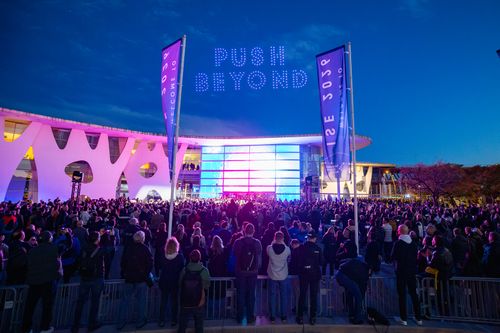 Spanning all eight halls at Fira de Barcelona Gran Via, ISE 2026 delivered four days of record-breaking energy, creativity, and innovation.
-
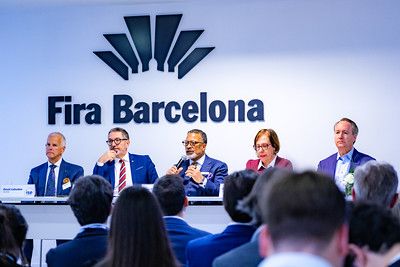 The initiative will create new opportunities for talent development, innovation and community projects across the sector
-
 The Facts & Figures report for ISE 2026 is available to download.
-
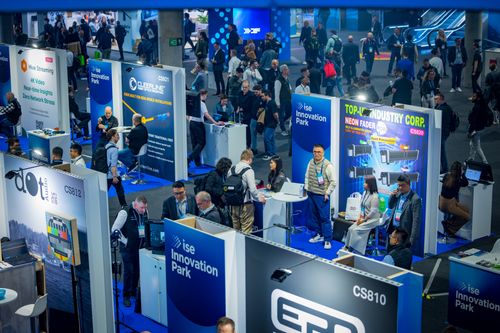 Bringing together startups, investors and industry leaders, the expanded show feature offers a strong platform for visibility, networking, and commercial opportunity.
-
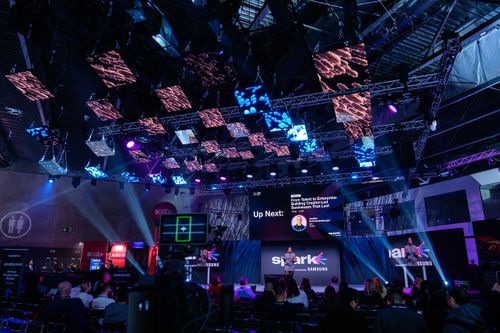 This new type of event brings together end users, creators and production specialists from broadcast, live events, advertising and gaming, combining creative showcases, editorial programming and netwo ...