
Session: Show control at the Washington Monument: Patrick Verhey on the night LMG pressed play
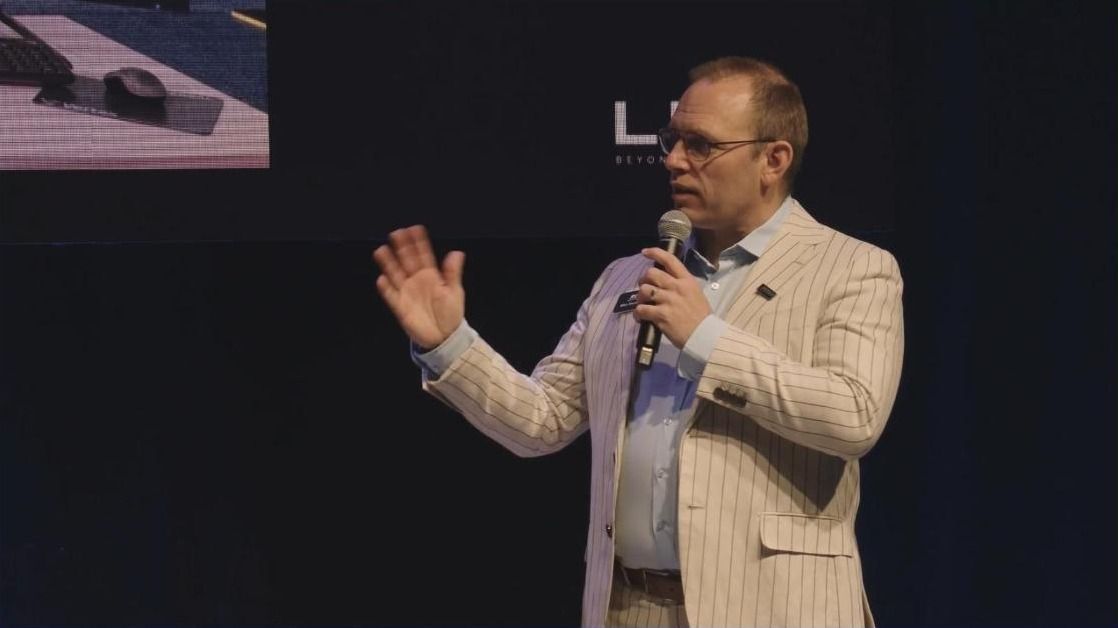
How LMG ran the first four-sided mapping of the Washington Monument from one show control system, and what it learnt about late content and remote access.
- Event: ISE 2026
- From session: Inside LMG’s most popular productions
- Speakers:
- Mike Steinbrecher, Business Development Director Experiential Technologies, Ross Video
- Patrick Verhey, Director - Media R&D and Training, LMG Systems
- Estimated read time: 8 minutes
- Watch the full session
Quick read summary
- LMG ran the first four-sided Washington Monument projection mapping from one show control setup in Ross Vertex, with 40 projectors and the fireworks timecode.
- The project arrived a month before New Year’s Eve, and the final timeline was built 10 minutes before the first show.
- Remote access works best as support for the operator on site, Patrick Verhey argues, not as a way to remove them.
- A server rack beside each projector position, a fibre loop and colour-coded zones kept a site too big to see manageable.
"I basically programmed my timeline for the show 10 minutes before we did run it." Patrick Verhey of LMG Systems was describing New Year’s Eve at the Washington Monument. He ran show control for 40 projectors, the audio and the fireworks timecode from one Ross Vertex system, live on national television.
At ISE 2026 on 4 February 2026, Mike Steinbrecher, Business Development Director Experiential Technologies at Ross Video, put the questions to him on stage. The two have known each other for 31 years. Verhey, Director - Media R&D and Training at LMG Systems, has used the Vertex media server since its first day, and LMG’s Systems Innovation team now runs it on all of its setups.
A screen that passes for a print and earns like a billboard
The first project is at Music City Center in Nashville, where LMG installed a COB LED screen 17,280 pixels wide. Verhey said many visitors take it for a printed graphic. A standard player could not drive it: "We needed to have a system which could actually push all of those pixels out."
The venue sells the screen as advertising space. A new show goes up almost every week. A three-person in-house team runs it, using Vertex’s live preview editing to build the next client’s show while the current one stays on air. When it hits a problem, Verhey remotes in from Orlando.
Can remote show control replace the operator on site?
Not in Verhey’s view: he sees remote show control as support for the person on site, never a replacement. His first reaction was hesitation, because it sounded like one person at home running five shows at once.
The idea is to have somebody on site who operates everything, but then still be able to remote into the system without a massive fast internet connection.
The remote user joins as an extra user who can change and programme the show. Steinbrecher called it Ross’s digital twin workflow, a term ISE explains in what is a digital twin.
At InfoComm last summer, Ross controlled a stadium in Switzerland from its booth over a 5G router, the kind of test discussed in how 5G is changing live events. LMG then controlled the same stadium from the company’s private jet at 45,000 feet.
How do you plan a four-sided monument mapping with a month’s notice?
You start from a scribble and work back from the date. The United States turns 250, so the creative director asked why not light the most iconic structure in Washington DC. Earlier mapping had covered one side only.
First contact came about a month before the show, with a site survey about 20 days before load-in. The National Park Service owns the ground, so every projector position needed agreement. LMG could not use the grass or build towers that blocked the crowd’s view of a monument 169 metres high.
The answer was to lay the projectors flat in tents, 10 per side, shooting upwards at up to about 48 degrees. For outdoor projection mapping on a protected site, permissions and sightlines shape the design as much as the projectors do.
Verhey also joined the content team from day one, converted the monument’s measurements into pixel figures and sent them a content template.
One server rack for every projector position
LMG built a decentralised system that could still be managed from one point. Cabling 40 projectors from one location would have meant roughly 20 to 30 kilometres of cable.
Instead, each projector position got its own server rack with short HDMI runs. One fibre run of about 1.5 kilometres circled the monument as a loop for backup, and the audio team shared it for Dante.
Verhey colour-coded the site from a sketch on Google Maps. Each side had a colour and the rack lights matched, so crew could be sent to "yellow" or "blue" without confusion.
What happens when the timeline is still empty at 6.50pm?
You build it in 10 minutes and press play. Steinbrecher put it plainly: "We all know content always comes in late." Verhey said this was the latest he had ever worked. The show went out live on CNN, first run at 7pm.
I can’t blame the content people. It was literally the only way we could make it work because we couldn’t set up earlier, we couldn’t run test videos on it.
A rehearsal would also have given the show away. So LMG had agreed that the content would arrive in scenes. The 18-minute show came as about 25 files, and Vertex let Verhey drag 20 of them onto the timeline at once. On the first show the opening two videos were swapped. He stopped, regrouped and ran it again.
Mapped by hand in freezing wind
Automatic camera calibration could not see the tall, narrow monument at a useful resolution, so Verhey touched up the pixels manually over two or three nights. His main eight-hour night came with winds gusting to 45 miles per hour and freezing temperatures, and a laptop the wind kept closing. Humidity on cold nights killed two of the 40 projectors over six show days, against six cold spares on site.
How do you watch four sides you cannot see?
You put a camera on each face and feed them back to control. As Verhey said, "you do not have a single point where you can put control."
LMG put four NDI cameras round the monument and fed them into one extra Vertex system in the control tent. The colour coding carried over to that monitor, so projectionists could see which face had lost a projector.
Timecode for the fireworks, and talk of a sequel
Vertex also sent timecode to the fireworks crew at the Lincoln Memorial, about three kilometres away, over an air fibre link. The crew wanted a five-minute pre-roll, so Verhey hit play while a screensaver loop was still running. Vertex was the show control system for the whole installation, Verhey confirmed, with the creative director beside him calling the show.
The job was meant to be a one-off, until the president circled the monument in Marine One during the show. Ten minutes later, Verhey said, the talk turned to July 4th, and there is talk of a roadshow across iconic US buildings.
FAQ
- How did LMG map all four sides of the Washington Monument? LMG laid 40 projectors flat in heated tents, 10 per side, shooting upwards at angles of up to about 48 degrees. Patrick Verhey of LMG Systems mapped the pixels by hand, because automatic camera calibration could not see the tall structure at a useful resolution.
- Can show control be run remotely? Yes. Ross Video has controlled a stadium in Switzerland from a trade show booth over 5G, and LMG ran the same stadium from a private jet. Patrick Verhey of LMG Systems sees remote access as support for an operator on site rather than a replacement.
- Which feature lets a venue change an LED screen while it is live? Live preview editing in Ross Vertex lets a team programme the next show on the timeline while the current one plays. Music City Center in Nashville uses it to change its 17,280-pixel-wide advertising screen almost every week.
Ten minutes, one desk and a camera on every side
Strip away the monument and the helicopter, and Verhey’s account makes one argument: show control is only as good as the decisions made before the content arrives. Nothing on New Year’s Eve could be rehearsed.
What could be settled in advance was the system around the content. That meant a pixel template on day one, a file for every scene, racks beside the projectors, a colour for every side and a camera on every face. Those choices let one operator build an 18-minute timeline in 10 minutes, then recover from a swapped video in front of a national audience.
The remote work points the same way. Running a Swiss stadium from a jet is a stunt, but the principle is practical: the person on site keeps the show, and the specialist joins when something needs fixing.
For integrators and production companies, the lesson is to stop treating late content as a risk to be priced and start treating it as a design brief. This landmark job arrived at a month’s notice. The teams that win it will be the ones whose systems assume nothing will be ready, and still let one person press play on time.
About the speakers
Mike Steinbrecher
Business Development Director Experiential Technologies, Ross Video
Steinbrecher works in Ross Video’s Experiential Technologies department, which he joined when Ross acquired the company behind the Vertex media server.
Patrick Verhey
Director - Media R&D and Training, LMG Systems
Verhey leads media R&D at Systems Innovation by LMG in Orlando and ran show control for LMG’s New Year’s Eve mapping of the Washington Monument.
See live event technology at ISE
The show control behind big productions is on the ISE show floor.
- Pro audio and staging at ISE: show control, lighting and staging, live across the halls.
- Talks and summits across ISE: keynotes, summits and free-to-attend stages in one place.
- New to ISE? Get your bearings with the first-time visitor guide.
Featured Articles
-
 Spanning all eight halls at Fira de Barcelona Gran Via, ISE 2026 delivered four days of record-breaking energy, creativity, and innovation.
-
 The initiative will create new opportunities for talent development, innovation and community projects across the sector
-
 The Facts & Figures report for ISE 2026 is available to download.
-
 Bringing together startups, investors and industry leaders, the expanded show feature offers a strong platform for visibility, networking, and commercial opportunity.
-
 This new type of event brings together end users, creators and production specialists from broadcast, live events, advertising and gaming, combining creative showcases, editorial programming and netwo ...