
Session: Retail trends 2026: inside the flagships built for shoppers who let AI buy
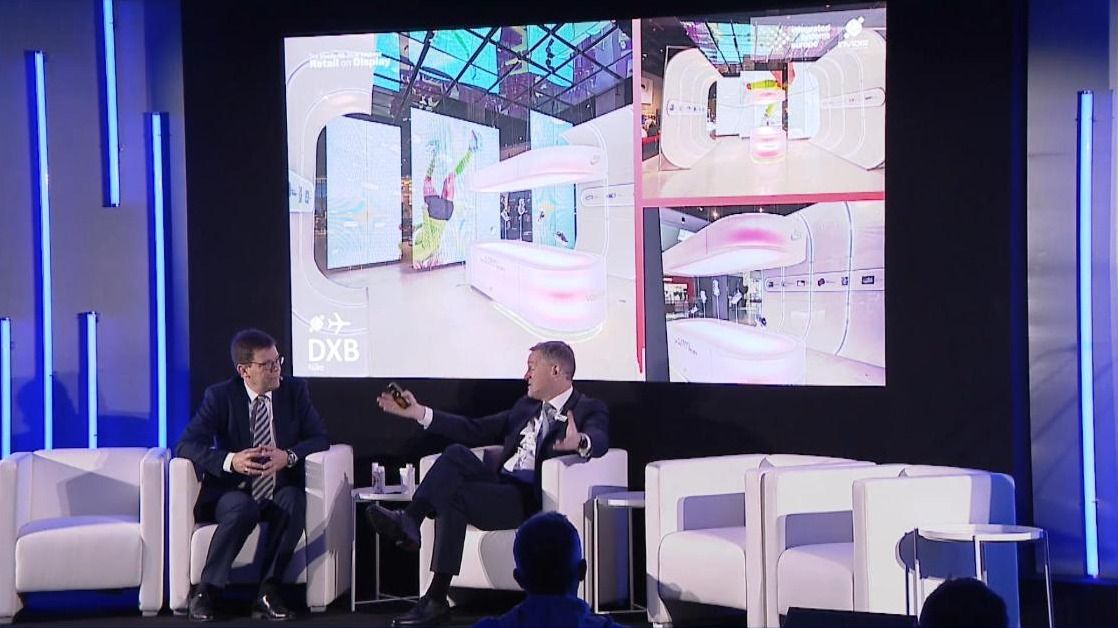
Florian Rotberg and Stefan Schieker of invidis consulting tour new flagship stores and explain how AI buying and new displays are changing what a store is for.
- Event: ISE 2026
- From session: Store Highlights from Around the Globe
- Speakers:
- Florian Rotberg, Managing Director, invidis consulting
- Stefan Schieker, Senior Partner, invidis consulting
- Estimated read time: 8 minutes
- Watch the full session
Quick read summary
- The sharpest retail trends point to stores built for emotion, because AI agents will soon handle much of the routine buying.
- Store space comes in three kinds, says invidis consulting: transactional for efficiency, experiential for attention and emotional for impact.
- Seoul has replaced Paris and London as the place to see the most creative stores, from Gentle Monster to Pop Mart.
- Screens in a store talk to everyone in the room, so personalisation belongs on the phone, not the wall.
On a rainy day in downtown Seoul, shoppers stood under umbrellas for hours outside Pop Mart’s flagship store. While they waited, a transparent LED window switched from clear glass to full-screen stories, and the queue photographed it. It captures the retail trends of the year in one scene: stores people travel to and wait for, just as software learns to shop for them.
Florian Rotberg, Managing Director of invidis consulting, and Stefan Schieker, Senior Partner at the firm, toured new stores in New York, Dubai, Seoul, Valencia and Austria for an ISE 2026 audience on 5 February 2026. The question behind every example: what is a physical store for once machines start making the purchases?
Why are retail trends pushing stores towards emotion?
Retail trends are pushing stores towards emotion because the purely transactional job of a shop is the one AI is most likely to take over. For many transactions, Schieker argued, the buyer will no longer be a human but an agent talking to other agents.
His example was a family holiday: you describe the trip, and the agent finds the place and books it. That is agentic commerce, and it breaks the old logic of marketing, which caters to humans and now has to cater to machines. A store can become the place where a brand builds a relationship with the person who later prompts the agent.
Is the marketing funnel finished?
The marketing funnel is not finished yet, but the speakers believe AI will break it, after mobile phones ended the old linear path to purchase.
Mobile kind of killed the linear customer journey.
Half of people in US supermarkets use a phone in store, the speakers said, often to check prices. AI goes further. The funnel created attention and curiosity, then drove people down towards a sale. If an agent supplies the attention, a human may only appear at the bottom to decide, or not at all.
Rotberg noted that a retailer can now ask AI to build a whole marketing mix and its collateral. Schieker added that the funnel is still alive for many reasons, but shopping will move towards more fluid interactions.
Three kinds of space, and the one AI is creating
The consultancy divides retail space into three kinds, and the third is new. Transactional spaces are typically cold, often exchangeable and all about efficiency. Experiential spaces are loud and temporary, because the wow effect wears off after one or two visits. As Schieker put it, "experiential is all about attention."
With the effects of AI, Schieker sees a third category he calls emotional, though he admitted the word may not stick. These spaces are cosy, relevant to their audience and designed for impact. For store design, the shift is from grabbing attention to building a connection.
In Valencia, a bank has built a branch that does not look like a bank. The bank found it very hard to upsell in its app, so it built a city centre space worth visiting.
Nespresso shows the same idea in New York, for a brand whose customers can order everything online. Its Flatiron flagship hides two rentable clubs behind a hidden door, and LED along the staircase shows slowly moving coffee images with no sales promotion. The pair see this as a big US trend: being digital without feeling digital.
The store still sells, as the app identifies a customer on arrival so the order is ready when they leave. In the past a space was either transactional or experiential. Now the boundaries blur.
Seoul is the new benchmark for store creativity
Seoul now sets the pace, Rotberg argued. People once went to Paris or London to see the coolest brands. Now, he said, "today you have to go to Seoul."
A young Korean beauty brand has put LED on the shelves and in the checkout queue, and people lined up to get in. Gentle Monster, the eyewear brand, has a flagship of five floors that feels like a museum, mixing art with wall-covering LED, and its app books sessions with experts who help visitors choose glasses.
In Dubai, Nike’s flagship has an entrance stage built with transparent LED, because a solid screen would block the view into the store.
Zara, also in Dubai, puts the transactional and the emotional under one roof: 42 self-checkout terminals managed with RFID, surrounded by LED pillar wraps and light ceilings.
Why can’t in-store digital signage be personal?
In-store digital signage cannot be truly personal because it talks to a room, not to one person. Schieker is cautious whenever he hears personalisation promised for screens. In his words, "personalization works on a mobile phone very, very well." A display in a space is one to few or one to many, so its content must suit whoever is there.
The hardware is no longer the obstacle. Schieker called LED, with finer pixel pitch and falling prices, the technology of the future, while LCD is still the workhorse today. Large colour ePaper now comes in sizes from 75 to 86 inches, runs on battery and suits content that rarely changes. At NRF, the big retail show in New York, Rotberg said every single booth had ePaper.
Retailers now say screens at the point of sale are as valuable as their shelves. Rotberg warned against reading that as stores becoming media companies.
Retail media doesn’t work without retail.
Footfall is the asset: shoppers visit supermarkets every week and convenience stores even more often. A screen at the shelf commands a CPM, the price per thousand views, three times higher than one at the entrance. They cited a recent study of more than 200 campaigns with an average sales uplift of 8.1 per cent.
What the tour teaches, store by store
Each store on the tour made one clear choice, and most of them transfer.
| Store | City | Display choice | What transfers |
|---|---|---|---|
| Nespresso | New York | Slow coffee imagery on LED | Mood content where the brand is built |
| Nike | Dubai | Transparent LED stage | Tell a story without blocking the view |
| Zara | Dubai | 42 RFID self-checkouts, LED pillar wraps | Fast checkout and atmosphere can share a floor |
| Pop Mart | Seoul | Transparent LED window | Entertain the queue and it will share the store |
FAQ
- Is agentic commerce a threat to physical stores? Not necessarily, according to invidis consulting. When AI agents search, suggest and book for a shopper, the store can become the place where a brand builds the relationship that makes the shopper name it to the agent.
- Why do retailers put transparent LED in shop windows and entrances? Transparent LED lets a retailer show moving content without blocking the view into the store. Nike uses it for entrance stages in Dubai, and Pop Mart switches its Seoul window from clear glass to full content to entertain queues.
- When does large colour ePaper make sense in a store? Large colour ePaper suits content that rarely changes, because it runs on battery. Panels now reach 75 to 86 inches, and invidis consulting reported ePaper on every booth at NRF, the big retail show in New York.
- How much can in-store advertising screens lift sales? A recent study of more than 200 campaigns, cited by invidis consulting at ISE 2026, found an average sales uplift of 8.1 per cent for advertised products. The highest, 24 per cent, came in convenience stores for a new flavour of an established brand.
The store’s real customer is the person behind the agent
The agent may place the order, but a person still decides what the agent should want. The session put it plainly: a shopper tells the agent their preferred coffee brand because they find that brand cool. That preference was formed somewhere, and the stores on this tour are designed to be that somewhere.
For brands, that changes how a flagship is judged. A store that only processes orders competes with software that will do it faster. A store that makes people queue in the rain, or walk five floors of a museum-like space, builds the memory an agent will later act on.
For the AV channel, the brief is changing too. Technology is no longer the limit, the speakers argued. The limit now is knowing what each space is for. The retail market trends for 2026 point the same way, as does the case for luxury retail becoming more like hospitality.
Integrators who can explain why a screen belongs in an emotional space, not only how to install it, will have the better conversation with retailers. Interactive retail is already moving beyond touchscreens, and the next step is screens that make people care.
About the speakers
Florian Rotberg
Managing Director, invidis consulting
Rotberg leads invidis consulting, a consultancy rooted in the digital signage industry, and presented the store tour at ISE 2026.
Stefan Schieker
Senior Partner, invidis consulting
Schieker set out the transactional, experiential and emotional spaces framework at ISE 2026.
See the store of the future at ISE
The tech behind flagship stores is on show across the signage halls.
- Digital signage and DooH at ISE: retail screens, interactive displays and DooH.
- Digital Signage Summit sessions: where retail and signage leaders share what works.
- Talks and summits across ISE: keynotes, summits and free-to-attend stages in one place.
- Planning your first ISE? Read the first-time visitor guide before you go.
Featured Articles
-
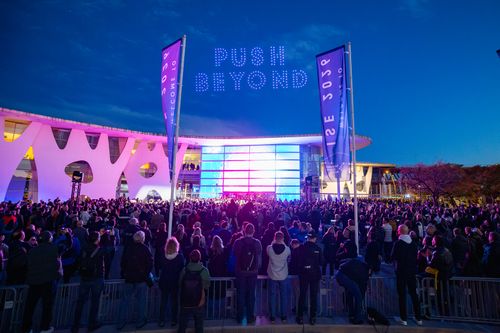 Spanning all eight halls at Fira de Barcelona Gran Via, ISE 2026 delivered four days of record-breaking energy, creativity, and innovation.
-
 The initiative will create new opportunities for talent development, innovation and community projects across the sector
-
 The Facts & Figures report for ISE 2026 is available to download.
-
 Bringing together startups, investors and industry leaders, the expanded show feature offers a strong platform for visibility, networking, and commercial opportunity.
-
 This new type of event brings together end users, creators and production specialists from broadcast, live events, advertising and gaming, combining creative showcases, editorial programming and netwo ...