
Session: Retail media in the store: hype, profit and who owns the data
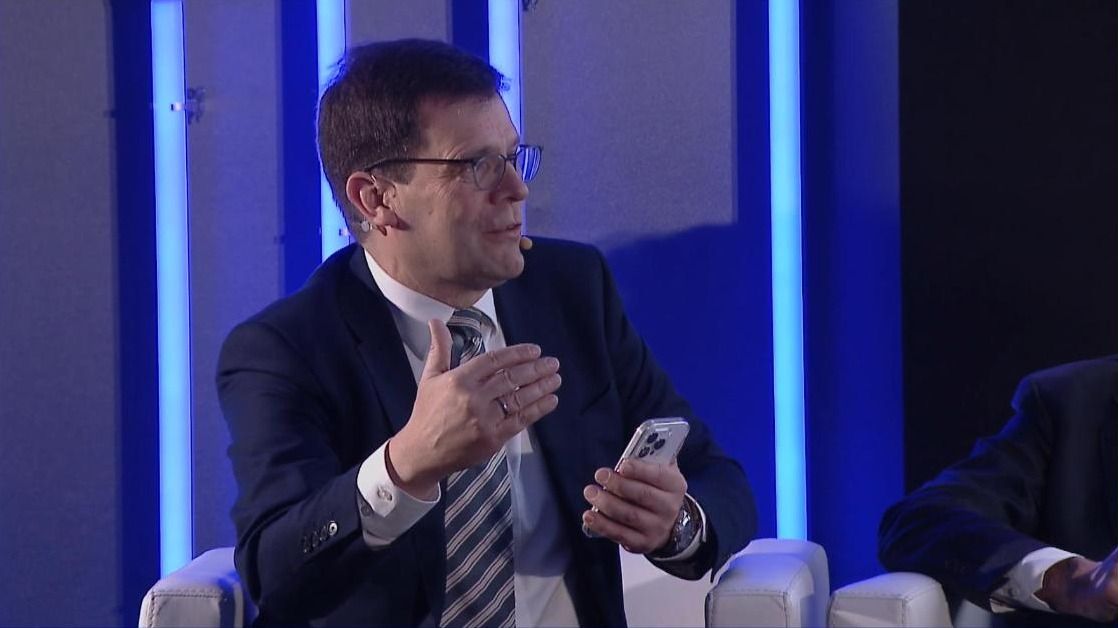
What a Samsung, Navori Labs, M-Cube and invidis panel at ISE 2026 said about in-store screens, ad placement, attribution, data and revenue-share deals.
- Event: ISE 2026
- From session: Retail Media: Between the hype and real business
- Speakers:
- Henrik Hansen, European Head of B2B Retail, Samsung
- Jeffrey Weitzman, CEO, Navori Labs
- Gianluca Pasquali, CEO, M-Cube
- Stefan Schieker, Senior Partner, invidis consulting
- Estimated read time: 9 minutes
- Watch the full session
Quick read summary
- Retail media in the store becomes a real business when the retailer gets placement, measurement and data ownership right, an ISE 2026 panel argued.
- Eight in 10 transactions are still made in a physical store, yet most retail media spend goes to online and mobile channels.
- The panel split on how far a store should open its screens to brands it does not sell.
- A partner that runs the whole network for a revenue share can start things, but the panel saw losing the data as the lasting risk.
"There are a lot of misconceptions that you could just generalize retail media," said Jeffrey Weitzman, CEO of Navori Labs, on a panel at ISE 2026. A supermarket, a sporting goods store and a fuel and convenience site each need a different network, he argued, and a different answer on who may advertise in it.
Henrik Hansen, European Head of B2B Retail at Samsung, and Gianluca Pasquali, CEO of the integrator M-Cube, joined Weitzman. Stefan Schieker, Senior Partner at invidis consulting, moderated the session.
Schieker opened with the scale. Retail media is estimated to be a $166 billion to $176 billion industry, he said, with growth rates of 17 to 24 per cent. Most of that spend goes to online and mobile channels, yet eight in 10 transactions are still made in a store. That gap, Schieker said, is where the growth lies.
Which stores are ready for retail media screens?
Grocery is ready first, according to Pasquali. Supermarkets face heavy pressure on margins, need to monetise their estate and their data, and have the footfall. M-Cube has three large in-store retail media projects in grocery across Europe.
Sporting goods, consumer electronics, beauty and pharmacies are now trying the same logic, Pasquali said. Hansen sees the opportunity in any multi-brand outlet, but said many retailers are still learning that a network of screens is not as simple as they think.
Each vertical needs its own version, Weitzman added. In grocery, a network needs close integration with inventory, so a store never advertises a product it does not stock.
Placement mistakes still undo good screens
Basic placement mistakes still undo in-store networks, according to Hansen. Endemic advertising promotes products a shopper can actually buy in that store. Non-endemic ads come from brands the store does not sell, such as a travel agent advertising family holidays at the supermarket exit, when the shopping is done and the customer is in a good mood.
The fault he has seen is the same ad at the entrance, when the shopping journey is only starting. In another case, screens went in at a store entrance, and the day after installation the shopping trolleys were parked in front of them.
Should a store sell its screens to brands it does not stock?
A store should sell to outside brands only as far as its own business allows, and that is where the panel split.
Weitzman said it depends on the type and size of the retailer, and on its capacity to manage advertising internally. A retailer without a marketing team for ad sales will typically start with endemic brands. A sporting goods store would rarely allow an ad for propane, while a fuel and convenience site might.
He warned vendors against pushing third-party ad selling on a retailer that only wants to promote its own brand. "The primary purpose of a brick and mortar retail location is to sell the products that they have," he said.
Pasquali, earlier in the session, made the opposite case. Selling screen time to endemic brands can be cannibalised by trade marketing, he said, so a network also has to attract brands with no product on the shelf, and data is how it does so.
Neither side won outright. Weitzman’s test, the store’s own sales first, sets the limit. Pasquali’s data sets the ambition.
Is a store screen just another DOOH site?
A store screen is not just another outdoor site, although the two look alike. Schieker said many people think retail media in a store is very similar to digital out-of-home (DOOH). Both are driven by audiences and advertising, but they differ in who owns the customer and the media environment.
Outdoor networks mostly auction inventory to the highest bidder and accept guesswork, Weitzman said. Retail demands far more accuracy, because brands want to link the audience to the content, and the content to sales.
For Pasquali, the big difference "is that retail media in store is happening in store." That gives a retailer a message to sell at the moment of purchase, much further down the funnel. It also means every ad touches the retailer’s own customer experience. ISE has also looked at why stores are turning into media experiences.
From cost line to profit centre, with data on top
Screens now count as a profit centre because advertising revenue can pay for the network. Weitzman called that shift the reason the industry is excited about retail media.
We move from looking at digital signage from a cost perspective and how to measure the ROI against the installation to a profit center where the more you deploy, the more you could attract advertisers and the more money you can generate.
Schieker called data the real driver, pointing to Walmart and Amazon, which run their own data units. Weitzman said a signage platform is one stream into a large retailer’s data lake, adding what played. ISE has covered how smart stores are using data to improve experiences.
Retailers in the second tier, below that top level, will lead the next stage of growth, Weitzman said. Smaller retailers may lack the resources, so vendors need to measure end to end within their own stack. ISE has a primer on how digital signage software works.
Who should own an in-store media network?
The retailer should own it in the long run, Pasquali argued, even if a partner builds and runs it first. The biggest retailers will do it themselves, with large consulting firms orchestrating the work. Smaller retailers have the appetite but no knowledge, and that is where an integrator can help. As Pasquali put it, "The value chain is much bigger than just digital signage."
A network also needs data, ad tech platforms and advertising sales teams. Some players offer to run the whole show: they take the investment, do the media sales and keep a revenue share. Pasquali sees that as a short-term trigger. As retailers mature, he expects them to want to own the media asset, because it shapes their customer experience. Another panellist named the risk: if a retailer outsources everything, someone else collects data that is valuable for future campaigns.
FAQ
- What is retail media, and how does it work in a store? Retail media is advertising that a retailer sells to brands on its own channels, online and in its stores. In a store, it runs on screens from the entrance to the exit, close to the moment of purchase. The ISE 2026 panel said grocery led adoption because supermarkets have the footfall and the data.
- Which retailers are adopting in-store advertising screens after grocery? Sporting goods, consumer electronics, beauty and pharmacies are following grocery into in-store advertising, according to Gianluca Pasquali of M-Cube. Henrik Hansen of Samsung said the opportunity exists in any multi-brand outlet.
- Why should non-endemic advertising stay away from the store entrance? Non-endemic ads promote brands a store does not sell. Henrik Hansen of Samsung said such ads fail at the entrance, when the shopping journey is only starting, and work better at the exit, when the shopping is done.
- Should a retailer outsource its media network for a revenue share? Outsourcing a store media network for a revenue share can get a project started, but the ISE 2026 panel saw it as a short-term move. A retailer that does not own the data also cannot use it for future campaigns.
A retailer that hands over its screens hands over its aisles
Schieker closed by calling retail media a huge opportunity, still in its infancy, with many things left to solve.
What the session did settle is where the value sits. It is not in the screens, which a trolley can block. It is in three things a retailer controls: where an ad plays, whether its effect on sales can be proved, and who keeps the data afterwards.
That is why the warnings on full outsourcing carried the most weight. A revenue-share deal can turn screens into income quickly. It also hands a third party the customer experience in the retailer’s own aisles, and the data that would make the next campaign better. Nobody on the panel defended that trade as a long-term plan.
For integrators and software vendors, the opportunity is the second tier of retailers: big enough to want a network, too small to build a media division. The lessons for retailers were just as plain. Start with what the store sells, measure what plays, and keep the data.
About the speakers
Henrik Hansen
European Head of B2B Retail, Samsung
Hansen works with a variety of retail brands on in-store displays.
Jeffrey Weitzman
CEO, Navori Labs
Weitzman runs Navori Labs, a digital signage software company.
Gianluca Pasquali
CEO, M-Cube
Pasquali leads M-Cube, an integrator with three large in-store retail media projects in European grocery.
Stefan Schieker
Senior Partner, invidis consulting
Schieker moderated the panel at ISE 2026.
More on retail media at ISE
Retail media is one of the biggest conversations in signage.
- Digital signage at ISE: in-store screens and the platforms behind them.
- The Digital Signage Summit: sessions on retail media and DooH.
- The wider ISE programme: summits, Megatrends and the free ISE Open stages.
- Never been to ISE? Plan your visit with the guide for new attendees.
Featured Articles
-
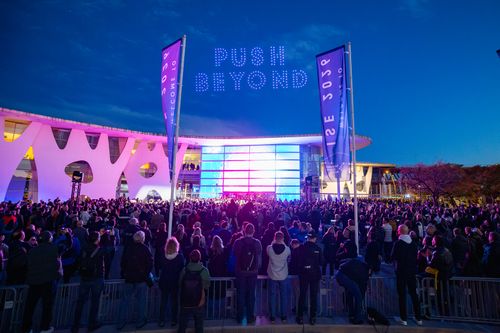 Spanning all eight halls at Fira de Barcelona Gran Via, ISE 2026 delivered four days of record-breaking energy, creativity, and innovation.
-
 The initiative will create new opportunities for talent development, innovation and community projects across the sector
-
 The Facts & Figures report for ISE 2026 is available to download.
-
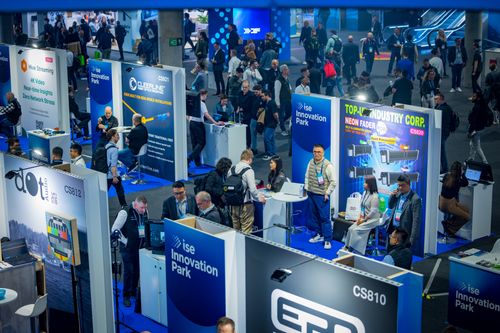 Bringing together startups, investors and industry leaders, the expanded show feature offers a strong platform for visibility, networking, and commercial opportunity.
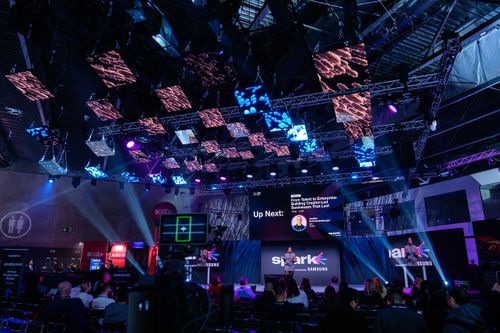
-
 This new type of event brings together end users, creators and production specialists from broadcast, live events, advertising and gaming, combining creative showcases, editorial programming and netwo ...