

Is outside broadcast heading for reinvention?
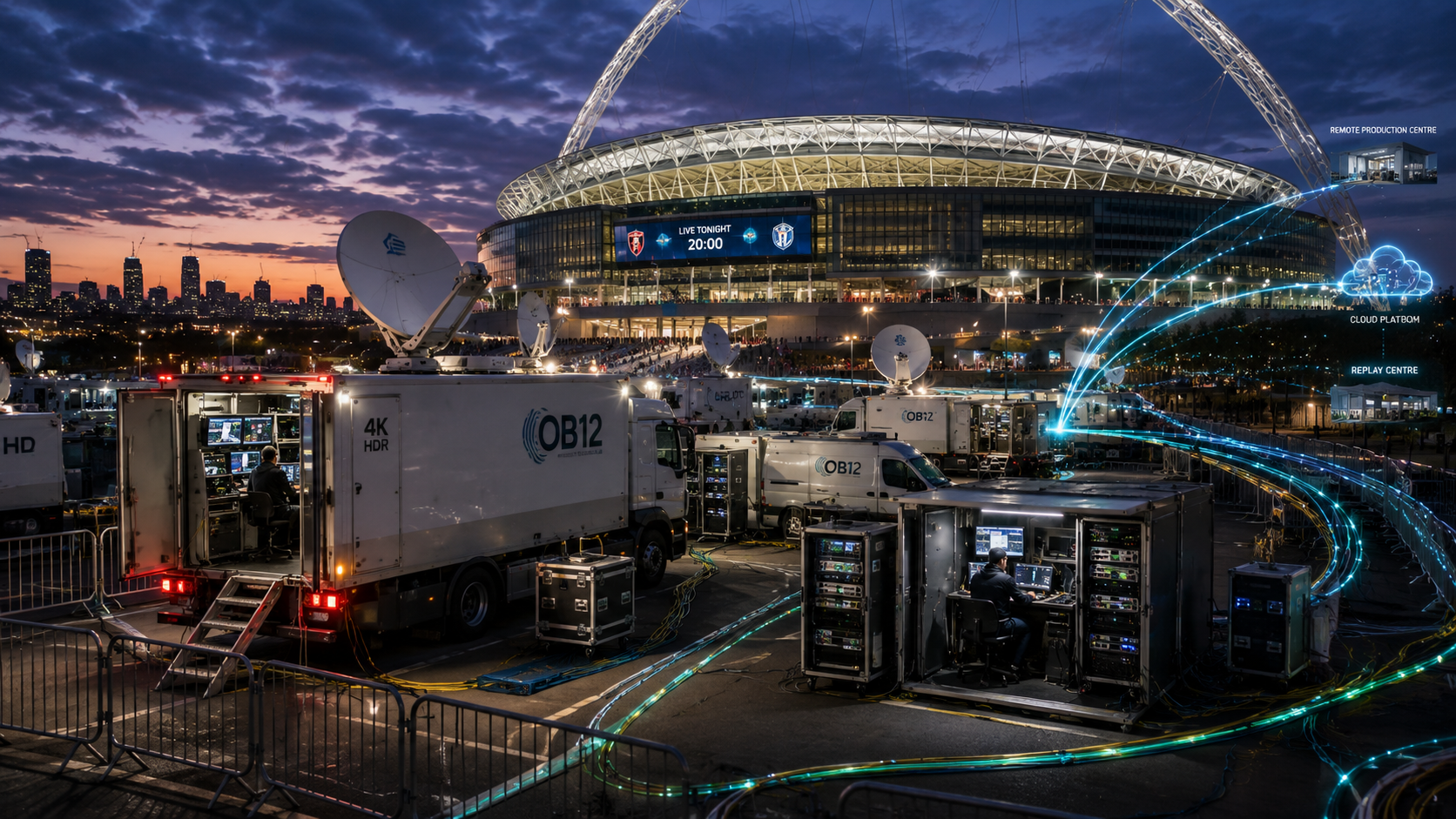
Outside broadcast has long been one of the most recognisable parts of the media industry. For decades, large production trucks packed with specialist equipment have travelled to sporting events, concerts, political events, and major public occasions, bringing live coverage to audiences around the world.
The model has proven remarkably successful. But it is also changing. Remote production technologies, cloud-based workflows, IP networking, and software-defined infrastructures are transforming how live content is produced. As a result, the future of outside broadcast may look vastly different from its past.
The economic drivers are compelling. Traditional OB operations require significant investments in vehicles, equipment, travel, accommodation, logistics, and staffing. As broadcasters face increasing financial pressure, many are exploring ways to reduce operational costs while maintaining production quality.
Remote production has emerged as a key solution. By moving certain production functions away from the event location and into centralised facilities, broadcasters can reduce the number of personnel and equipment required on site. Production teams can support multiple events more efficiently, improving resource utilisation and reducing operational expenses.
However, the future of OB is unlikely to be entirely remote.
Certain productions still require substantial on-site capabilities. Major sports events, large-scale entertainment productions, and complex multi-camera environments often benefit from the flexibility and resilience provided by dedicated outside broadcast facilities.
The future is a hybrid one. Traditional OB vehicles are evolving into highly connected production hubs that integrate seamlessly with remote production environments, cloud infrastructures, and centralised operations centres. Rather than disappearing, outside broadcast is becoming more flexible and interconnected.
Technology is driving this transformation. High-capacity IP networks, software-defined production systems, cloud-based processing, and remote collaboration tools are allowing broadcasters to rethink what an OB operation can be.
Integrated Systems Europe exhibitors including Riedel Communications are helping broadcasters build highly connected production environments that support both traditional outside broadcast operations and increasingly sophisticated remote production workflows. Meanwhile, Grass Valley continues expanding cloud-enabled broadcast ecosystems that help organisations launch and manage services more efficiently, while EvertzAV is advancing IP-based media processing and delivery technologies that enable broadcasters to manage playout and distribution resources with greater flexibility and scalability.
That is one reason live production transformation remains a major topic at Integrated Systems Europe, where broadcasters are exploring how technology is reshaping the economics and operations of live content creation.
Stay ahead – Stay informed.
As an AV specialist or industry leader, you recognise how crucial it is to keep up with evolving trends, new technologies, and notable happenings within the audiovisual world. That's why we're delighted to invite you to receive exclusive email updates about ISE – the world-renowned tech show for the systems integration and audiovisual industry.
When you subscribe, you'll be kept up to speed with insightful commentary on the freshest developments in AV, get early looks at what's planned for the ISE content schedule – including headline speakers – and benefit from in-depth reporting on the show's standout attractions.
Sign up now to stay at the forefront of audiovisual innovation and expertise.
Further reading
Learn more about broadcast solutions at ISE.
Related Content
-
) A growing number of event organisers are discovering an entirely different revenue opportunity. Content.
A growing number of event organisers are discovering an entirely different revenue opportunity. Content. -
) The modern venue is no longer simply hosting live events. It is producing continuous digital content.
The modern venue is no longer simply hosting live events. It is producing continuous digital content. -
) Modern stadiums are no longer simply sports venues. They are connected technology ecosystems.
Modern stadiums are no longer simply sports venues. They are connected technology ecosystems. -
) While esports has become an established category within live events and live streaming, its growth story is still very much being written.
While esports has become an established category within live events and live streaming, its growth story is still very much being written. -
) As well as being a triumphant showcase of sporting excellence, the quadrennial event is also an international case study in the deployment of audiovisual (AV) technology.
As well as being a triumphant showcase of sporting excellence, the quadrennial event is also an international case study in the deployment of audiovisual (AV) technology.
Featured Articles
-
) Spanning all eight halls at Fira de Barcelona Gran Via, ISE 2026 delivered four days of record-breaking energy, creativity, and innovation.
Spanning all eight halls at Fira de Barcelona Gran Via, ISE 2026 delivered four days of record-breaking energy, creativity, and innovation. -
) The initiative will create new opportunities for talent development, innovation and community projects across the sector
The initiative will create new opportunities for talent development, innovation and community projects across the sector -
) The Facts & Figures report for ISE 2026 is available to download.
The Facts & Figures report for ISE 2026 is available to download. -
) Bringing together startups, investors and industry leaders, the expanded show feature offers a strong platform for visibility, networking, and commercial opportunity.
Bringing together startups, investors and industry leaders, the expanded show feature offers a strong platform for visibility, networking, and commercial opportunity. -
) This new type of event brings together end users, creators and production specialists from broadcast, live events, advertising and gaming, combining creative showcases, editorial programming and netwo ...
This new type of event brings together end users, creators and production specialists from broadcast, live events, advertising and gaming, combining creative showcases, editorial programming and netwo ...
)
)

)
)
)
)
)
)
)
)
)
)
)
)
)
)
)
)
)
)
)
)
)
![rAVe [PUBS]](https://cdn.asp.events/CLIENT_Integrat_169E7B04_E6F3_39F6_8BE4DB27C54F731E/sites/ise-2027/media/libraries/partners/rAVe-PUBS-Google-Logo.png/fit-in/500x500/filters:no_upscale())
)
)
)
)
)
)
)
.png/fit-in/500x500/filters:no_upscale())
)
)
)
)
)
)
)
)
)
)
)
)
)
)
)
)
)
)
)
)
)
)
)
)