Session: Why an LED volume can be the cheap option for everyday TV shots
How an LED volume cut costs by an estimated 28 to 37 per cent on UK TV dramas, from location replacement and car scenes to 20 pickups shot in about four hours.
- Event: ISE 2026
- From session: Spark 2026: Applied Virtual Production for Creative Control
- Speaker: Rowan Pitts, Co-founder, MARS Volume and Bild Studios
- Estimated read time: 8 minutes
- Watch the full session
Quick read summary
- An LED volume can be the cheaper option for everyday TV scenes, with estimated savings of 28 to 37 per cent on two UK dramas.
- Rowan Pitts of MARS Volume argues the upfront fee is an investment that can leave the whole project in a net gain.
- His case rests on utility in-camera VFX: location replacement, vehicle scenes and pickups, all shot from 2D plates filmed on location.
- Live events engineers already run the tracking, display and media server kit that a volume depends on.
Every producer knows the shot that wrecks a schedule: a rooftop sunset with a 15-minute window, a Christmas street filmed in March, a pickup needed after the cast has gone. These are the shots an LED volume should take, and it can take them for less money than the alternatives.
That was the case Rowan Pitts, co-founder of MARS Volume and Bild Studios, made on the Spark stage at ISE 2026. He made it with a Watford car park, a London shopping street and a day of pickups, not blockbuster worlds.
The everyday shot, not the blockbuster, is where the volume pays
The volume earns its keep on ordinary shots that are awkward on location, Pitts argued, not on spectacle. He calls this utility in-camera VFX, and named three uses. Location replacement swaps a hard-to-reach place for video filmed there. Vehicle processing makes a static car look as if it is moving. Pickups fill the holes an editor finds after the main shoot.
All three rely on 2D plates, video filmed at the real place, rather than 3D environments built by an art department. That keeps cost and preparation time down.
How did a live events company come to run a virtual production studio?
Bild Studios arrived through live events, almost by accident. Its engineers already ran camera tracking, LED displays and content engines such as Unreal Engine, Notch and Unity, the ingredients of an LED volume.
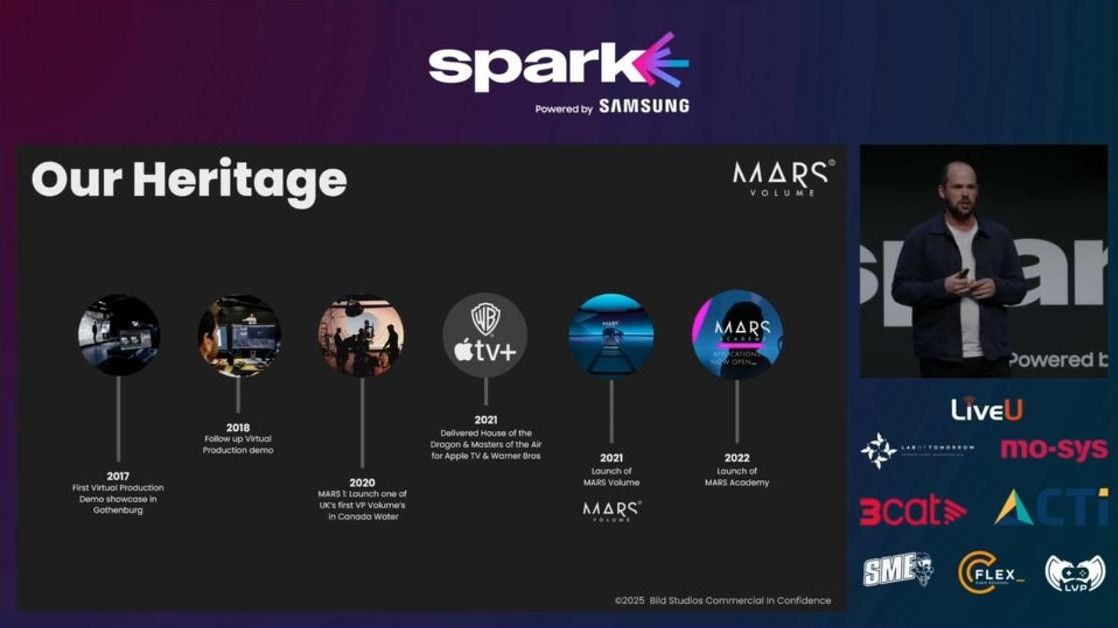
By 2020, The Mandalorian had put the approach on everyone’s radar, on blockbuster budgets. A three-month temporary volume in central London that year showed price was the blocker for smaller productions. In 2021 the company opened MARS Volume, a 12,000 square foot virtual production studio in West London, sized for high-end TV without pricing out short-form branded content.
Is the upfront cost of an LED volume worth paying?
Yes, for the right shots, Pitts argued, even though the upfront fee can be higher than a green screen or a location day. He frames it as an investment that pays back later in the project.
When you’re assessing the project as a whole at the end of the process, by investing in in-camera VFX and virtual production, it’s not impossible to be in a quite significant net gain position.
Crews capture more per shoot day and escape the weather, the public and permits. The bar is high: everything captured in camera, with only a final grade left for post.
What did a Watford car park teach the Sweetpea team?
It taught them that a hard location can become a one-day stage booking. Sweetpea, a Sky drama made by See Saw Productions, needed a sunset scene on top of a Watford multi-storey car park. Pitts estimated the volume was roughly 28 per cent cheaper than shooting it for real, with about 35 per cent less carbon on the shoot day.
On location, the actors would have stood beside a five or six storey drop, harnessed and wired in. Green screen was a poor fallback, because wind-blown hair is costly to composite.
Instead, a plate team filmed the rooftop about a week ahead, and the sky was replaced to give the script its sunset. On location, Pitts said, you have "maybe a 15-minute window to get your shots captured". On the volume, that sweet spot was locked off all afternoon, and the director could talk to her cast face to face.
Why are car scenes the clearest win for a volume?
Car scenes suit a volume because one set of plates supplies the backdrop, the ambient light and the reflections at once. Black Doves, a Sister Productions series for Netflix, needed 31 scenes across five shoot days. Pitts put the saving at about 37 per cent against a low loader, or even a green screen once post-production is counted.
A Christmas sequence on Regent Street was being filmed in March. So a plate team drove the street at Christmas, with no road closure, and stitched the footage into a 360-degree asset. Played back on the volume, the plates light the scene as well as fill it.
Rain shows the gap most clearly. On a green screen, droplets are composited later, so the detail is usually skipped. On a volume, Pitts said, it is "simply a case of just spritzing the glass with water".
Can pickup shots wait until the edit shows the gaps?
They can, if the production films a plate at every location during the main shoot. That is what Gangs of London season two did, in one of the earliest projects at MARS Volume.
The production built its own library of plates and booked the volume at the end of principal photography, once it knew which pickups it needed. Pitts called it "an incredibly agile and incredibly quick process". On one day, the crew shot about 20 pickups from different locations in three and a half to four hours.
Shots a line producer would cut become affordable
The volume also rescues shots that would normally be cut on cost or safety. The Gangs of London director wanted the camera to rise from the passenger’s profile, over the bonnet and in through the rear window, at motorway speed.
Nine times out of 10, your line producer would be drawing a line through that shot and encouraging a much more simpler way of shooting it.
The answer was to move the car and the world instead of the camera. The car sat on a turntable, and an encoder fed its rotation to the Disguise media server, which locked the plates to it. The camera barely moved, yet on screen it travels round the vehicle.
Three productions, side by side
Pitts called the cost figures rough calculations.
| Production | Use of the volume | Booking | Result Pitts reported |
|---|---|---|---|
| Sweetpea (Sky) | Location replacement, sunset rooftop | 1 shoot day | About 28 per cent cheaper, about 35 per cent less carbon on the day |
| Black Doves (Netflix) | Vehicle processing, 360-degree plates | 5 shoot days, 31 scenes | About 37 per cent cheaper |
| Gangs of London season two | Pickups and car scenes from a plate library | 8 shoot days | About 20 pickups in three and a half to four hours |
Which skills does an AV business already bring to this work?
Most of them. The volume runs on camera tracking, LED displays, video infrastructure and media servers, which live events crews use every week. The difference is that film buyers judge the kit on realism. ISE has looked at how these techniques are reshaping broadcast AV, at whether the studio business model holds up and at the technology under the hood.
FAQ
- How does an LED volume differ from a green screen? An LED volume shows the background on screens behind the set, so it lights the actors and reflects in glass and bodywork during the take. A green screen is replaced in post-production, so light and reflections have to be matched afterwards.
- Can shooting on an LED volume cost less than a location shoot? It can for the right scenes. Rowan Pitts of MARS Volume estimated a Sky drama rooftop scene was about 28 per cent cheaper on a volume, and Netflix car scenes about 37 per cent cheaper.
- When should a production film plates for later pickups? A production should film a plate at every location during principal photography, while the crew is already there. The plates can then be called up on a volume once the edit shows which pickups are needed.
A sunset that stayed put all afternoon
The sharpest point in Pitts’s talk was not about technology. It was about the line producer’s red pen. The shots he showed are the ones that usually get rushed or cut: a 15-minute sunset, rain nobody has time to composite, a risky camera move. On the volume, each became a scheduling decision rather than a gamble.
That shifts the question producers should ask. It is not whether an LED stage costs more per day than a location. Often it does. The question is what the whole project costs once travel, permits, weather, post-production and pickups are counted. Pitts’s figures are his own rough estimates, but the two cost figures and the Gangs of London pickup day point the same way.
For the AV channel, the opportunity is less glamorous than the blockbuster image suggests, and probably more durable. It sits in plate libraries, quick turnarounds and pickup days booked once the edit shows the gaps. The test Pitts left with the room was simple. Look for the shot that would normally be cut, and ask whether a plate filmed last week could keep it in.
About the speaker
Rowan Pitts
Co-founder, MARS Volume and Bild Studios
Pitts co-founded Bild Studios, which delivers broadcast events, live experiences and fixed installations, and in 2021 opened MARS Volume, a permanent LED volume in West London.
See virtual production at ISE
LED volumes are on show for broadcast and creative teams alike.
- Broadcast solutions at ISE: virtual production, LED and studio tech.
- The Broadcast AV Summit: sessions on production for brands and broadcasters.
- Creative industries at ISE: Spark and the creative side of virtual production.
- The wider ISE programme: summits, Megatrends and the free ISE Open stages.
- Visiting ISE for the first time? Start with the first-time visitor guide.
Featured Articles
-
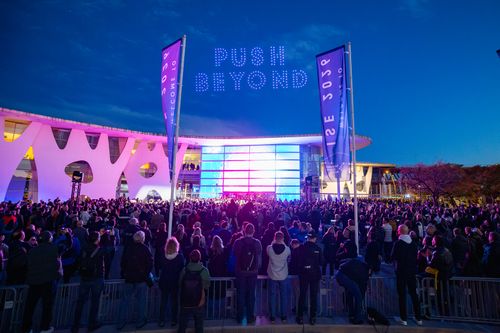 Spanning all eight halls at Fira de Barcelona Gran Via, ISE 2026 delivered four days of record-breaking energy, creativity, and innovation.
-
 The initiative will create new opportunities for talent development, innovation and community projects across the sector
-
 The Facts & Figures report for ISE 2026 is available to download.
-
 Bringing together startups, investors and industry leaders, the expanded show feature offers a strong platform for visibility, networking, and commercial opportunity.
-
 This new type of event brings together end users, creators and production specialists from broadcast, live events, advertising and gaming, combining creative showcases, editorial programming and netwo ...