

The future of streaming may depend on the edge
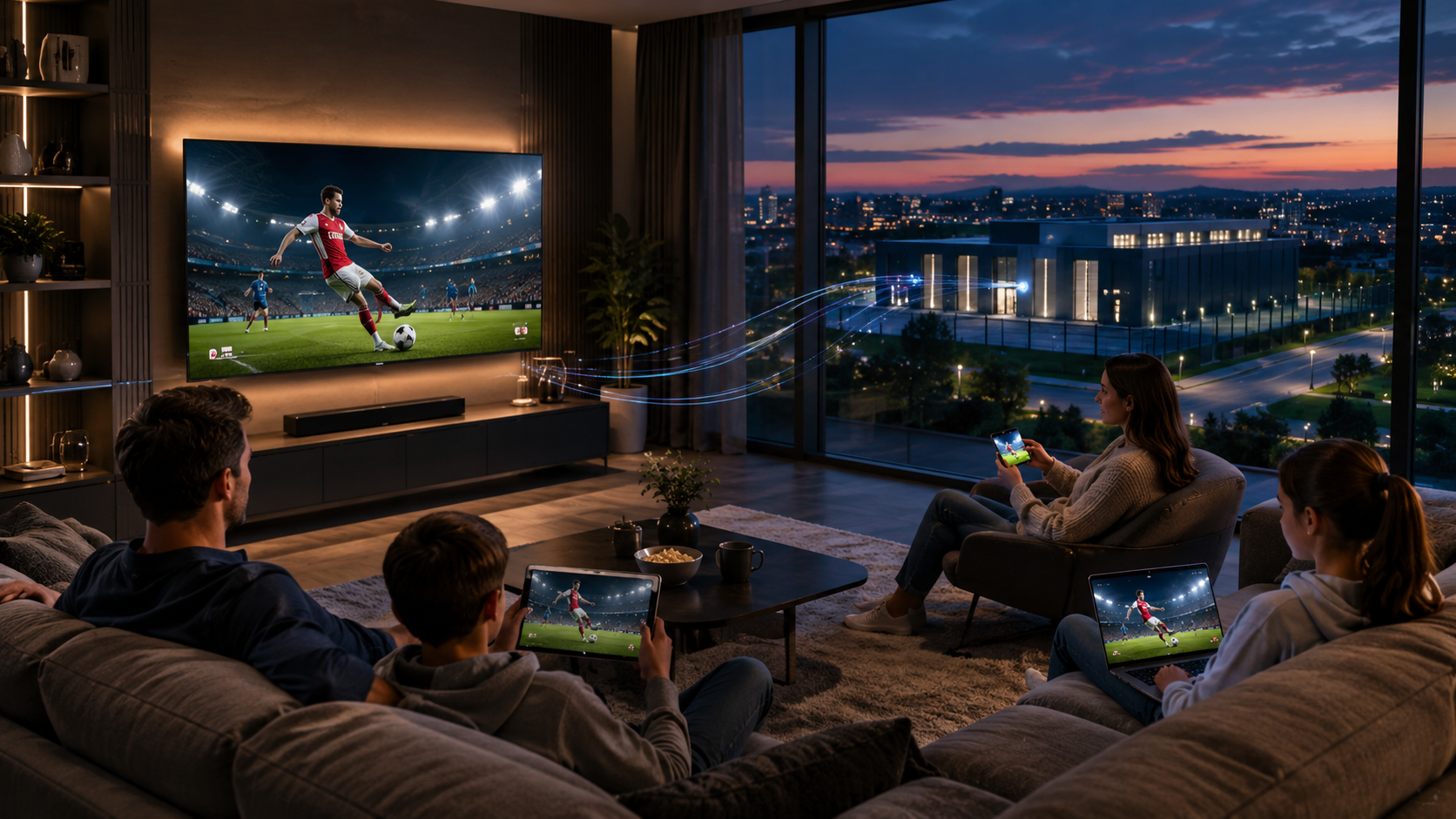
For years, broadcasters and streaming providers focused on centralising infrastructure. Large data centres, cloud platforms, and centralised processing environments promised efficiency, scalability, and cost savings.
Now the industry is beginning to look in a different direction. Edge computing is emerging as one of the most important technologies shaping the future of content delivery.
The concept is simple. Instead of processing content and data exclusively in centralised locations, computing resources are placed closer to audiences and end users. This can reduce latency, improve responsiveness, lower bandwidth requirements, and create more reliable viewing experiences.
The implications for media organisations are significant. Audience expectations continue rising. Viewers expect high-quality video, seamless streaming, low-latency experiences, and immediate access to content regardless of location or device. At the same time, broadcasters are delivering more live content, interactive experiences, and personalised services than ever before.
Traditional delivery architectures can struggle to meet these demands efficiently at scale. Edge computing offers potential solutions. By processing and delivering content closer to audiences, broadcasters can improve performance while reducing strain on core infrastructure. This is particularly important for live sports, esports, interactive broadcasts, and real-time audience engagement applications where delays can have a noticeable impact on user experience.
The growth of connected devices is also increasing interest in edge architectures. Smart TVs, mobile devices, digital signage networks, and connected venue environments are generating huge volumes of data that can be analysed and acted upon more effectively at the network edge.
However, edge computing is not simply a technical upgrade.
It requires broadcasters to rethink infrastructure design, operational workflows, security strategies, and distribution models. Managing distributed computing environments introduces new challenges around orchestration, monitoring, resilience, and cybersecurity.
The broadcasters gaining the most value are increasingly integrating edge capabilities into broader cloud and IP-based infrastructures rather than treating them as standalone solutions.
Integrated Systems Europe exhibitors including Cisco are helping organisations develop networking architectures capable of supporting distributed content delivery environments. Meanwhile, AJA Video Systems continues expanding IP transport and connectivity solutions designed for increasingly flexible media operations, while EvertzAV is developing infrastructure technologies that support highly distributed production and delivery workflows.
That is one reason edge computing is attracting growing attention at Integrated Systems Europe, where broadcasters are exploring the next generation of media infrastructure and content delivery strategies.
Stay ahead – Stay informed.
As an AV specialist or industry leader, you recognise how crucial it is to keep up with evolving trends, new technologies, and notable happenings within the audiovisual world. That's why we're delighted to invite you to receive exclusive email updates about ISE – the world-renowned tech show for the systems integration and audiovisual industry.
When you subscribe, you'll be kept up to speed with insightful commentary on the freshest developments in AV, get early looks at what's planned for the ISE content schedule – including headline speakers – and benefit from in-depth reporting on the show's standout attractions.
Sign up now to stay at the forefront of audiovisual innovation and expertise.
Further reading
Learn more about broadcast solutions at ISE.
Related Content
-
) A digital twin is a live virtual model of a real‑world space, system or workflow, continuously updated with data so it behaves like its physical counterpart.
A digital twin is a live virtual model of a real‑world space, system or workflow, continuously updated with data so it behaves like its physical counterpart. -
) IPMX and ST 2110 both transport professional media over IP networks but differ mainly in who they serve.
IPMX and ST 2110 both transport professional media over IP networks but differ mainly in who they serve. -
) How do venues improve the fan experience? By removing friction at every stage.
How do venues improve the fan experience? By removing friction at every stage. -
) Broadcast TV isn't growing in the traditional sense. But instead, the definition of broadcasting is expanding.
Broadcast TV isn't growing in the traditional sense. But instead, the definition of broadcasting is expanding. -
) Edge computing is the processing of data close to where it is created and used, rather than sending it to a distant data centre or cloud platform.
Edge computing is the processing of data close to where it is created and used, rather than sending it to a distant data centre or cloud platform.
Featured Articles
-
) Spanning all eight halls at Fira de Barcelona Gran Via, ISE 2026 delivered four days of record-breaking energy, creativity, and innovation.
Spanning all eight halls at Fira de Barcelona Gran Via, ISE 2026 delivered four days of record-breaking energy, creativity, and innovation. -
) The initiative will create new opportunities for talent development, innovation and community projects across the sector
The initiative will create new opportunities for talent development, innovation and community projects across the sector -
) The Facts & Figures report for ISE 2026 is available to download.
The Facts & Figures report for ISE 2026 is available to download. -
) Bringing together startups, investors and industry leaders, the expanded show feature offers a strong platform for visibility, networking, and commercial opportunity.
Bringing together startups, investors and industry leaders, the expanded show feature offers a strong platform for visibility, networking, and commercial opportunity. -
) This new type of event brings together end users, creators and production specialists from broadcast, live events, advertising and gaming, combining creative showcases, editorial programming and netwo ...
This new type of event brings together end users, creators and production specialists from broadcast, live events, advertising and gaming, combining creative showcases, editorial programming and netwo ...
)
)

)
)
)
)
)
)
)
)
)
)
)
)
)
)
)
)
)
)
)
)
)
)
)
)
)
)
)
)
)
)
)
)
)
)
)
)
)
)
)
)
)
.png/fit-in/500x500/filters:no_upscale())
)
)
)
![rAVe [PUBS]](https://cdn.asp.events/CLIENT_Integrat_169E7B04_E6F3_39F6_8BE4DB27C54F731E/sites/ise-2027/media/libraries/partners/rAVe-PUBS-Google-Logo.png/fit-in/500x500/filters:no_upscale())
)
)
)
)
)
)
)
)