Session: Control room solutions: inside a $22 billion market heading for 2030
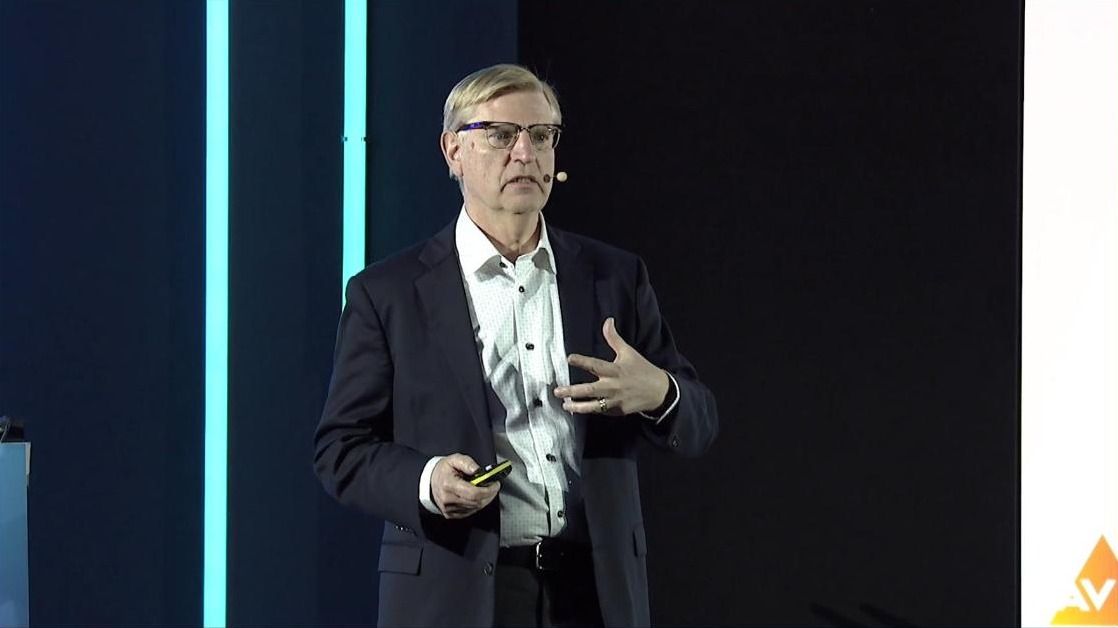
The four forces reshaping control rooms, the market size and regional split to 2030, and where AI should stop, from AVIXA analyst Mike Sullivan-Trainor.
- Event: ISE 2026
- From session: Latest Control Rooms Trends
- Speaker: Mike Sullivan-Trainor, Senior Industry Analyst, Market Intelligence, AVIXA
- Estimated read time: 8 minutes
- Watch the full session
Quick read summary
- Spending on control room solutions will pass $22 billion by 2030, up from about $18 billion in 2025, according to AVIXA.
- Asia-Pacific spends most, ahead of the Americas and then Europe, the Middle East and Africa, where Gulf states are investing fast.
- Mike Sullivan-Trainor of AVIXA expects AI to cut alerts and automate routine work, but says it should stop short of decisions.
- Owners of critical systems fear that upgrades bring new errors, so suppliers must prove reliability before they can sell efficiency.
AVIXA expects pro AV spending by the world’s control rooms to pass $22 billion in 2030, up from roughly $18 billion in 2025. Mike Sullivan-Trainor, Senior Industry Analyst, Market Intelligence at AVIXA, shared the forecast at ISE 2026 on 4 February.
His argument was that control room solutions, often overshadowed at a pro AV show, are in the middle of a transformation. The rooms that dispatch emergency services, control air traffic and manage utilities are taking in more data than ever.
How big is the market for control room solutions?
The market for control room solutions was worth roughly $18 billion in 2025 and should rise above $22 billion by 2030, by AVIXA’s measure. Sullivan-Trainor’s team tracks it as a segment called command and control: operations centres, dispatch centres, emergency communications and network operations centres, plus anything with a similar mission-critical function.
The figure counts pro AV product and services, not the staff. Control rooms may not expand at the speed of some markets, he said, but the growth is continuous.
Asia-Pacific leads, and the Gulf is closing in
Asia-Pacific (APAC) is the largest investor in control rooms and will account for about $9 billion of spending by 2030, according to Sullivan-Trainor, with China’s focus on command and control a major driver. The Americas come second, led by the United States. Europe, the Middle East and Africa (EMEA) is third.
Inside EMEA, the Gulf Cooperation Council (GCC) countries are pushing hard, as they become more security conscious and build digital infrastructure. In Europe, military investment will raise the importance of control rooms, alongside a growing need for cybersecurity.
Which buyers are spending, and why now?
Four groups account for most of the spending, each with its own reasons to invest.
- Energy and utilities: a more diverse energy supply and rising load bring more data, and may lead to larger or distributed control rooms.
- Government and military: these buyers probably have the most funds to adopt the latest technology.
- Transportation: growing transport infrastructure needs rooms to manage tunnels and airports.
- Emergency communications: this sector has continued to develop since the pandemic.
Sullivan-Trainor added a fifth: medical emergency operations centres, which many countries are setting up to handle future pandemics.
Inside the room, systems still take most of the money
Most spending on control room technology still goes on systems that combine hardware and software, with displays an important part. Services come second and are growing, but mostly as installation, design and development. Managed services stay small, because in a critical control room the owner has to stay in control.
Sullivan-Trainor expects LED screens to grow 15 per cent in 2026, while fine pixel pitch LCD video walls raise the detail operators can see.
AV over IP is arriving too. IPMX (Internet Protocol Media Experience) products on the ISE show floor are built to take over video processing from proprietary products. ISE has covered that shift in AV over IP and software orchestration and in IPMX and NDI: pathways to standards-based interoperability.
Four pressures are driving the spending
The four pressures are the data deluge, AI automation, security and operator training, according to Sullivan-Trainor.
| Pressure | What is changing | The question for the buyer | What suppliers need to offer |
|---|---|---|---|
| Data deluge | More endpoints and Internet of Things (IoT) devices send richer data, and AI processing adds more | Can current hardware, storage and applications cope? | Faster analysis, data visualisation and advanced displays, with proof they are reliable |
| AI automation | AI can gather, parse and monitor data, and handle some analytics | Where does the operator approve, and where does AI stop? | Automation of routine tasks, with decisions left to people |
| Security | Cyber threats now target the room’s data and the infrastructure it manages | Are new devices, old devices and cloud services secure? | Audits across physical and cyber security, and secure cloud instances |
| Operator training | Operators must handle AI, security and data on top of their core job | Who will run all of this? | Interfaces built around the operator, to make them more productive |
More data, but no easier sale
More data makes the case for investment, but it does not make owners keen to upgrade. Sullivan-Trainor believes the industry has the tools to cope. The obstacle is persuading organisations to invest, even when they face exactly these problems.
Upgrading critical systems always introduces the possibility for new errors to come up.
That fear reframes the sales conversation. An owner is not asking what a new system can do, but whether it will keep working. For a vendor or service company, he said, "ensuring the viability of the new technology that’s gonna bring the efficiency" is the equation to solve.
How far should AI go in a control room?
AI should go as far as routine work and recommendations, but not decisions, in Sullivan-Trainor’s view. Used correctly, it pre-processes incoming information and surfaces what matters most, which cuts the volume of alerts.
It can automate the routine tasks that an operator performs today, but it probably should draw the line at decision making.
Even recommendations need care, because they rest on factors the operator may have wanted to examine. Most AI models are built on past patterns, so they are weak with the unpredictable, which may be what an operator most needs to be ready for.
That makes operator training part of any AI plan, he added, because AI is only as good as the person using it. ISE explored an earlier view in The intelligence that control rooms need most is artificial.
Is the security operations centre moving into the control room?
In some agencies the security operations centre (SOC) already sits inside the control room. Sullivan-Trainor sees that as a strength: "the SOC is integrated with the control room function, and that’s good."
The gaps are new devices, older devices and physical infrastructure that may not be secure. His remedy is a thorough audit across physical and cyber security, plus a secure cloud instance of your own. ISE’s proactive control room defence watchlist looks at the threats in more detail.
Control room design has to start with the operator
Control room design has to put the operator first, Sullivan-Trainor argued, because the job is getting harder. Operators now need to know more about AI, security and data on top of their core work. In his words, "the control rooms need to be built to be operator centric." Teams need multi-skilled, AI-savvy operators, or a division of roles so that specialists cover those functions.
FAQ
- Does AVIXA’s $22 billion forecast include control room staff? No. AVIXA’s command and control figure counts the pro AV technology and services consumed by control room end users, not the people who work in the rooms.
- Which regions spend the most on control room solutions? Asia-Pacific spends the most on control room solutions, with about $9 billion forecast by 2030, according to AVIXA. The Americas come second and Europe, the Middle East and Africa third.
- Can AI replace operators in a control room? Not on AVIXA’s view. Mike Sullivan-Trainor says AI should cut alerts and automate routine tasks but draw the line at decision making, because it copes poorly with the unpredictable.
- How is AV over IP changing control room hardware? AV over IP is starting to replace proprietary hardware in control rooms, with IPMX products on the ISE 2026 show floor built to take over video processing. AVIXA also expects cloud services use in control rooms to rise by up to 10 per cent in 2026.
The hardest sale in the room is reliability
The striking thing about Sullivan-Trainor’s forecast is where it locates the bottleneck. The technology is not the problem. AI can parse the data deluge, fine pixel pitch displays can show it, IP video can replace closed boxes and secure cloud instances can store it. By his account, the industry already has the tools.
What it lacks is the owner’s confidence. A control room runs systems that cannot fail, and every upgrade carries the risk of a new error. That turns a $22 billion market into a series of careful, conservative decisions. The buyers with money, from Gulf governments to European defence and utilities under rising load, will move only when they believe the new system is safer than the old one.
That has a clear consequence for suppliers. The ones who win the next five years of growth will treat proof of reliability as part of the product, and design the room around the operator rather than around the hardware. The question for every vendor at ISE is not how much its technology can do, but how much risk it can take off the owner’s desk.
About the speaker
Mike Sullivan-Trainor
Senior Industry Analyst, Market Intelligence, AVIXA
Sullivan-Trainor analyses the pro AV market for AVIXA’s market intelligence team, including the command and control segment that covers control rooms.
More control room technology at ISE
Control rooms are one of the busiest markets on the ISE floor.
- AV infrastructure and control at ISE: displays, control and infrastructure for critical rooms.
- The Control Rooms Summit: the summit for control room operators and designers.
- Everything on the ISE programme: every summit, keynote and show-floor stage.
- Visiting ISE for the first time? Start with the first-time visitor guide.
Featured Articles
-
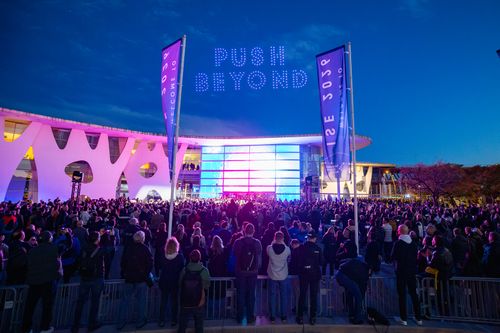 Spanning all eight halls at Fira de Barcelona Gran Via, ISE 2026 delivered four days of record-breaking energy, creativity, and innovation.
-
 The initiative will create new opportunities for talent development, innovation and community projects across the sector
-
 The Facts & Figures report for ISE 2026 is available to download.
-
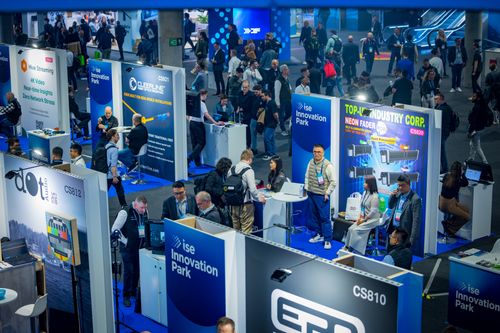 Bringing together startups, investors and industry leaders, the expanded show feature offers a strong platform for visibility, networking, and commercial opportunity.
-
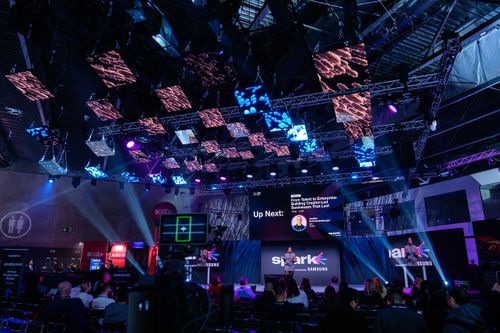 This new type of event brings together end users, creators and production specialists from broadcast, live events, advertising and gaming, combining creative showcases, editorial programming and netwo ...