

AV over IP and software orchestration
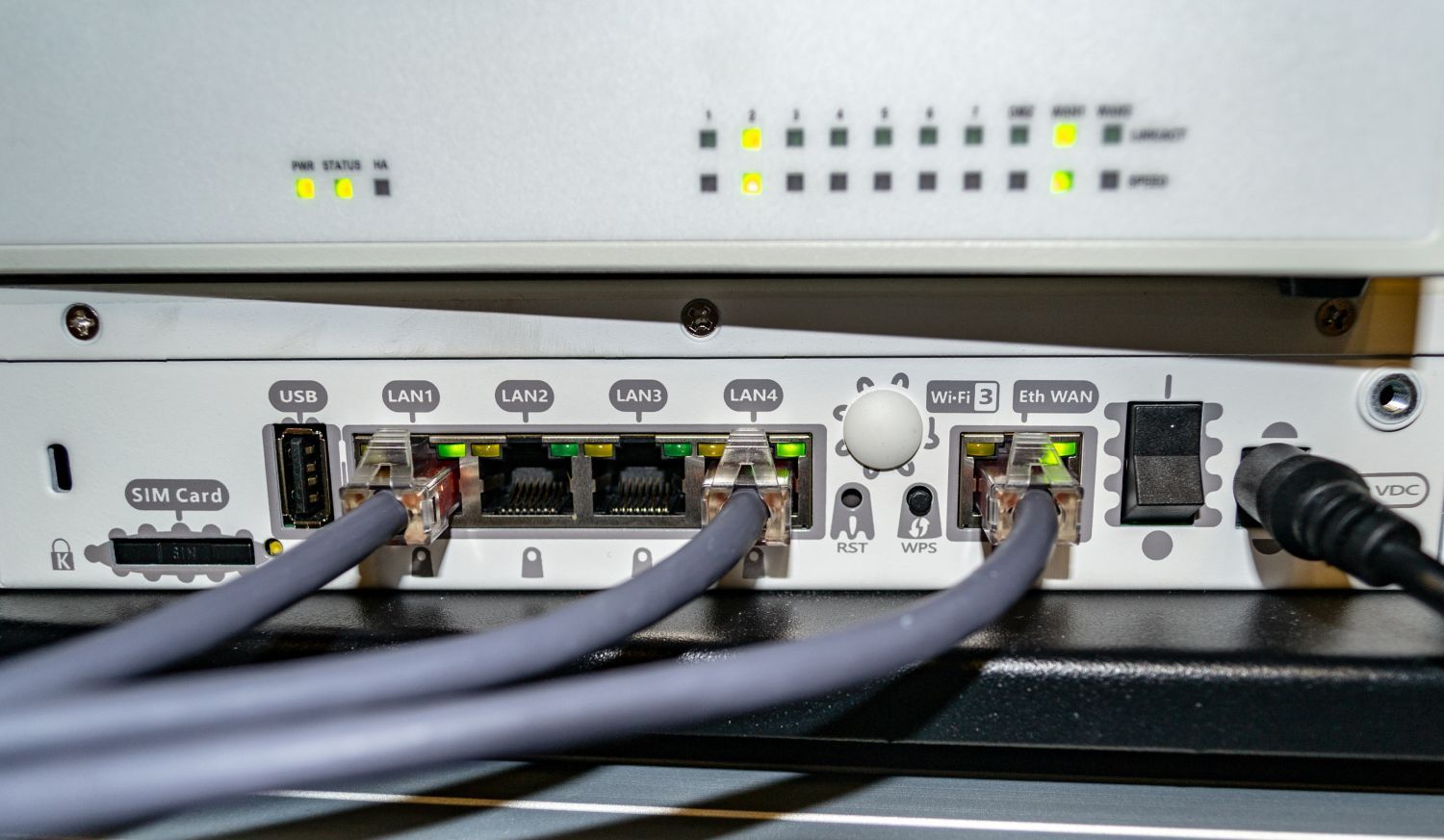
Transport alone is no longer the story. Increasingly, the value of an AV system lies in the orchestration layer that sits above it – the software platforms that monitor, switch, secure, license and automate modern AV networks. These systems now span hundreds of endpoints, diverse codecs, variable bandwidth conditions and continuous firmware dependencies – a level of complexity that can no longer be managed through hardware alone or by configuring devices in isolation.
This evolution is reflected in the past year's platform activity. Grass Valley's continued expansion of its AMPP (Agile Media Processing Platform) OS – including partnerships with Audinate to natively integrate Dante audio routing and device discovery, and with Hitomi Broadcast to incorporate precise signal-timing measurement – shows how broadcast-grade, software-defined infrastructure is filtering into wider pro AV workflows.
Meanwhile, EvertzAV's MMA25G IPMX-ready gateways, paired with its MAGNUM-OS orchestration suite, signal a broader move toward unified operational layers that treat AV, IT and cloud resources as one manageable fabric rather than a set of isolated systems. The shift is away from individual devices and toward the behaviour of the entire ecosystem.
This trend is likely to be highly visible at ISE 2026, where exhibitor narratives are expected to emphasise system intelligence over raw hardware specifications. Audinate is likely to continue advancing software-centred audio networking and device discovery. Grass Valley's focus should highlight interoperable media OS strategies, while EvertzAV is expected to underline the operational impact of IPMX adoption. Even companies traditionally defined by their physical endpoints – such as QSC and Sennheiser – are leaning into software ecosystems, monitoring layers and cloud management as part of their roadmap.
The increasing maturity of standards underlies this shift. IPMX, with its pro AV-oriented profiles for JPEG XS, HDCP, USB and EDID, aims to reduce integration friction. SMPTE ST 2110 remains central to mission-critical media workflows, while Dante continues to act as the predominant audio networking layer. The emerging picture is less about choosing a single protocol and more about how orchestration platforms harmonise multiple standards, allowing operators to focus on outcomes rather than infrastructure detail.
For integrators, this represents both an opportunity and a recalibration. Network design, once a niche requirement, is now inseparable from core AV practice. Firmware management and software licensing sit alongside familiar tasks such as specifying projection optics or planning loudspeaker coverage, reflecting a design process that spans physical components and ongoing operational needs. Clients increasingly expect systems that can adapt and scale over time instead of remaining static once deployed. As a result, commissioning now includes both hardware calibration and the configuration of monitoring dashboards, automated policies and cloud-connected services.
As AV over IP becomes ubiquitous, the competitive frontier is shifting into the orchestration layer – the intelligence that activates the network, shapes user experience and defines long-term system reliability. At ISE 2026, the question will not be whether AV should move to IP, but which software ecosystem will make that transition visible, manageable and genuinely transformative.
Stay informed!
ISE is the world-renowned annual tech show for the AV and systems integration industry, taking place in Barcelona, 3-6 February 2026. For more information on AV-over-IP infrastructure and other aspects of broadcast AV, and to discover more about ISE 2026 as details are released, sign up for updates.
Don't miss out – join our community today and keep up to speed with all the latest industry trends.
Related Content
-
) A digital twin is a live virtual model of a real‑world space, system or workflow, continuously updated with data so it behaves like its physical counterpart.
A digital twin is a live virtual model of a real‑world space, system or workflow, continuously updated with data so it behaves like its physical counterpart. -
) IPMX and ST 2110 both transport professional media over IP networks but differ mainly in who they serve.
IPMX and ST 2110 both transport professional media over IP networks but differ mainly in who they serve. -
) How do venues improve the fan experience? By removing friction at every stage.
How do venues improve the fan experience? By removing friction at every stage. -
) Broadcast TV isn't growing in the traditional sense. But instead, the definition of broadcasting is expanding.
Broadcast TV isn't growing in the traditional sense. But instead, the definition of broadcasting is expanding. -
) Edge computing is the processing of data close to where it is created and used, rather than sending it to a distant data centre or cloud platform.
Edge computing is the processing of data close to where it is created and used, rather than sending it to a distant data centre or cloud platform.
Featured Articles
-
) Spanning all eight halls at Fira de Barcelona Gran Via, ISE 2026 delivered four days of record-breaking energy, creativity, and innovation.
Spanning all eight halls at Fira de Barcelona Gran Via, ISE 2026 delivered four days of record-breaking energy, creativity, and innovation. -
) The initiative will create new opportunities for talent development, innovation and community projects across the sector
The initiative will create new opportunities for talent development, innovation and community projects across the sector -
) The Facts & Figures report for ISE 2026 is available to download.
The Facts & Figures report for ISE 2026 is available to download. -
) Bringing together startups, investors and industry leaders, the expanded show feature offers a strong platform for visibility, networking, and commercial opportunity.
Bringing together startups, investors and industry leaders, the expanded show feature offers a strong platform for visibility, networking, and commercial opportunity. -
) This new type of event brings together end users, creators and production specialists from broadcast, live events, advertising and gaming, combining creative showcases, editorial programming and netwo ...
This new type of event brings together end users, creators and production specialists from broadcast, live events, advertising and gaming, combining creative showcases, editorial programming and netwo ...
)
)

)
)
)
)
)
)
)
)
)

)
)
)
)
)
)
)
.png/fit-in/500x500/filters:no_upscale())
)
)
)
)
)
)
)
)

)
)
)
)
)
.png/fit-in/500x500/filters:no_upscale())
)
)
![rAVe [PUBS]](https://cdn.asp.events/CLIENT_Integrat_169E7B04_E6F3_39F6_8BE4DB27C54F731E/sites/ise-2027/media/libraries/partners/rAVe-PUBS-Google-Logo.png/fit-in/500x500/filters:no_upscale())
)
)
)
)
)
)
)
)
)
)
)
![[inst]ALLICHT](https://cdn.asp.events/CLIENT_Integrat_169E7B04_E6F3_39F6_8BE4DB27C54F731E/sites/ise-2027/media/libraries/partners/Inst_Allicht_Logo.png/fit-in/500x500/filters:no_upscale())
)
)
)
)
)
)
)