Session: Archive digitisation: why the footage on your shelf may no longer be yours
Why old video tape must be digitised now, what migration involves today and how brands turn archive footage into stores, venues and live shows, from ISE 2026.
- Event: ISE 2026
- From session: Unlocking the World’s Content – Making it Accessible, Discoverable and Driving New Revenue Streams
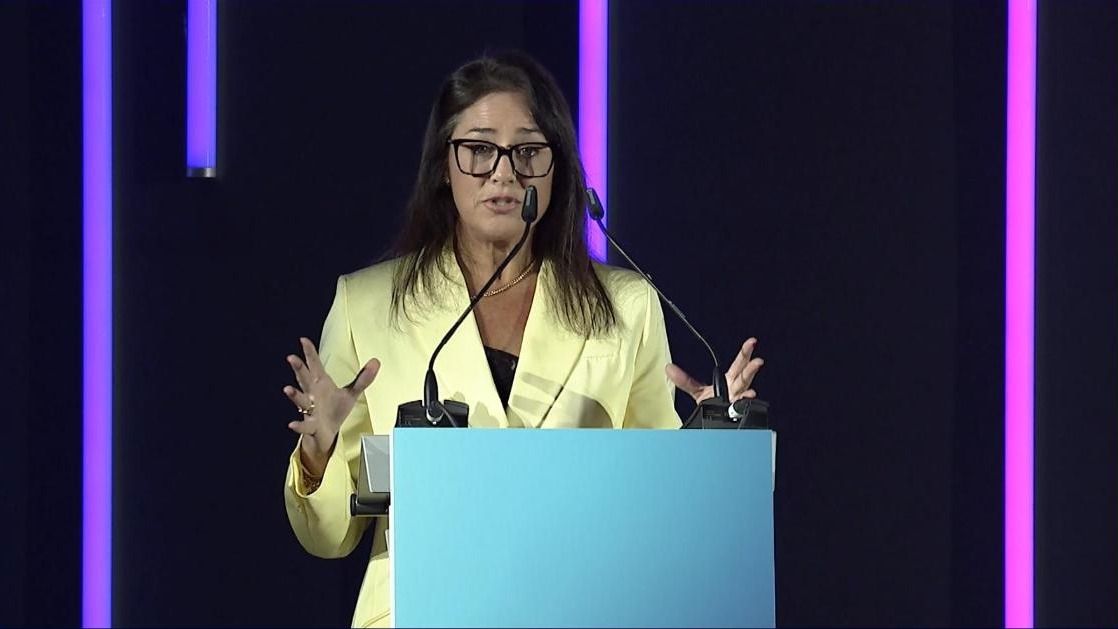
- Speaker: Heidi Shakespeare, CEO, Memnon Archiving Services
- Estimated read time: 9 minutes
- Watch the full session
Quick read summary
- Archive digitisation decides whether an organisation still owns its old footage, because tape that cannot be played, searched or upscaled earns nothing.
- Heidi Shakespeare of Memnon Archiving Services gives tape five to ten years before machines, parts and engineers run out.
- Memnon quoted for 7 million hours of migration in 12 months, and every hour still takes an hour of real-time playback.
- Brands from Nike to Guinness show that archive footage, turned into story, can fill films, stores, venues and live shows.
- AI can sharpen old footage only after it has been migrated, and it cannot recover a signal that has already decayed.
"If you can’t play it, search for it or upscale it, you don’t own it." Heidi Shakespeare, CEO of Memnon Archiving Services, said it on stage at ISE 2026 in Barcelona. She argued that archive digitisation is no longer a preservation chore but the test of whether an organisation still owns its past at all.
ISE is better known for 8K displays and spatial audio than for old tape, and that was her point. The industry has perfected the system, while the content it exists to show sits in dark warehouses, deteriorating.
Old footage is the source, not a storage cost
Shakespeare’s central claim is that an organisation’s old footage is its most underused asset, and that it loses value every year it stays on tape. She prefers not to call it legacy content. She calls it the source.
If an organisation existed before the millennium, she said, its most valuable footage is probably on DigiBeta broadcast tape, an ageing LTO (Linear Tape-Open) data tape or a hard drive nobody dares plug in. That material represents millions already spent on advertising campaigns, research breakthroughs and sponsorship moments. In most organisations, she suspects, it produces nothing but a monthly storage invoice.
Without a plan to start migrating within roughly five years, she told the audience, an organisation might as well stop paying for storage.
Why is archive digitisation running out of time?
Archive digitisation is running out of time because the tapes, the playback machines and the engineers who repair them are all disappearing together. Shakespeare gave tape a horizon of five, possibly ten, years before it deteriorates past recovery.
She cited a 2022 UNESCO report that named 2025 as the digitisation deadline, the point after which it expected cost-effective transfer to become close to impossible. That date has passed. Migration is still possible, Shakespeare said, but the report got one thing plainly right.
It’s never going to be cheaper to migrate your tape tomorrow than it was yesterday.
How long is the queue to migrate a video archive?
The queue now runs to millions of hours, far longer than the world’s capacity to clear it. In its first 20 years, Memnon digitised 4 million hours of content. In the last 18 months alone it digitised 1 million hours. In the last 12 months it quoted to migrate 7 million hours, roughly 150 petabytes.
Speed is the hard constraint. Migration happens in real time, so a video archive of 7 million hours needs at least 7 million hours of playback, plus preparation. Two years ago, one of Memnon’s largest facilities ran 32 lines of simultaneous ingest. It now runs 102. Even that does not close the gap, she said, and some content will be lost whatever anyone does.
Which brands are already spending their archives?
Several global brands have already turned archive footage into films, stores and live shows. Shakespeare’s distinction is simple: if the source is the data, lore is the meaning. A brand with lore can charge a premium and survive a product failure, which is why she treats brand heritage as an active asset rather than a sunk cost.
Nike built a short film on the story of Air Max from 1970s sketches and old VHS recordings of its designers arguing over the concept. She said it has drawn nearly 8 million YouTube views. AT&T solved a dead zone in its Chicago flagship store by mining 1930s laboratory film. Customers point an iPad at what looks like a still image and the old film comes to life, a pattern explored in why physical retail is becoming more immersive.
The Guinness Storehouse in Dublin runs on more than two centuries of source material, and it spawned a Netflix series. Heineken synchronised 289 mobile phones into a single display for fans far from the UEFA Champions League final, and at the Sphere the Eagles had decades of their own imagery raining down from the ceiling. Venues chasing the same reaction face the questions in five ways technology can improve the fan experience.
Isn’t a climate-controlled vault enough to protect a media archive?
No. Shakespeare said the most dangerous assumption she hears in boardrooms is that tapes in a high-spec, climate-controlled vault are safe. A media archive that nobody can play is, in her phrase, "very expensive magnetic bricks".
Every format is now a problem, including the ones the industry trusted. Memnon used to clean perhaps 5 per cent of DigiBeta tapes before playback, and now cleans every one, because years of storage left them dirtier and stickier. "There is no such thing as a simple format to migrate anymore," she said.
New machines, heads and parts are no longer made. Memnon keeps around 4,000 assets, at least 1,000 of them donor machines kept for parts, while the engineers who know these machines are leaving the industry. She also warned that a hard drive is not an archival format: Memnon regularly receives drives that were used as archives and can no longer be accessed.
Can AI rebuild old footage later?
AI cannot rebuild footage that was never migrated. It can only work on what has already been captured.
Right now, everyone is talking about AI being a creator, but AI is not the source. AI is a processor.
Feed generative tools generic stock material, she said, and the output is generic. Feed them an organisation’s own engineering breakthroughs, its founder’s actual voice and its design lineage, and the output becomes distinctive. "You are not archiving for the past anymore," she told the audience. Her point was that an organisation’s own archive now trains its future on an accurate record of its past.
AI upscaling can also sharpen a blurry licence plate or an old VHS recording into usable detail. In the public sector, she said, restored CCTV or dash cam footage can mean the difference between a life sentence and an acquittal. But AI needs a high-fidelity ingest, and can do nothing with a tape that has already turned to dust.
FAQ
- Why is old video tape harder to migrate than it used to be? Old video tape has become dirtier and stickier with age, and the machines, heads and parts to play it are no longer made. Heidi Shakespeare of Memnon Archiving Services said Memnon now cleans every DigiBeta tape and rebuilds machines from donor units.
- How long does archive digitisation of a large tape collection take? Tape migration runs in real time, so every hour of a video archive needs at least an hour of playback, plus preparation. Heidi Shakespeare said 7 million hours of content means more than 7 million hours of machine time.
- Can AI upscaling restore footage that has not been digitised? No. AI upscaling needs a high-fidelity digital ingest before it can sharpen anything. Memnon Archiving Services CEO Heidi Shakespeare said AI cannot enhance content still on tape, or a signal that has already decayed.
- Is a hard drive a safe place to keep archive footage? A hard drive is not an archival format, according to Heidi Shakespeare of Memnon Archiving Services. Memnon regularly receives drives that were used as archives and can no longer be accessed.
The soul of the system is already on the shelf
Shakespeare’s sharpest point was not about tape at all. It was about where value sits in a show built on hardware. ISE is a showcase for the system, the displays, the arrays and the control rooms, and she does not dispute their power. Her argument is that a system is only as moving as what it plays, and the most moving material many organisations own is already sitting in their own warehouses.
That reframes archive digitisation as a commercial decision rather than an archival one. Nike, AT&T, Guinness and the Eagles each went back to their own brand heritage and gave it a story, a space and an audience. Her practical advice was to digitise for discovery: if a creative team cannot find a clip in five seconds, it does not exist for strategic purposes.
The constraint is time, and it only runs one way. Migration cannot run faster than real time, and every year of delay pushes an organisation further back in a queue already measured in millions of hours.
For integrators, the practical question to ask a client before specifying the next experience wall is what footage they hold, and whether anyone can still play it. For brand owners, it is whether their story will still exist in ten years. Her closing line put it in five words: "The source is the soul."
About the speaker
Heidi Shakespeare
CEO, Memnon Archiving Services
Shakespeare started her career in advertising in the early 1990s, and Memnon migrates legacy tape and film at scale for broadcasters, governments, brands and indigenous communities.
More on archives and media at ISE
Archives, rights and new revenue are live topics for broadcasters.
- Broadcast and streaming at ISE: media distribution and content management on the floor.
- Broadcast AV Summit sessions: where broadcasters and content owners meet.
- Everything on the ISE programme: every summit, keynote and show-floor stage.
- New to ISE? Get your bearings with the first-time visitor guide.
Featured Articles
-
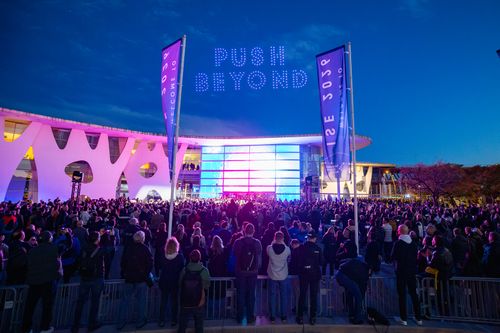 Spanning all eight halls at Fira de Barcelona Gran Via, ISE 2026 delivered four days of record-breaking energy, creativity, and innovation.
-
 The initiative will create new opportunities for talent development, innovation and community projects across the sector
-
 The Facts & Figures report for ISE 2026 is available to download.
-
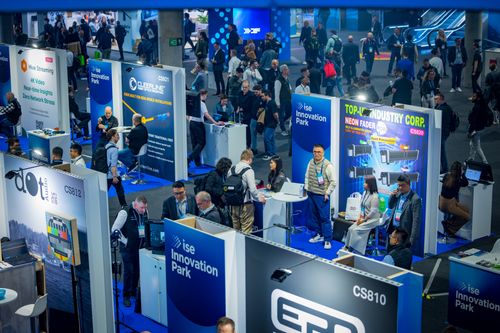 Bringing together startups, investors and industry leaders, the expanded show feature offers a strong platform for visibility, networking, and commercial opportunity.
-
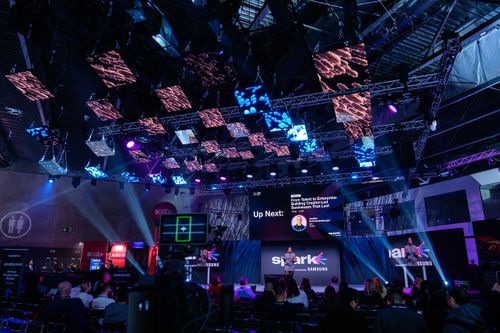 This new type of event brings together end users, creators and production specialists from broadcast, live events, advertising and gaming, combining creative showcases, editorial programming and netwo ...