

Five ways technology can improve the fan experience
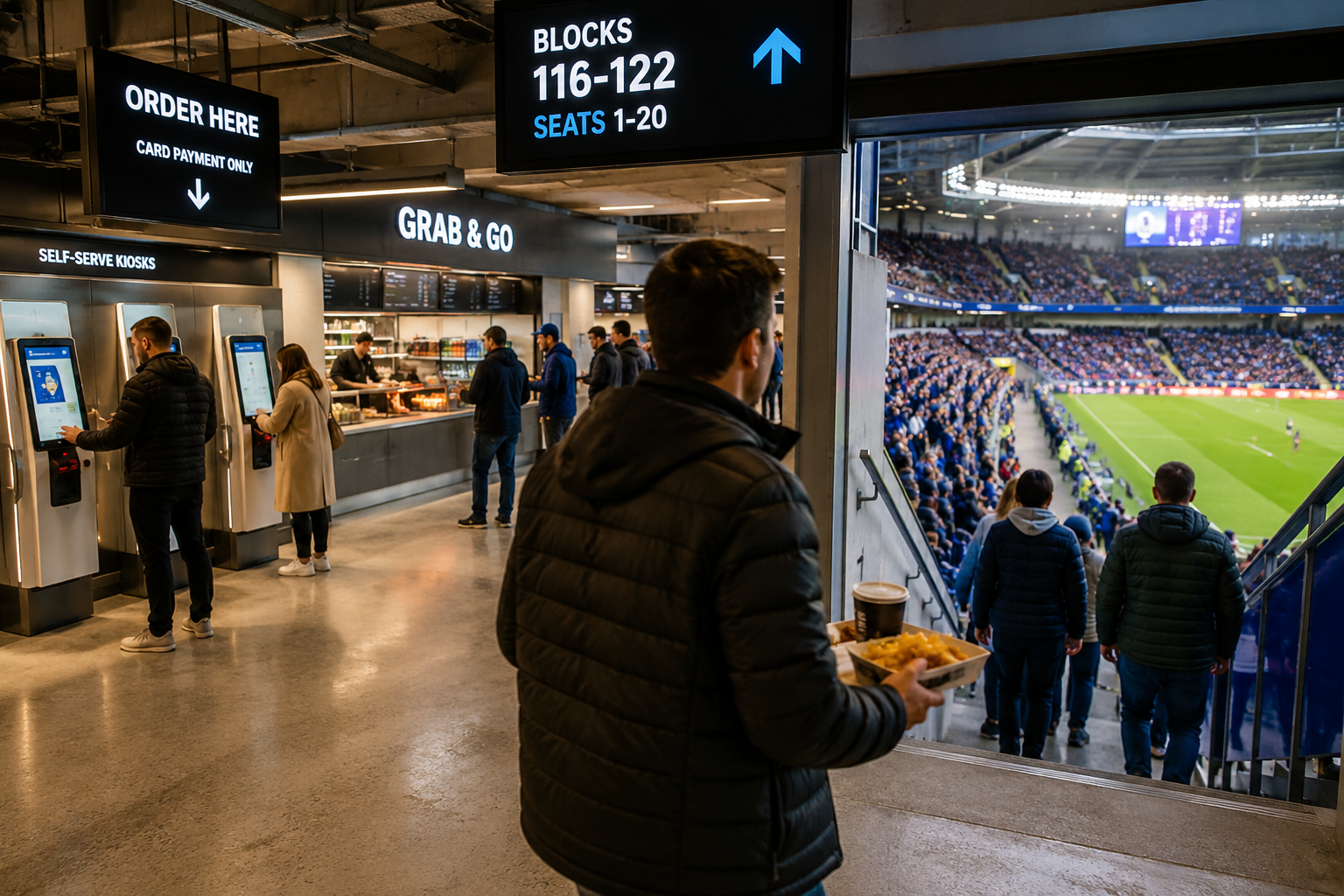
For venue operators, that distinction matters. Fans may remember a spectacular LED display or extraordinary sound system, but they also remember spending 30 minutes in a queue, struggling to find the right entrance or missing part of the performance while waiting for a drink.
Improving fan experience therefore starts with a deceptively simple question: where does friction occur?
1. Make getting into the venue easier
The experience begins long before the performance or match.
Mobile ticketing can simplify purchasing and entry, while digital communications can provide travel information, entrance details and event updates before visitors arrive. Once they reach the venue, well-designed access systems can help operators process large numbers of people quickly without making security feel unnecessarily intrusive.
Technology can also help operations teams respond when conditions change. Real-time information about crowd movements, for example, can be used to direct visitors towards less congested entrances.
The objective isn't to make entry more technological. It's to make it less noticeable.
2. Help people find their way
Large stadiums, arenas and festival sites can be confusing, particularly for first-time visitors.
Digital signage and dynamic wayfinding allow information to change according to circumstances rather than relying entirely on permanent signs. Displays can direct people towards seats, hospitality areas, toilets and transport connections – or provide alternative routes when particular areas become congested.
This is where connected systems become particularly valuable. When signage can respond to information from venue operations rather than simply displaying a predetermined playlist, communications become part of crowd management.
3. Reduce queues for food and merchandise
Few technologies improve an event by themselves quite as effectively as giving fans more time to enjoy it.
Mobile ordering, self-service kiosks, contactless payments and checkout-free retail are all being used to reduce one of the most persistent sources of frustration inside venues.
At Manchester's Co-op Live, for example, an autonomous AI-powered self-service market allows visitors to tap a payment method on entry, select their food and drinks and leave without visiting a conventional checkout. Computer-vision technology automatically identifies their purchases. Launched in March 2026, the market was described as the first installation of its kind in Europe.
The important innovation from the fan's perspective isn't AI. It's the time saved.
4. Make every seat feel part of the event
Removing friction is only half the equation. Technology can also make the event itself more compelling.
Large-format LED displays can bring spectators closer to the action, particularly in large venues where many seats are some distance from the pitch or stage. High-quality and increasingly immersive audio can create a stronger sense of participation, while lighting, live content and audience interaction can help transform spectators into active participants.
The potential of audio was demonstrated particularly clearly in ISE 2026's Venue of the Future session at the Live Events Stage, which explored how a new acoustic system at Stockholm's Avicii Arena was designed to make a 14,000-capacity venue feel more intimate and connected. The project included a movable acoustic ceiling and an electroacoustic enhancement system that allows crowd sound to be shared across different parts of the arena.
Crucially, these technologies work best as part of the experience rather than competing with it. A bigger screen isn't automatically a better experience, just as a louder PA isn't automatically better sound.
The question should always be: what does this add for the audience?
5. Keep fans connected
Connectivity now underpins much of the venue journey.
Visitors expect to access tickets, message friends, share content and use venue services from their phones. Meanwhile, venue teams rely on networks for everything from payment systems and digital signage to production communications and operational monitoring.
Reliable connectivity can also allow venues to maintain the relationship after visitors leave, providing relevant content, future event information and personalised communications.
This makes network infrastructure an increasingly important part of fan experience – even though most fans will never know it is there.
Better fan experience doesn't mean more technology
The common thread across all five areas is not technology itself. It is simplicity.
A venue could deploy hundreds of digital touchpoints and still deliver a frustrating experience if those systems are disconnected or poorly designed. Conversely, relatively modest investments in entry, wayfinding, connectivity or payments can have an outsized effect if they solve genuine visitor problems.
That makes fan experience a useful lens through which to make technology decisions: does this make attending an event noticeably better?
At Integrated Systems Europe, venue owners and operators can explore technologies spanning digital signage, displays, audio, networking, communications and control, and see how these different systems can work together across the visitor journey.
Because the smartest venue isn't necessarily the one with the most technology. It's the one where technology gets out of the way and lets fans enjoy the event.
Frequently Asked Questions
What technology can improve the fan experience?
Mobile ticketing, access systems, digital signage, venue apps, contactless payments, high-quality displays and audio, and reliable connectivity can all improve different stages of the visitor journey.
How can venues reduce queues?
Digital ticketing, dynamic crowd information, mobile ordering, self-service systems and frictionless payment technologies can reduce waiting at entrances, concessions and merchandise outlets.
Why is connectivity important for fan experience?
Reliable connectivity supports mobile tickets, venue apps, payments and audience communications while allowing visitors to stay connected and share their experience.
Can smaller venues improve fan experience with technology?
Yes. Improvements do not have to involve major infrastructure projects. Removing specific sources of friction through better signage, payments, communications or connectivity can make a significant difference.
 Stay ahead – Stay informed.
As an AV specialist or industry leader, you recognise how crucial it is to keep up with evolving trends, new technologies, and notable happenings within the audiovisual world. That's why we're delighted to invite you to receive exclusive email updates about ISE – the world-renowned annual tech show for the systems integration and audiovisual industry.
When you subscribe, you'll be kept up to speed with insightful commentary on the freshest developments in AV, get early looks at what's planned for the ISE content schedule – including headline speakers – and benefit from in-depth reporting on the show's standout attractions.
Sign up now to stay at the forefront of audiovisual innovation and expertise.
Further reading
Find out more about live events, audio, lighting and staging at ISE
Find out more about digital signage at ISE
Related articles
- Stadiums are becoming technology platforms – Discover how networking, AV, analytics and audience-engagement technologies are converging to create more connected, responsive stadium experiences.
- Your most valuable ticket may never reach the general public – Explore how technology is helping venues turn premium hospitality into more personalised, seamless and valuable fan experiences.
- 5G is finally changing live events – but not in the way you think – See how 5G and private networks are enabling more flexible, connected live-event environments behind the scenes.
Related Content
-
) Technology does not automatically make a venue smarter. The real transformation comes when tech is connected to operational and commercial objectives.
Technology does not automatically make a venue smarter. The real transformation comes when tech is connected to operational and commercial objectives. -
) Calling a new venue "future-proof" has always been risky. Today, it is becoming harder still.
Calling a new venue "future-proof" has always been risky. Today, it is becoming harder still. -
) Why the biggest live productions now resemble infrastructure projects rather than concert tours.
Why the biggest live productions now resemble infrastructure projects rather than concert tours. -
) For years, 5G was set to revolutionise live events: faster downloads, lower latency, better connectivity, smarter venues. The reality has been more complicated.
For years, 5G was set to revolutionise live events: faster downloads, lower latency, better connectivity, smarter venues. The reality has been more complicated. -
) Ticketing is becoming one of the most valuable data assets in the live events industry.
Ticketing is becoming one of the most valuable data assets in the live events industry.
Featured Articles
-
) Spanning all eight halls at Fira de Barcelona Gran Via, ISE 2026 delivered four days of record-breaking energy, creativity, and innovation.
Spanning all eight halls at Fira de Barcelona Gran Via, ISE 2026 delivered four days of record-breaking energy, creativity, and innovation. -
) The initiative will create new opportunities for talent development, innovation and community projects across the sector
The initiative will create new opportunities for talent development, innovation and community projects across the sector -
) The Facts & Figures report for ISE 2026 is available to download.
The Facts & Figures report for ISE 2026 is available to download. -
) Bringing together startups, investors and industry leaders, the expanded show feature offers a strong platform for visibility, networking, and commercial opportunity.
Bringing together startups, investors and industry leaders, the expanded show feature offers a strong platform for visibility, networking, and commercial opportunity. -
) This new type of event brings together end users, creators and production specialists from broadcast, live events, advertising and gaming, combining creative showcases, editorial programming and netwo ...
This new type of event brings together end users, creators and production specialists from broadcast, live events, advertising and gaming, combining creative showcases, editorial programming and netwo ...
)
)

)
)
)
)

)
)
)
)
)
)
)
)
)
)
)
)
)
)
)
)
)
)
)
)
)
)
)
)
)
)
)
)
)
)
)
)
)
)
)
)
)
)
)
)
)
)
)
)
)
)
)
)
)