

The race for low-latency streaming
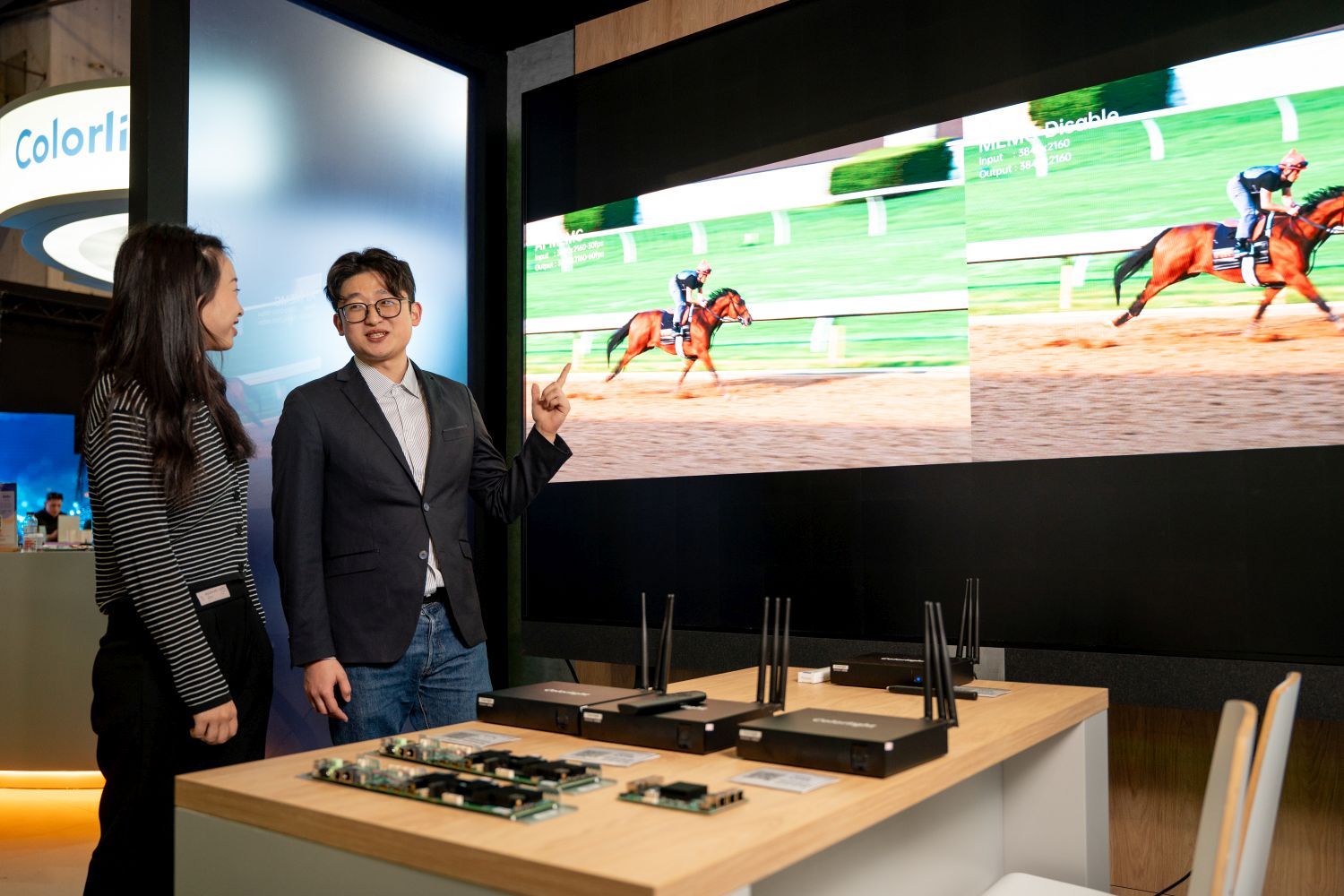
For live sports and interactive broadcasting, the time between an event happening and viewers seeing it can be as important as the quality of the picture. Reducing that delay is becoming a priority for streaming technology providers.
Revised 20 October 2026
A football fan hears neighbours celebrating a goal while the ball is still in midfield on their screen. A phone notification announces the winner of a race before the final lap has finished. Both are familiar examples of a problem that continues to challenge live streaming: latency.
The issue is measurable. In November 2024, the UK's Digital TV Group (DTG) reported significant differences in streaming delays across devices and services during major sporting events. Although performance had improved, some devices were still delivering live content more than a minute behind the event itself.
For broadcasters and streaming platforms, this raises a question that cannot be answered simply by increasing resolution or bitrate. How close to real time does a live stream need to be, and what compromises are acceptable to achieve it?
Why latency matters to live audiences
Latency is the time between an event being captured by a camera and the corresponding pictures appearing on a viewer's screen. Known as glass-to-glass latency, it includes delays introduced by encoding, processing, transmission, distribution and playback.
For prerecorded entertainment, this delay is largely irrelevant. For live sport, auctions, esports and interactive programming, it can fundamentally affect the experience.
The Internet Engineering Task Force's RFC 9317 identifies a glass-to-glass delay of under ten seconds as a target for low-latency live delivery. It specifically highlights the problem of sports fans hearing reactions or receiving information about an event before seeing it themselves.
However, low latency is not necessarily the viewer's overriding concern. Research commissioned by InterDigital in 2025 found that sports streaming audiences continued to encounter problems with buffering, picture quality and lag. Among viewers aged 18-24, 31% cited poor video quality, while 20% identified lag as a common problem.
The implication is that broadcasters need to improve timeliness without sacrificing the stability and picture quality audiences already expect.
Where the delay comes from
Reducing latency is more complicated than improving the speed of an internet connection.
A live video signal passes through several stages before reaching the viewer. Cameras capture the images, encoders compress them, packaging systems prepare them for distribution, and content delivery networks carry the stream towards playback devices. Each stage can introduce delay.
Video players also maintain buffers to accommodate variations in network performance and prevent interruptions. As the DASH Industry Forum's interoperability guidelines explain, larger buffers improve playback stability but increase latency.
Balancing these competing requirements becomes more challenging when a single live event must reach large audiences using different networks, devices and viewing applications.
Technologies bringing streaming closer to real time
Several technologies are helping broadcasters reduce delays, although they address different parts of the delivery chain.
Low-Latency HLS and Low-Latency DASH allow players to begin receiving smaller portions of video segments before complete segments are available. This can reduce the time required for packaging and playback while retaining the advantages of HTTP-based streaming and established content delivery networks.
WebRTC takes a different approach. Designed for real-time communications, it supports very low-latency audio and video exchange, making it particularly relevant to interactive applications. However, delivering WebRTC streams to very large audiences can require different distribution architectures from conventional OTT streaming.
Transport protocols also have a role. Secure Reliable Transport (SRT) and Reliable Internet Stream Transport (RIST) are used to carry video across potentially unreliable networks, supporting broadcast contribution and remote production workflows. They can help maintain reliable transmission with controlled delay, but do not independently determine the latency experienced by the end viewer.
The important distinction is between improving individual workflow stages and reducing total glass-to-glass latency. A fast contribution link cannot compensate for excessive buffering elsewhere in the delivery chain.
Low latency introduces new operational trade-offs
Broadcasters cannot simply remove every buffer and expect the stream to remain reliable.
The optimum approach depends on the application. A large sporting event might prioritise consistent delivery to millions of viewers with a delay of several seconds. An interactive auction or live audience participation format may require substantially faster responses.
Reducing latency can affect encoding efficiency, adaptive bitrate performance and the ability to recover from network disruption. It can also increase infrastructure complexity and operating costs.
The challenge for engineering teams is therefore to establish an appropriate latency target and understand what achieving it will require.
That involves measuring performance across the entire workflow, rather than relying on figures for individual products or protocols. It also means testing the experience on different playback devices and under varying network conditions.
Consistency matters alongside absolute speed. If viewers watching the same event receive pictures at substantially different times, interactive features and shared viewing experiences become harder to coordinate.
What low-latency streaming means for broadcast AV
The growing importance of latency has implications beyond conventional television broadcasting.
Enterprise video production, live events, remote contribution and hybrid experiences all depend on workflows that bring together professional AV, IT networking and broadcast technologies.
An organisation producing a live presentation, for example, may need to distribute high-quality video to remote participants while enabling questions and audience interaction. The acceptable delay will depend on whether viewers are simply watching or actively contributing.
For AV integrators and production teams, this makes latency an important consideration when specifying encoders, network infrastructure, cloud production platforms and streaming systems.
It also creates a need for more detailed conversations with technology suppliers. Rather than asking whether a system supports low-latency streaming, buyers can examine its measured end-to-end performance, resilience under packet loss and compatibility with existing production infrastructure.
Exploring live production technologies at ISE 2027
At Integrated Systems Europe (ISE) 2027, taking place at Fira de Barcelona, Gran Via, from 2-5 February, visitors can explore technologies used throughout the live video production and distribution chain.
The show's broadcast solutions offering brings together equipment and systems relevant to video capture, encoding, production, networking and streaming.
For broadcast engineers, AV integrators and enterprise production teams, the opportunity is to compare how different technologies address the practical challenges of delivering live content.
Questions worth exploring include how encoding settings affect delay, how systems respond to unreliable networks and where latency can be measured across a complete workflow.
Low-latency streaming is not a contest to achieve the smallest possible number of milliseconds. It is about delivering the right balance of immediacy, picture quality and reliability for each application.
As more live experiences incorporate audience interaction and multiple viewing platforms, understanding that balance will become increasingly important for everyone involved in producing and distributing video.
Stay ahead – Stay informed.
As an AV specialist or industry leader, you recognise how crucial it is to keep up with evolving trends, new technologies, and notable happenings within the audiovisual world. That's why we're delighted to invite you to receive exclusive email updates about ISE – the world-renowned tech show for the systems integration and audiovisual industry.
When you subscribe, you'll be kept up to speed with insightful commentary on the freshest developments in AV, get early looks at what's planned for the ISE content schedule – including headline speakers – and benefit from in-depth reporting on the show's standout attractions.
Sign up now to stay at the forefront of audiovisual innovation and expertise.
Further reading
Discover broadcast solutions at ISE
Related Content
-
) A digital twin is a live virtual model of a real‑world space, system or workflow, continuously updated with data so it behaves like its physical counterpart.
A digital twin is a live virtual model of a real‑world space, system or workflow, continuously updated with data so it behaves like its physical counterpart. -
) IPMX and ST 2110 both transport professional media over IP networks but differ mainly in who they serve.
IPMX and ST 2110 both transport professional media over IP networks but differ mainly in who they serve. -
) How do venues improve the fan experience? By removing friction at every stage.
How do venues improve the fan experience? By removing friction at every stage. -
) Broadcast TV isn't growing in the traditional sense. But instead, the definition of broadcasting is expanding.
Broadcast TV isn't growing in the traditional sense. But instead, the definition of broadcasting is expanding. -
) Edge computing is the processing of data close to where it is created and used, rather than sending it to a distant data centre or cloud platform.
Edge computing is the processing of data close to where it is created and used, rather than sending it to a distant data centre or cloud platform.
Featured Articles
-
) Spanning all eight halls at Fira de Barcelona Gran Via, ISE 2026 delivered four days of record-breaking energy, creativity, and innovation.
Spanning all eight halls at Fira de Barcelona Gran Via, ISE 2026 delivered four days of record-breaking energy, creativity, and innovation. -
) The initiative will create new opportunities for talent development, innovation and community projects across the sector
The initiative will create new opportunities for talent development, innovation and community projects across the sector -
) The Facts & Figures report for ISE 2026 is available to download.
The Facts & Figures report for ISE 2026 is available to download. -
) Bringing together startups, investors and industry leaders, the expanded show feature offers a strong platform for visibility, networking, and commercial opportunity.
Bringing together startups, investors and industry leaders, the expanded show feature offers a strong platform for visibility, networking, and commercial opportunity. -
) This new type of event brings together end users, creators and production specialists from broadcast, live events, advertising and gaming, combining creative showcases, editorial programming and netwo ...
This new type of event brings together end users, creators and production specialists from broadcast, live events, advertising and gaming, combining creative showcases, editorial programming and netwo ...
)
)

)
)
)
)
)
)
)
)
)
)
)
)
)
)
)
)
)

)
)
)
)
)
)
)
)
)
)
)
)
)
)
)
)
)
)
)
)

)
)
)
)
)
)
)
)
)
)
)
)
)
.png/fit-in/500x500/filters:no_upscale())
)
)
)