
Tech convergence and the shift towards IP-based systems
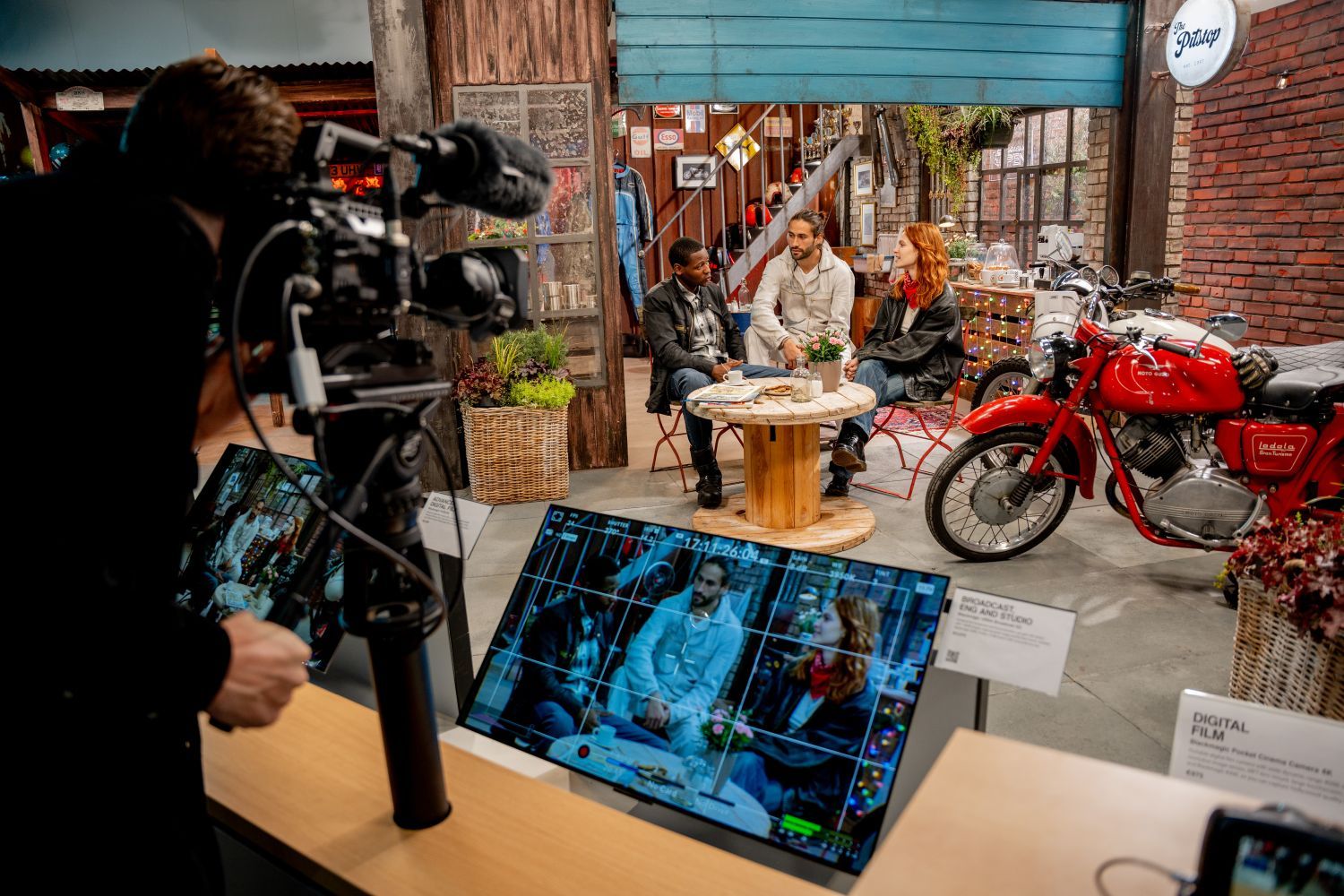
The convergence of pro AV and broadcast has moved from an emerging trend to an operational reality across today’s integrated systems architectures – particularly in enterprise studios, higher education, corporate live-event environments, esports facilities and hybrid production spaces.
While the highest tiers of broadcast and traditional AV still maintain distinct engineering requirements, the foundational technologies, workflows and manufacturer roadmaps underpinning both sectors are increasingly aligned. The result is a shared shift in how modern production and experience-delivery environments are being designed and operated.
Wide AVoIP adoption
A major catalyst behind this alignment is the industry-wide adoption of IP as the common transport and orchestration layer. Whether through SMPTE ST 2110 in broadcast applications, NDI and Dante AV in production workflows, or standards-based AVoIP ecosystems in corporate deployments, the market is consolidating around packet-based architectures that prioritise flexibility, scalability and interoperability. For system designers, this effectively collapses the old distinction between ‘AV' and ‘broadcast' infrastructure, replacing it with a unified network-centric model supported by shared toolsets, converged control systems and increasingly similar operational expectations.
Sony's “ever-expanding” Networked Live ecosystem – launched in 2022 and demonstrated prominently at recent ISE editions – remains one of the most visible indicators of this direction, combining ST 2110 production, cloud-processing pipelines and facility-wide orchestration into an architecture that now serves both OB-grade requirements and the fast-growing market for enterprise and education studios.
Ross Video's Ultrix “hyperconverged” platform, long established in broadcast and live events, is also gaining traction across enterprise studios, campus production hubs and hybrid workflows showcased at ISE. Its integration of routing, multiviewing, audio processing and hybrid SDI/IP signal management within a single frame illustrates how mixed-environment designs can now be delivered with far fewer standalone subsystems.
On the audio side, Q-SYS continues to embed itself within converged AV/broadcast environments. Its modern control layer and native support for Dante, AES67 and broadcast-class PTZ integration make it increasingly relevant to corporate studios, hybrid event spaces and production-ready meeting environments – the kinds of applications now reflected within ISE's expanding Broadcast AV Zone.
Creation and delivery overlap
Convergence is most evident in the spaces where content creation and experience delivery overlap. Corporations now expect broadcast-grade production values for CEO communications and town halls. Universities are building in-house studios that rival regional broadcasters, driven by hybrid learning and rising student media production. Esports environments are being engineered from the outset with blended AV/broadcast signal chains, where latency-sensitive gameplay, audience immersion and streaming workflows must coexist seamlessly.
This shift is also reshaping professional skillsets. Integrators who once specialised in either AV or broadcast are increasingly required to operate across both, driving demand for deeper expertise in network architecture, PTP (Precision Time Protocol) timing, multicast behaviour, redundancy models and IP-centric control environments. These capabilities are now influencing tender specifications, procurement and ongoing service strategies.
Convergence is not a transitional moment but a structural shift. The combined pro AV and broadcast ecosystem is moving decisively toward flexible, software-defined infrastructures in which processing, routing and control operate as distributed services rather than fixed-function hardware blocks – a direction clearly reflected across major manufacturer roadmaps.
As ISE 2026 approaches, momentum behind IP-based, cross-disciplinary workflows will continue to accelerate, driven by maturing ST 2110 and NMOS interoperability, the rise of cloud-enabled production models, and growing demand for broadcast-quality content across enterprise, education and live-event environments. For integrators, manufacturers and end users, the opportunity lies in embracing this unified ecosystem – one that dissolves the AV/broadcast divide and redefines what is possible in modern content creation, communication and experience delivery.
Stay informed!
ISE is the world-renowned annual tech show for the AV and systems integration industry, taking place in Barcelona, 3-6 February 2026. For more information on AV-over-IP infrastructure and other aspects of broadcast AV, and to discover more about ISE 2026 as details are released, sign up for updates.
Don't miss out – join our community today and keep up to speed with all the latest industry trends.
Related Content
-
) A digital twin is a live virtual model of a real‑world space, system or workflow, continuously updated with data so it behaves like its physical counterpart.
A digital twin is a live virtual model of a real‑world space, system or workflow, continuously updated with data so it behaves like its physical counterpart. -
) IPMX and ST 2110 both transport professional media over IP networks but differ mainly in who they serve.
IPMX and ST 2110 both transport professional media over IP networks but differ mainly in who they serve. -
) How do venues improve the fan experience? By removing friction at every stage.
How do venues improve the fan experience? By removing friction at every stage. -
) Broadcast TV isn't growing in the traditional sense. But instead, the definition of broadcasting is expanding.
Broadcast TV isn't growing in the traditional sense. But instead, the definition of broadcasting is expanding. -
) Edge computing is the processing of data close to where it is created and used, rather than sending it to a distant data centre or cloud platform.
Edge computing is the processing of data close to where it is created and used, rather than sending it to a distant data centre or cloud platform.
Featured Articles
-
) Spanning all eight halls at Fira de Barcelona Gran Via, ISE 2026 delivered four days of record-breaking energy, creativity, and innovation.
Spanning all eight halls at Fira de Barcelona Gran Via, ISE 2026 delivered four days of record-breaking energy, creativity, and innovation. -
) The initiative will create new opportunities for talent development, innovation and community projects across the sector
The initiative will create new opportunities for talent development, innovation and community projects across the sector -
) The Facts & Figures report for ISE 2026 is available to download.
The Facts & Figures report for ISE 2026 is available to download. -
) Bringing together startups, investors and industry leaders, the expanded show feature offers a strong platform for visibility, networking, and commercial opportunity.
Bringing together startups, investors and industry leaders, the expanded show feature offers a strong platform for visibility, networking, and commercial opportunity. -
) This new type of event brings together end users, creators and production specialists from broadcast, live events, advertising and gaming, combining creative showcases, editorial programming and netwo ...
This new type of event brings together end users, creators and production specialists from broadcast, live events, advertising and gaming, combining creative showcases, editorial programming and netwo ...
)
)
)
)
)
)
)
![rAVe [PUBS]](https://cdn.asp.events/CLIENT_Integrat_169E7B04_E6F3_39F6_8BE4DB27C54F731E/sites/ise-2027/media/libraries/partners/rAVe-PUBS-Google-Logo.png/fit-in/500x500/filters:no_upscale())
)
)
)
)
)
)
)
)
)
)
)
)
.png/fit-in/500x500/filters:no_upscale())
)
)
)
)
)
![[inst]ALLICHT](https://cdn.asp.events/CLIENT_Integrat_169E7B04_E6F3_39F6_8BE4DB27C54F731E/sites/ise-2027/media/libraries/partners/Inst_Allicht_Logo.png/fit-in/500x500/filters:no_upscale())
)
)
)
)
)
)
)
)
)
)
)
)
)
)
)
)
)
)
)
)
)
)
)
)
)
)
)
)