

Why smart homes still go wrong ' even when the technology is right
The biggest problem in smart home projects is often not the technology itself.
It is that the right people are brought into the conversation too late.
Today's connected homes depend on lighting control, networking, security, automation, climate, audio, shading, wellness technology and energy management all working together. But while the technology has advanced quickly, project workflows have not always kept pace.
The result is a growing gap between what homeowners expect and how many projects are still delivered.
Too many residential projects still treat technology as a late-stage add-on – and that is exactly where integration problems begin.
Modern homeowners expect seamless experiences where systems work together invisibly and intuitively. They do not care which manufacturer supplied the lighting controls or who installed the network infrastructure. They simply expect everything to work – elegantly, reliably and without friction.
Delivering that level of integration requires far deeper collaboration between architects, interior designers, developers, consultants, integrators and technology manufacturers from the earliest stages of a project.
And the industry is beginning to respond.
ISE exhibitors such as Crestron, Control4 and Savant show where the industry is heading: towards ecosystems where entertainment, lighting, climate and control are designed as one connected experience, not as separate layers added at the end.
This growing convergence is changing how projects are designed from the ground up.
Architects now need to understand infrastructure requirements earlier in the process. Interior designers are balancing aesthetics with hidden technology integration. Developers are recognising that seamless connectivity and intelligent living environments can significantly increase buyer appeal and long-term asset value.
And buyers themselves are becoming more demanding.
Luxury residential clients increasingly evaluate homes based on the overall living experience rather than individual devices. They expect environments that feel responsive, personalised and future-ready. Poorly integrated technology now feels outdated remarkably quickly.
That is why collaboration is becoming one of the industry's most important competitive advantages.
The residential sector is also beginning to overlap more heavily with adjacent industries including hospitality, wellness, smart buildings and sustainable design. Those boundaries are disappearing fast.
This wider convergence is becoming increasingly visible at Integrated Systems Europe, where professionals from architecture, smart buildings, AV, security, lighting and residential integration are exploring how connected living is evolving.
Because the future smart home will not be defined by individual products alone.
It will be defined by how effectively industries work together to create experiences people genuinely want to live in.
Stay ahead – Stay informed.
As an AV specialist or industry leader, you recognise how crucial it is to keep up with evolving trends, new technologies, and notable happenings within the audiovisual world. That's why we're delighted to invite you to receive exclusive email updates about ISE – the world-renowned tech show for the systems integration and audiovisual industry.
When you subscribe, you'll be kept up to speed with insightful commentary on the freshest developments in AV, get early looks at what's planned for the ISE content schedule – including headline speakers – and benefit from in-depth reporting on the show's standout attractions.
Sign up now to stay at the forefront of audiovisual innovation and expertise.
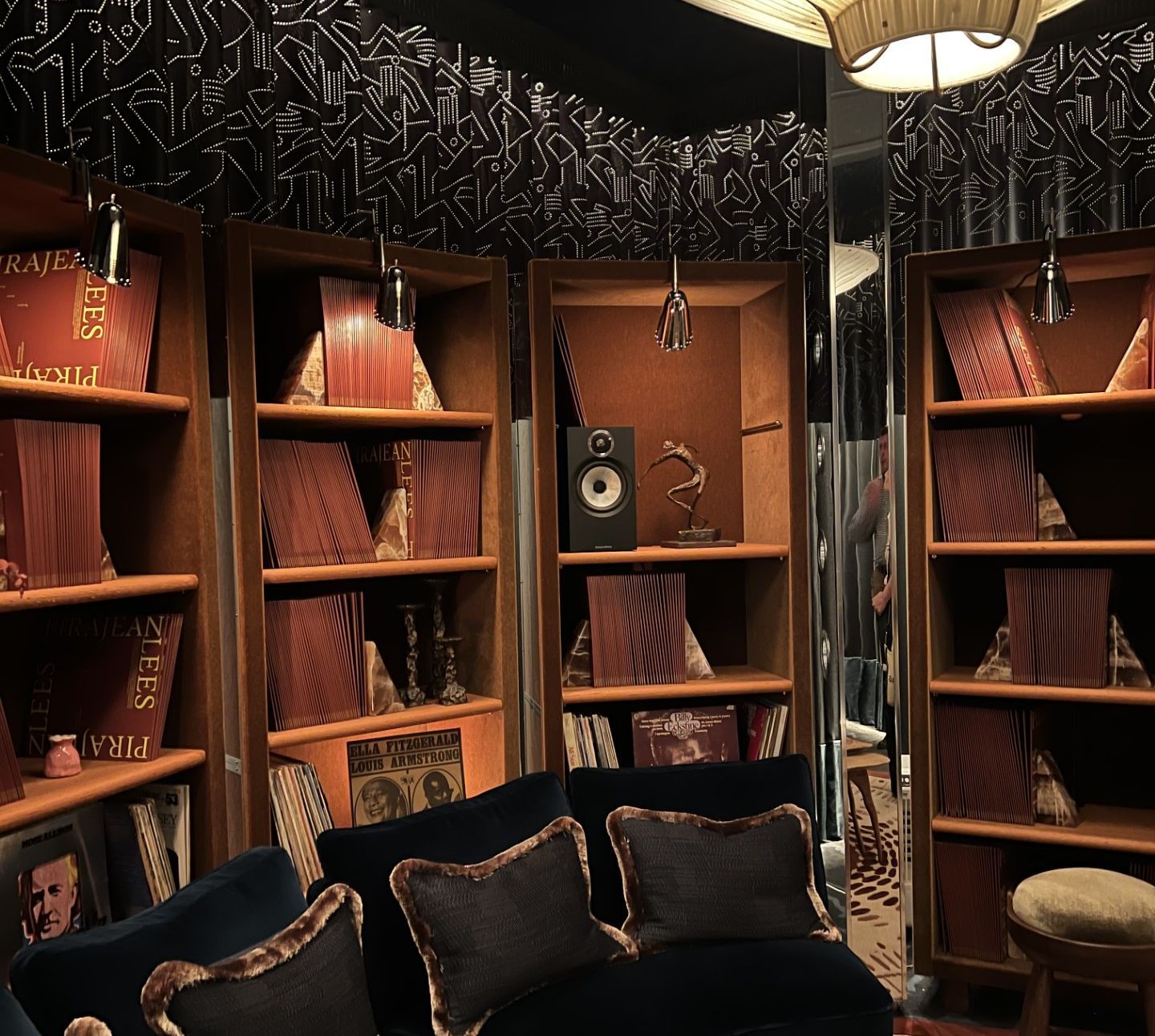
[Image: The library at WOW!house – an immersive, high-performance space where design and integration were indistinguishable.]
Related Content
-
) Today, some of the most successful luxury residential projects are being designed around experiences rather than objects.
Today, some of the most successful luxury residential projects are being designed around experiences rather than objects. -
) The definition of luxury is expanding. Increasingly, designers are considering how spaces sound, feel and even influence wellbeing.
The definition of luxury is expanding. Increasingly, designers are considering how spaces sound, feel and even influence wellbeing. -
) The tension between 'wanting more technology' and 'seeing less of it' is becoming increasingly important in high-end residential design.
The tension between 'wanting more technology' and 'seeing less of it' is becoming increasingly important in high-end residential design. -
) CEDIA Awards judges reflect on how architecture, interiors, and smart systems are finally learning to speak the same language.
CEDIA Awards judges reflect on how architecture, interiors, and smart systems are finally learning to speak the same language. -
) Earlier this year, CEDIA member Nucleus provided a great showcase of integrators working with interior designers.
Earlier this year, CEDIA member Nucleus provided a great showcase of integrators working with interior designers.
Featured Articles
-
) Spanning all eight halls at Fira de Barcelona Gran Via, ISE 2026 delivered four days of record-breaking energy, creativity, and innovation.
Spanning all eight halls at Fira de Barcelona Gran Via, ISE 2026 delivered four days of record-breaking energy, creativity, and innovation. -
) The initiative will create new opportunities for talent development, innovation and community projects across the sector
The initiative will create new opportunities for talent development, innovation and community projects across the sector -
) The Facts & Figures report for ISE 2026 is available to download.
The Facts & Figures report for ISE 2026 is available to download. -
) Bringing together startups, investors and industry leaders, the expanded show feature offers a strong platform for visibility, networking, and commercial opportunity.
Bringing together startups, investors and industry leaders, the expanded show feature offers a strong platform for visibility, networking, and commercial opportunity. -
) This new type of event brings together end users, creators and production specialists from broadcast, live events, advertising and gaming, combining creative showcases, editorial programming and netwo ...
This new type of event brings together end users, creators and production specialists from broadcast, live events, advertising and gaming, combining creative showcases, editorial programming and netwo ...
)
)

)
)
)
)
)
)
)
)
.png/fit-in/500x500/filters:no_upscale())
)
)
)
)
)
)
)
)
)
)
)
)
)
)
)
)
)
)
)
)
)
)
)
)
.png/fit-in/500x500/filters:no_upscale())
)
)
)
.png/fit-in/500x500/filters:no_upscale())
)
)
)
)
)
)
)
)
)
)
)
)
)
)
)
)