
Is SDI finally losing the fight?
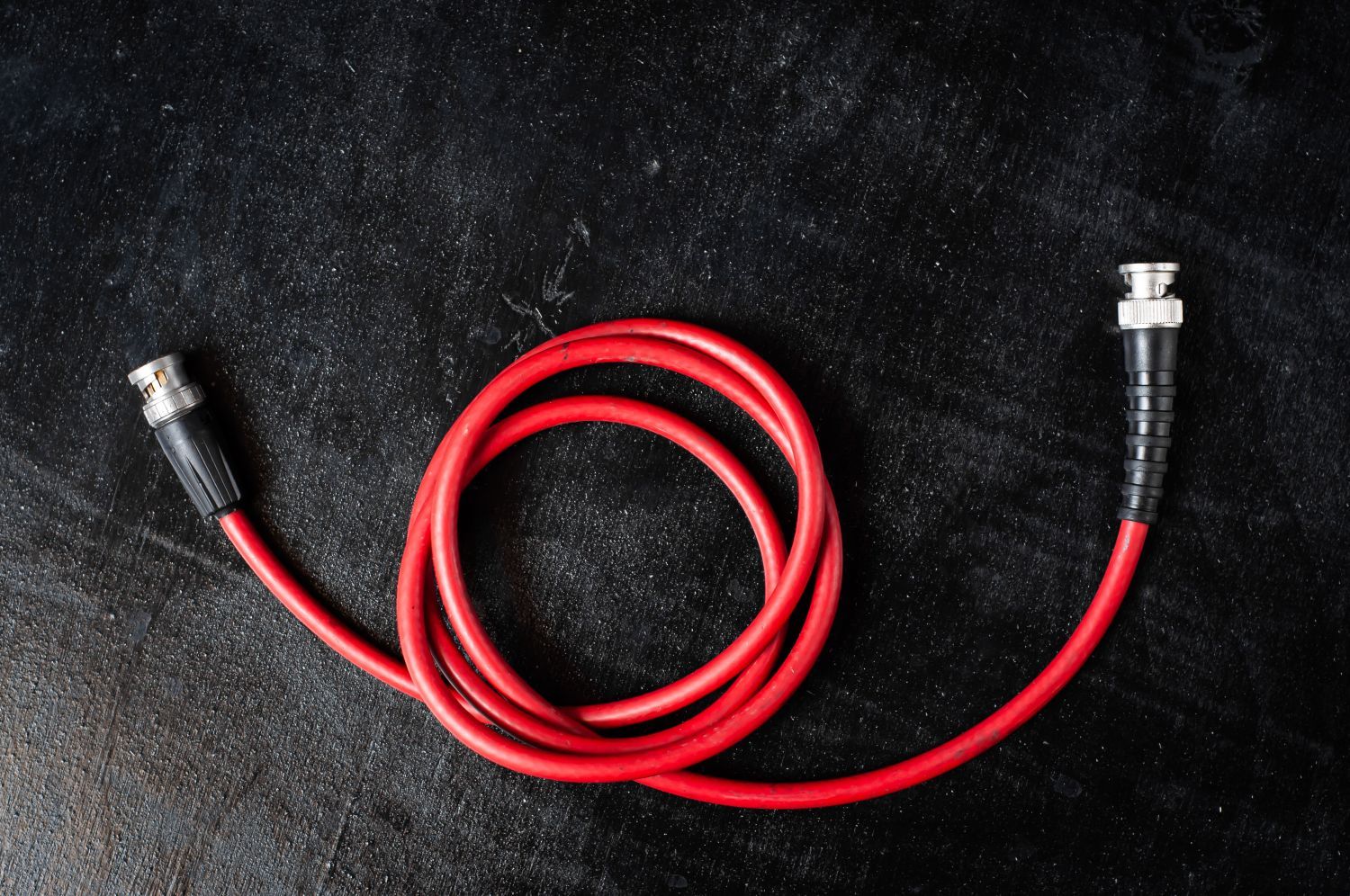
For years, the move from SDI to IP has been described as broadcast's inevitable infrastructure transition. But if IP is winning, nobody seems to have told SDI.
Revised 3 September 2026
Haivision's 2026 Broadcast Transformation Report found that 82% of more than 1,300 broadcast professionals surveyed still use SDI infrastructure. Adoption of SMPTE ST 2110, meanwhile, increased from 26% in 2025 to 30% in 2026.
Those figures reveal an industry that is changing, but not by simply ripping out one technology and replacing it with another. The direction is towards IP; the reality, for many broadcasters, is hybrid.
Why is broadcast moving from SDI to IP?
SDI has served broadcasting remarkably well. It provides dedicated, predictable signal paths and remains familiar to generations of broadcast engineers.
IP changes the underlying model. Instead of video, audio and ancillary data travelling through dedicated broadcast connections, they can become separate flows across a managed network.
The SMPTE ST 2110 suite of standards was specifically developed to enable professional video, audio and data to be transported over IP. Individual streams can take different routes through a network while remaining accurately synchronised using Precision Time Protocol (PTP).
That creates possibilities that become increasingly valuable as production itself becomes more distributed. Network resources can be shared and reconfigured, while IP infrastructure can support production models that span multiple rooms, buildings or locations.
It also brings broadcast infrastructure closer to the networking technologies underpinning the wider media and professional AV industries.
IP doesn't automatically mean simpler
The advantages come with a significant qualification: replacing dedicated broadcast connections with a network does not make engineering complexity disappear. It moves some of that complexity somewhere else.
ST 2110 environments require broadcasters to understand network architecture, bandwidth, timing, multicast traffic and system monitoring. Control and orchestration also matter because engineers need practical ways of discovering devices and connecting media flows.
This is where the Advanced Media Workflow Association's NMOS specifications complement ST 2110. IS-04 provides discovery and registration, for example, while IS-05 handles device connection management.
The skills requirement therefore changes too. Broadcast engineering and IT networking are becoming harder to separate, while cybersecurity becomes more important as production infrastructure grows more connected.
For organisations accustomed to the relative determinism of SDI, that is not a trivial transition.
Hybrid is not a failure to modernise
The temptation is to see hybrid SDI/IP infrastructure as an awkward halfway house. In many cases, it is a rational engineering decision.
Broadcast facilities represent major capital investments, and existing SDI equipment does not suddenly become obsolete because IP offers a more flexible architecture. More importantly, live production environments cannot tolerate disruption simply to achieve architectural purity.
There is strong evidence that vendors and customers are designing around this reality. In 2026, for example, Grass Valley and Tab M Solutions built a new production control room for the University of Illinois around a hybrid SMPTE ST 2110/SDI architecture. Grass Valley says the design allows production staff to retain familiar SDI workflows while using IP where it provides infrastructure efficiency and scalability.
That is a useful model for the wider industry. The question does not have to be: SDI or IP? It can be: where does IP create enough value to justify the transition?
The bigger shift is towards networked production
Seen from that perspective, the long-term significance of IP extends beyond replacing cables.
Production infrastructure is becoming more software-defined and distributed. Remote production remains the leading technology priority among respondents to Haivision's 2026 survey, cited by 41%, while IP-based contribution and cloud-enabled workflows continue to develop alongside ST 2110.
At the same time, the boundaries between broadcast and professional AV are becoming less distinct. ST 2110 technology provides part of the foundation for IPMX, which adapts standards and specifications developed for broadcast IP to the requirements of professional AV environments. That convergence is creating a larger ecosystem around interoperable media-over-IP technologies.
For infrastructure leaders, this makes the transition more strategic than a simple SDI replacement programme. Decisions made now can affect how easily facilities connect to remote resources, software platforms and other IP-based production environments in future.
So, is SDI finally losing?
If the question is whether SDI is about to disappear, the answer is clearly no. An infrastructure used by 82% of respondents to a major broadcast survey is hardly obsolete.
But if the question is which architecture is shaping the future direction of broadcast infrastructure, the answer looks different.
ST 2110 adoption is rising. Production is becoming more distributed. Broadcast and IT technologies are converging, and standards such as IPMX are carrying broadcast-derived IP technologies into professional AV. In 2025, SMPTE, the EBU and VSF even received a Technology & Engineering Emmy for the development of ST 2110 – recognition of how significant the standards have become to the industry's transition towards IP.
ISE 2027 exhibitors including Grass Valley, Lawo and RIEDEL Communications operate across this changing infrastructure landscape, while the presence of organisations such as AIMS Alliance reflects the growing importance of standards and interoperability as broadcast and professional AV converge.
For visitors to Integrated Systems Europe, that convergence makes the SDI-to-IP transition particularly relevant. Broadcast is no longer having this conversation in isolation: networking, software-defined infrastructure and interoperable media transport are increasingly shared concerns across broadcast and professional AV.
SDI hasn't lost. But IP is increasingly defining what comes next.
Frequently Asked Questions
What is the difference between SDI and IP broadcasting?
SDI carries broadcast signals over dedicated point-to-point connections. IP-based broadcasting transports video, audio and data as network traffic, allowing resources and media flows to be routed and managed across network infrastructure.
Is SMPTE ST 2110 replacing SDI?
ST 2110 adoption is growing, but SDI remains widely used. Haivision's 2026 survey found 30% of respondents using ST 2110 and 82% using SDI, suggesting hybrid infrastructure will remain important during the transition.
What are the advantages of IP over SDI?
IP can offer greater flexibility in routing and resource sharing and can make distributed production easier to support. It can also integrate more naturally with the wider networked and software-defined infrastructure increasingly used in modern media operations.
 Stay ahead – Stay informed.
As an AV specialist or industry leader, you recognise how crucial it is to keep up with evolving trends, new technologies, and notable happenings within the audiovisual world. That's why we're delighted to invite you to receive exclusive email updates about ISE – the world-renowned tech show for the systems integration and audiovisual industry.
When you subscribe, you'll be kept up to speed with insightful commentary on the freshest developments in AV, get early looks at what's planned for the ISE content schedule – including headline speakers – and benefit from in-depth reporting on the show's standout attractions.
Sign up now to stay at the forefront of audiovisual innovation and expertise.
Further reading
Discover broadcast solutions at ISE
Discover cybersecurity and other emerging technologies at ISE
Related articles
- What's the difference between IPMX and ST 2110? — Understand how two important media-over-IP approaches compare, where they overlap and why they matter as broadcast and professional AV converge.
- The next broadcast revolution may be invisible to viewers — Discover how software-defined infrastructure is taking broadcast beyond physical signal paths towards more flexible, networked production environments.
- Is outside broadcast heading for reinvention? — Explore how IP connectivity, remote production and distributed workflows are changing where live programmes are produced and the infrastructure needed to deliver them.
Related Content
-
) IPMX and ST 2110 both transport professional media over IP networks but differ mainly in who they serve.
IPMX and ST 2110 both transport professional media over IP networks but differ mainly in who they serve. -
) Broadcast TV isn't growing in the traditional sense. But instead, the definition of broadcasting is expanding.
Broadcast TV isn't growing in the traditional sense. But instead, the definition of broadcasting is expanding. -
) For decades, broadcasters' concerns around operational risk focused primarily on reliability. Today, a different threat is demanding attention: cybersecurity.
For decades, broadcasters' concerns around operational risk focused primarily on reliability. Today, a different threat is demanding attention: cybersecurity. -
) Broadcasters face growing pressure from regulators, investors, advertisers, production partners, and audiences to demonstrate measurable environmental progress.
Broadcasters face growing pressure from regulators, investors, advertisers, production partners, and audiences to demonstrate measurable environmental progress. -
) Across the industry, a major transformation is taking place behind the scenes as traditional hardware-centric environments give way to software-defined architectures.
Across the industry, a major transformation is taking place behind the scenes as traditional hardware-centric environments give way to software-defined architectures.
Featured Articles
-
) Spanning all eight halls at Fira de Barcelona Gran Via, ISE 2026 delivered four days of record-breaking energy, creativity, and innovation.
Spanning all eight halls at Fira de Barcelona Gran Via, ISE 2026 delivered four days of record-breaking energy, creativity, and innovation. -
) The initiative will create new opportunities for talent development, innovation and community projects across the sector
The initiative will create new opportunities for talent development, innovation and community projects across the sector -
) The Facts & Figures report for ISE 2026 is available to download.
The Facts & Figures report for ISE 2026 is available to download. -
) Bringing together startups, investors and industry leaders, the expanded show feature offers a strong platform for visibility, networking, and commercial opportunity.
Bringing together startups, investors and industry leaders, the expanded show feature offers a strong platform for visibility, networking, and commercial opportunity. -
) This new type of event brings together end users, creators and production specialists from broadcast, live events, advertising and gaming, combining creative showcases, editorial programming and netwo ...
This new type of event brings together end users, creators and production specialists from broadcast, live events, advertising and gaming, combining creative showcases, editorial programming and netwo ...
)
)

)
)
)
)
)
)
)
)
)
)
)
)
)
)
)
)
)
)
)
)
)
)
)
)
)
)
)
)
)
)
)
)
)
)
)
)
)
)
)
)
)
)

)
)
.png/fit-in/500x500/filters:no_upscale())
)
)
)
)
)
)
)