

Residential technology meets design
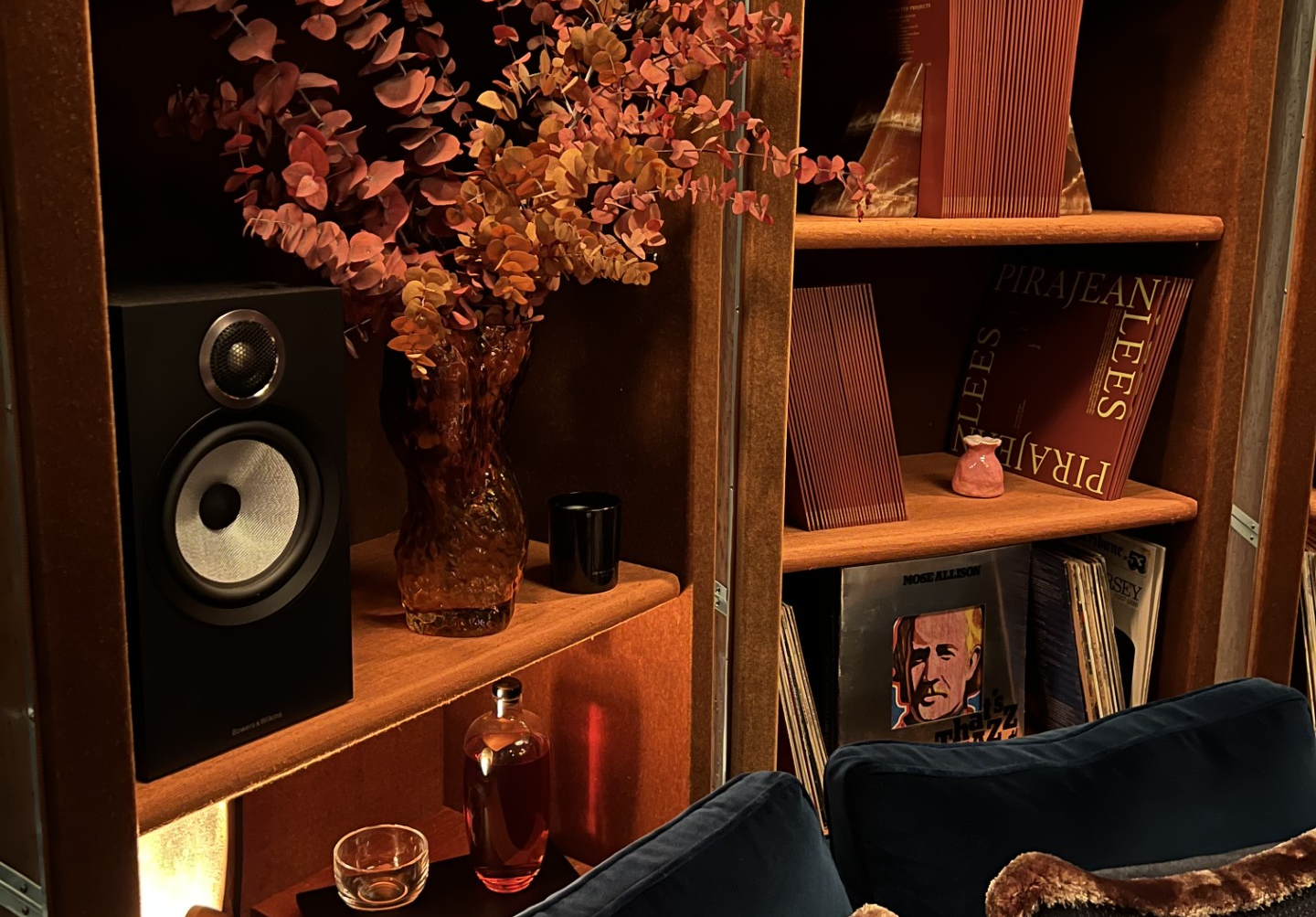
Interior designer Dean Keyworth of Armstrong Keyworth recalled how different the landscape once looked. “There might be a chat about where to put the television,” he laughed. “But now there's an entire chapter in my new book on smart home technology. It's become integral to the conversation around luxury interior design.”
Dean was joined on the panel by Susie Rumbold, Sam Brunsden, Peter Warren, Tom Webster, and Toni Sabatino. Together, they represent every angle of the modern home: architecture, interiors, construction, and smart systems. Their collective view is clear –the industry is undergoing a quiet but profound transformation.
“Technology can enhance both the functionality and aesthetic of a space,” said Toni, Principal of Toni Sabatino Style. “It's not just about control; it's about comfort, energy awareness, and celebrating design through light and sound.”
Sam, Managing Director of Dyntec, agreed: “Technology isn't a bolt-on anymore. It should be treated as a core design layer, like mechanical, electrical, or plumbing. You can't build a home today without considering how it will perform digitally.”
Beyond luxury
For years, smart homes were perceived as indulgences reserved for the wealthiest clients. That perception is rapidly changing.
“It goes beyond high-end residential now,” said Susie, Founder and Creative Director of Tessuto Interiors. “There's a trickle-down effect. Smart features are expected in rental developments and mid-market projects. The real challenge is keeping it usable, technology only succeeds when it feels effortless.”
Toni added that smart systems have shifted from luxury to lifestyle. “From lighting to shading to energy monitoring, these features are becoming standard expectations.”
UK developer Peter Warren, Partner at EAB Homes, has witnessed this shift firsthand. “Whether a house sells for £1 million or £5 million, every buyer assumes some level of technology will be included. The difficulty is balancing expectation and budget.”
His solution: ensure the infrastructure is in place. “Even if clients can't afford full automation immediately, giving them the wiring and backbone means they can add capability later. Preparing for the future adds value.”
Designing for every life stage
While convenience often dominates the smart home conversation, the panel emphasised the deeper benefits of adaptability and long-term support.
Sam sits on the advisory board of the International WELL Building Institute (IWBI), which oversees the WELL Building Standard. He noted that wellness certifications increasingly consider digital wellbeing and senior living. “It's about infrastructure that can support changing life stages. A young family today may need in?home care in a decade. Good systems allow a home to evolve.”
Susie echoed this: “Clients are planning long-term residences. We ask questions about lifestyle, travel, entertainment, and future accessibility needs. Flexibility is everything.”
Dean added: “Technology responds to routine. From automated lighting to shading that adapts to natural rhythms, it's powerful when it supports human behaviour rather than competing with it.”
The invisible infrastructure
Every panellist pointed to the home network as the silent hero – often overlooked, yet essential.
Peter explained: “Clients come to us saying, ‘I just want the internet to work.' In well?insulated new builds, phone and Wi?Fi signals can be terrible. A beautiful home is useless if it's not connected.”
Sam added: “Audiovisual systems are now IT systems. Everything relies on the network. If the backbone isn't designed properly, nothing else will function.”
Toni highlighted the misconception that Wi?Fi alone can carry everything. “People think it's magic. But reliability requires planning, cabling, and infrastructure.”
Bridging aesthetic and technical worlds
Historically, designers and integrators often clashed, with one prioritising aesthetics, the other performance. Collaboration is now dissolving those boundaries.
“It used to be about big black speakers stuck on beautiful wallpaper,” said Susie. “That's gone. Keypads, lighting panels, and fixtures are now elegant and tactile. Technology contributes to the visual story.”
Sam emphasised timing: “We need to be brought in early – at the same stage as mechanical and electrical engineers. It prevents layout issues and ensures harmonious design.”
Peter added that dropping professional stereotypes is key: “Designers aren't fussy, and integrators aren't tech nerds. When everyone aligns, the result is cohesive and the client wins.”
A future of effortless living
Looking ahead, the panel saw a world where systems disappear entirely into the background, enabling homes that anticipate and support daily life.
Susie envisioned homes that self?regulate: “Climate, shading, and energy systems are already responding automatically to conditions. Comfort will happen quietly.”
Dean pointed to rising AI capability: “We're heading toward unified, intuitive control – voice?driven, context?aware systems. But none of it works without solid engineering.”
Sam predicted smaller hardware and greater expectations: “Racks that once filled cupboards now take half the space. With edge computing, they'll shrink further. Integration will get simpler – but users expect invisibility.”
Toni summarised the goal: “It's not more gadgets. It's a home that enhances wellbeing and feels beautifully intuitive.”
Peter closed with what may be the industry's most important shift: “The biggest innovation is collaboration. When everyone communicates openly – designers, integrators, builders – the project is smooth, and the handover is silent. That's when you know it worked.”
Stay informed!
ISE 2026 takes place in Barcelona on 3-6 February 2026. For more updates on all kinds of residential technology – including audio, video, lighting, automation, control and security – and to discover more about ISE 2026 as details are released, sign up for updates.
Don't miss out – join our community today and keep up to speed with all the latest industry trends.
Related Content
-
) Today, some of the most successful luxury residential projects are being designed around experiences rather than objects.
Today, some of the most successful luxury residential projects are being designed around experiences rather than objects. -
) The definition of luxury is expanding. Increasingly, designers are considering how spaces sound, feel and even influence wellbeing.
The definition of luxury is expanding. Increasingly, designers are considering how spaces sound, feel and even influence wellbeing. -
) The tension between 'wanting more technology' and 'seeing less of it' is becoming increasingly important in high-end residential design.
The tension between 'wanting more technology' and 'seeing less of it' is becoming increasingly important in high-end residential design. -
) The biggest challenge in luxury residential technology is no longer capability. It is collaboration.
The biggest challenge in luxury residential technology is no longer capability. It is collaboration. -
Earlier this year, CEDIA member Nucleus provided a great showcase of integrators working with interior designers.
Featured Articles
-
) Spanning all eight halls at Fira de Barcelona Gran Via, ISE 2026 delivered four days of record-breaking energy, creativity, and innovation.
Spanning all eight halls at Fira de Barcelona Gran Via, ISE 2026 delivered four days of record-breaking energy, creativity, and innovation. -
) The initiative will create new opportunities for talent development, innovation and community projects across the sector
The initiative will create new opportunities for talent development, innovation and community projects across the sector -
) The Facts & Figures report for ISE 2026 is available to download.
The Facts & Figures report for ISE 2026 is available to download. -
) Bringing together startups, investors and industry leaders, the expanded show feature offers a strong platform for visibility, networking, and commercial opportunity.
Bringing together startups, investors and industry leaders, the expanded show feature offers a strong platform for visibility, networking, and commercial opportunity. -
) This new type of event brings together end users, creators and production specialists from broadcast, live events, advertising and gaming, combining creative showcases, editorial programming and netwo ...
This new type of event brings together end users, creators and production specialists from broadcast, live events, advertising and gaming, combining creative showcases, editorial programming and netwo ...
)
)

)
)
)
)
)
)
)
)
![[inst]ALLICHT](https://cdn.asp.events/CLIENT_Integrat_169E7B04_E6F3_39F6_8BE4DB27C54F731E/sites/ise-2027/media/libraries/partners/Inst_Allicht_Logo.png/fit-in/500x500/filters:no_upscale())
)
)
)
)
)

)
)
)
![rAVe [PUBS]](https://cdn.asp.events/CLIENT_Integrat_169E7B04_E6F3_39F6_8BE4DB27C54F731E/sites/ise-2027/media/libraries/partners/rAVe-PUBS-Google-Logo.png/fit-in/500x500/filters:no_upscale())
)
)
)
)
)
)

)
)
)
.png/fit-in/500x500/filters:no_upscale())
)
)
)
)
)
)
)
)
)
)
)
)
)
)
)
)
)
)
)
)
)
)
)
)
)
)