

Hybrid learning is changing campus design
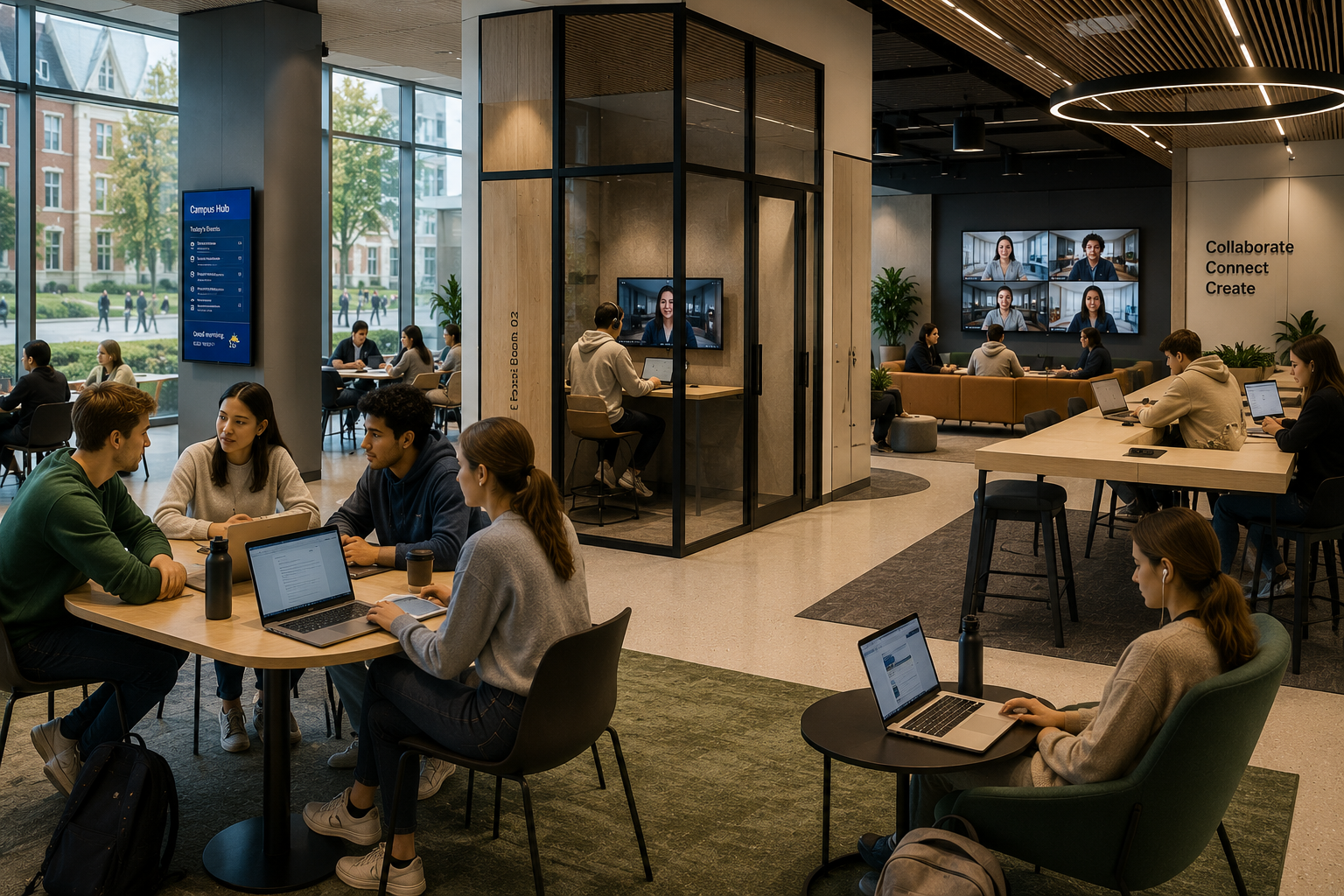
Hybrid learning took off as a response to disruption.
It is becoming a long-term design challenge.
When universities rapidly ramped up remote learning during the pandemic, many institutions assumed that students would eventually return to more traditional patterns of education.
Instead, expectations changed.
Students now expect flexibility. They want access to learning materials wherever they are. Recorded lectures, hybrid participation and digital collaboration have become normal parts of academic life.
Those changes are reshaping campuses.
Learning spaces are increasingly being designed around adaptability rather than permanence. Fixed layouts are giving way to flexible environments capable of supporting multiple teaching styles and different modes of participation.
The distinction between physical and digital learning is becoming less clear.
At ISE 2027, exhibitors including Epson, Logitech and Yealink continue to focus on technologies that support hybrid communication and connected learning environments. Interactive displays, collaboration systems and simplified conferencing platforms are helping institutions create more flexible educational spaces.
But hybrid learning is influencing far more than classrooms.
Libraries are evolving into collaboration hubs. Informal study areas are becoming increasingly important. Meeting spaces, media facilities and social environments are all assuming larger roles within campus life.
The campus itself is becoming more connected.
That evolution reflects a broader shift in how students learn.
Education is no longer confined to a timetable or a single room. Learning happens across multiple environments and often continues beyond the campus itself.
This creates new challenges for institutions.
How can remote participants feel fully included?
How can spaces support different subjects and teaching styles?
How can campuses remain attractive destinations when digital alternatives are available?
These are increasingly strategic questions.
Many universities are also dealing with legacy infrastructure acquired over decades. Integrating older systems into modern learning environments can be difficult, particularly when budgets remain under pressure.
At the same time, expectations continue to rise.
Students compare campus experiences with the digital services they use every day. Simplicity, reliability and accessibility matter more than ever.
The institutions adapting most successfully are recognising that campus design is no longer just an estates issue.
It is becoming an educational strategy.
That is one reason why conversations around hybrid learning, connected campuses and education technology continue to expand at Integrated Systems Europe.
Ten years from now, hybrid learning may feel completely ordinary.
Right now, however, many institutions are still working out what the next generation of campus design should look like.
 Stay ahead – Stay informed.
As an AV specialist or industry leader, you recognise how crucial it is to keep up with evolving trends, new technologies, and notable happenings within the audiovisual world. That's why we're delighted to invite you to receive exclusive email updates about ISE – the world-renowned annual tech show for the systems integration and audiovisual industry.
When you subscribe, you'll be kept up to speed with insightful commentary on the freshest developments in AV, get early looks at what's planned for the ISE content schedule – including headline speakers – and benefit from in-depth reporting on the show's standout attractions.
Sign up now to stay at the forefront of audiovisual innovation and expertise.
Further reading
Related Content
-
) Today's students judge a university long before they attend their first lecture. Student experience has become a strategic differentiator.
Today's students judge a university long before they attend their first lecture. Student experience has become a strategic differentiator. -
) Students have changed. And classrooms are changing with them.
Students have changed. And classrooms are changing with them. -
) Education has been asking: How should institutions use AI? But perhaps the more important question is: How should education evolve in a world where AI exists?
Education has been asking: How should institutions use AI? But perhaps the more important question is: How should education evolve in a world where AI exists? -
) Most universities are investing in technology. Far fewer are investing in strategy. That distinction matters.
Most universities are investing in technology. Far fewer are investing in strategy. That distinction matters. -
) AI is entering education far faster than many institutions are prepared for. And the consequences will extend well beyond teaching tools.
AI is entering education far faster than many institutions are prepared for. And the consequences will extend well beyond teaching tools.
Featured Articles
-
) Spanning all eight halls at Fira de Barcelona Gran Via, ISE 2026 delivered four days of record-breaking energy, creativity, and innovation.
Spanning all eight halls at Fira de Barcelona Gran Via, ISE 2026 delivered four days of record-breaking energy, creativity, and innovation. -
) The initiative will create new opportunities for talent development, innovation and community projects across the sector
The initiative will create new opportunities for talent development, innovation and community projects across the sector -
) The Facts & Figures report for ISE 2026 is available to download.
The Facts & Figures report for ISE 2026 is available to download. -
) Bringing together startups, investors and industry leaders, the expanded show feature offers a strong platform for visibility, networking, and commercial opportunity.
Bringing together startups, investors and industry leaders, the expanded show feature offers a strong platform for visibility, networking, and commercial opportunity. -
) This new type of event brings together end users, creators and production specialists from broadcast, live events, advertising and gaming, combining creative showcases, editorial programming and netwo ...
This new type of event brings together end users, creators and production specialists from broadcast, live events, advertising and gaming, combining creative showcases, editorial programming and netwo ...
)
)
)
)
)
)
)
)
)
)
)
)
)
)
)
)
)
)
)
)
)
)
)
)
)
)
)
)
)
)
)
)
)
)

)
)
)
)
)
)
)
)
.png/fit-in/500x500/filters:no_upscale())
)
)
)
)
)
)
)
)
)
)
)
)
)
)