

Why the'future smart home must feel simpler, not more complex'
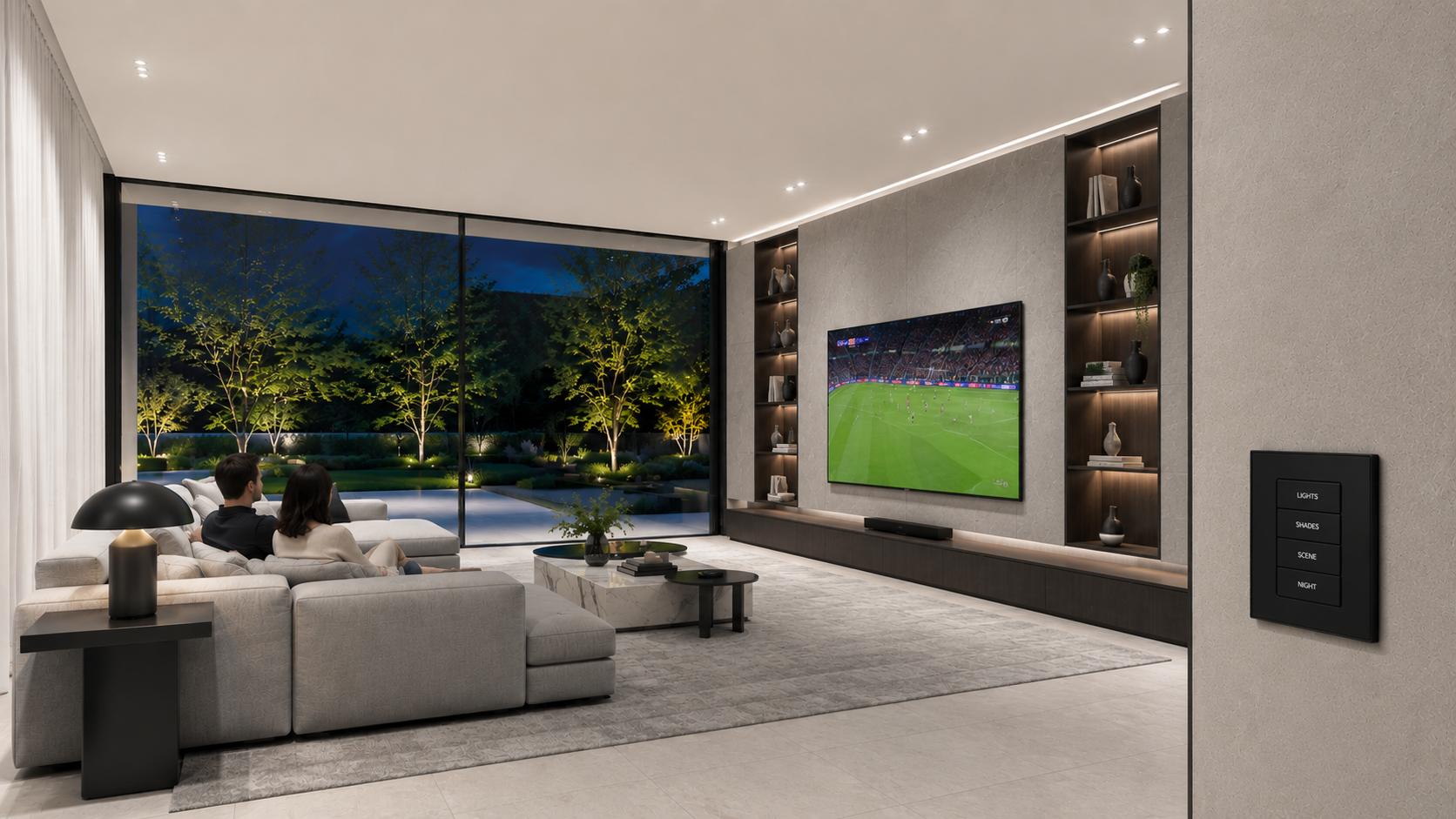
The smart home industry has a paradox.
The more technology enters the home, the more invisible it needs to become.
Because many luxury homeowners are no longer impressed by complexity.
They are exhausted by it.
For years, residential technology was marketed around features. More automation. More devices. More integrations. More control.
But something important is changing.
High-end clients increasingly want homes that feel calmer, more intuitive and less demanding.
They want technology that disappears into the architecture.
They want systems that work quietly in the background.
And they want experiences that feel emotionally seamless rather than technically impressive.
This shift is forcing the residential technology industry to rethink what smart living actually means.
Because convenience alone is no longer enough.
Today's luxury clients often associate premium experiences with simplicity, elegance and reduced cognitive load.
That creates significant design and integration challenges.
How do increasingly sophisticated systems remain intuitive?
How do homes become more intelligent without becoming overwhelming?
And how can technology support wellbeing rather than constant stimulation?
At ISE, exhibitors including Basalte, Black Nova, Sonance and Leon Speakers are increasingly focusing on design-led smart home experiences where technology blends seamlessly into architecture and interiors.
Luxury residential developments across Europe, the Middle East and further afield are adopting minimalist smart control strategies focused on hidden interfaces, architectural integration and reduced visual technology clutter.
The emphasis is shifting away from visible gadgets and towards more emotionally calming living environments.
Meanwhile, invisible architectural audio systems and integrated lighting controls are increasingly being specified as part of wider interior design strategies rather than standalone technology installations.
This matters because the smart home industry is no longer competing solely on functionality.
It is competing on emotional experience.
Clients are increasingly judging connected homes by how they feel to live in. Do systems create friction? Or remove it?
Do spaces feel restful? Or technologically overwhelming?
The implications extend far beyond aesthetics.
AI will intensify this challenge dramatically.
As homes become more predictive, responsive and automated, the interface between humans and technology will become increasingly important.
The most successful residential environments may therefore be the ones where occupants barely notice the technology at all.
That is pushing architects, interior designers and integrators into much closer collaboration.
Because the future smart home is becoming an experience-design challenge as much as a technology challenge.
And the professionals who understand that shift early may shape the next phase of connected living.
That is one reason why conversations around invisible technology, wellness, AI and human-centred smart home design are becoming increasingly important at Integrated Systems Europe (ISE).
Because the homes of the future will not simply need to be smarter.
They will need to feel better.
Stay ahead – Stay informed.
As an AV specialist or industry leader, you recognise how crucial it is to keep up with evolving trends, new technologies, and notable happenings within the audiovisual world. That's why we're delighted to invite you to receive exclusive email updates about ISE – the world-renowned tech show for the systems integration and audiovisual industry.
When you subscribe, you'll be kept up to speed with insightful commentary on the freshest developments in AV, get early looks at what's planned for the ISE content schedule – including headline speakers – and benefit from in-depth reporting on the show's standout attractions.
Sign up now to stay at the forefront of audiovisual innovation and expertise.
Featured Articles
-
) Spanning all eight halls at Fira de Barcelona Gran Via, ISE 2026 delivered four days of record-breaking energy, creativity, and innovation.
Spanning all eight halls at Fira de Barcelona Gran Via, ISE 2026 delivered four days of record-breaking energy, creativity, and innovation. -
) The initiative will create new opportunities for talent development, innovation and community projects across the sector
The initiative will create new opportunities for talent development, innovation and community projects across the sector -
) The Facts & Figures report for ISE 2026 is available to download.
The Facts & Figures report for ISE 2026 is available to download. -
) Bringing together startups, investors and industry leaders, the expanded show feature offers a strong platform for visibility, networking, and commercial opportunity.
Bringing together startups, investors and industry leaders, the expanded show feature offers a strong platform for visibility, networking, and commercial opportunity. -
) This new type of event brings together end users, creators and production specialists from broadcast, live events, advertising and gaming, combining creative showcases, editorial programming and netwo ...
This new type of event brings together end users, creators and production specialists from broadcast, live events, advertising and gaming, combining creative showcases, editorial programming and netwo ...
)
)

)
)
)
)
)
)
![[inst]ALLICHT](https://cdn.asp.events/CLIENT_Integrat_169E7B04_E6F3_39F6_8BE4DB27C54F731E/sites/ise-2027/media/libraries/partners/Inst_Allicht_Logo.png/fit-in/500x500/filters:no_upscale())
)
)
)
)
)
)
)
)
)
)
)
)
)
)
)

)
)
)
)
)
)
)
.png/fit-in/500x500/filters:no_upscale())
)
)
)
)
)
)
)
)
)
)
)
)
)
)
)
)
)
)
)
)
)
)