Session: Extended reality is not dead, it is waiting for the conditions to work
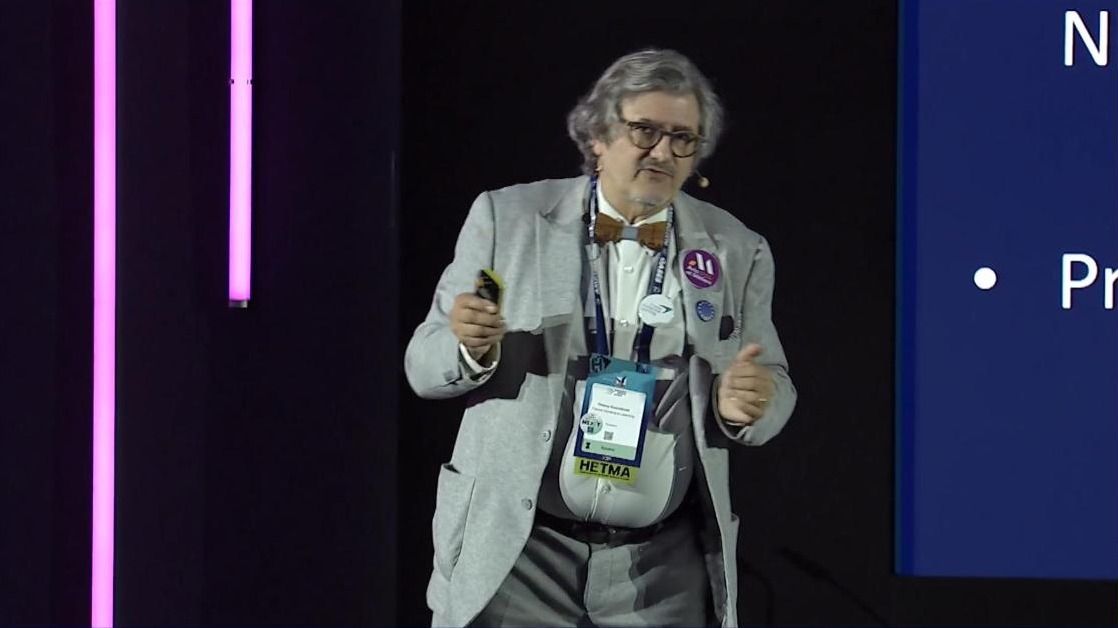
Thierry Koscielniak of France Immersive Learning on why XR stalled after the hype, the platform risk buyers face and how AI is making it productive at last.
- Event: ISE 2026
- From session: The State of XR - From Hype to Productivity with AI
- Speaker: Thierry Koscielniak, President, France Immersive Learning
- Estimated read time: 8 minutes
- Watch the full session
Quick read summary
- Extended reality is mature enough for teaching and training, but it only becomes productive when hardware, software, users and decision makers line up.
- Many people who bought a VR headset in the hype rarely use it, because they never found a reason that mattered to them.
- Thierry Koscielniak warns that vendor policy changes at Microsoft and Meta have left organisations holding hardware with no programme behind it.
- He argues for open standards, trained end users and headsets reserved for training that is dangerous, impossible, counterproductive or expensive in real life.
- AI is the accelerator: it makes XR content easier to produce and connects sensors in headsets and glasses to live analysis.
Extended reality is dead, according to some of the people Thierry Koscielniak meets. Headsets gathering dust and platforms closing their business programmes seem to prove them right. Koscielniak, President of France Immersive Learning, reads that evidence the other way round. His argument in Barcelona on 3 February 2026 was that XR has the technology and the research. What it has lacked are the conditions that let people use it.
He has 30 years in EdTech and is an executive adviser at a French institute of technology that trains industrial engineers. He also leads an association of more than 60 organisations that use immersive technology to teach and train, and is vice president of XR for Europe.
What is XR, and why is it older than the hype suggests?
XR, or extended reality, is the umbrella term for virtual, augmented and mixed reality: headsets and glasses that replace or add to what the wearer sees. The research behind it is not new. Two institutes at his institution teach a master’s degree in extended reality, and he works with researchers who have studied the field for more than 20 years.
That history gives buyers a simple test. When someone promises fantastic XR content, Koscielniak suggests asking when they began developing for it. A newcomer may not know the theory that keeps a wearer comfortable, such as how to avoid motion sickness.
Why do so many VR headsets end up in a cupboard?
Headsets go unused when their owners never find a reason to wear them. When Koscielniak asked who owned a virtual reality headset and used it on a regular basis, almost nobody raised a hand. More hands went up for owners who did not.
Friends of his bought headsets at Christmas in the frenzy of the hype and had not found anything really good to do with them. Others use theirs a lot, for 3D puzzles or virtual climbing. The difference is a use that matters to that person. In Koscielniak’s words, "you have to find your own point of interest into this kind of world." For an organisation, a headset bought for one defined task has a reason to come out every week.
Hardware makers, developers and end users want different things
To understand where XR stands, Koscielniak said, take the point of view of hardware manufacturers, software developers and end users. Their interests do not always line up.
Hardware makers want customers on their own headset, with their own store, their own licence and a connection to their server to verify it. Koscielniak said none of that suits teaching and learning.
What education needs is open standards and open hardware that can be used for research and teaching. For developers, open source is the ideal but not compulsory. What matters is that they use open standards and promote them.
End users face a different problem: the kit is new to them, and it keeps changing.
You have to be trained to use this kind of new hardware.
Something new arrives every six months, and people are told the model they bought is obsolete. He advises using the best hardware available now and accepting that better kit will follow.
Why won’t decision makers put on a headset?
Many of them have never really tried one, and the experience feels exposing. He put it plainly: "They haven’t really used a headset. They don’t know really what’s happening."
In one organisation he worked for, he could never persuade the head of the organisation to put a headset on. At the time there was only fully enclosed virtual reality, and a senior person was being asked to make strange gestures with a controller while colleagues watched. "They don’t like to be isolated," he said.
Mixed reality passthrough, which lets the wearer see the room around them, removes part of that barrier. For anyone presenting an XR business case, a short, private session in a passthrough headset may do more than any slide.
Which platform bets have already gone wrong?
Several, according to Koscielniak, and his message to hardware makers was to stop changing their policies every two or five years. He said Microsoft HoloLens has stopped, though it was a very good product for augmented reality and some companies still use it. He said Meta Quest stopped its business to business programme, which he called totally insane, and that he had heard the Apple Vision Pro programme is not in good health.
His response was to look at a new generation, such as a French company that has just unveiled a headset built on open standards. For buyers, the lesson is practical: ask any vendor what happens to your content, licences and devices if its business programme ends.
When does VR in education earn its cost?
A headset earns its place when the real task is dangerous, impossible, counterproductive or expensive. Koscielniak calls this DICE, and it is his core case for VR in education and training.
You can do dangerous stuff without being in danger.
The industrial evidence is already there. Large French industrial companies use virtual and augmented reality headsets every day. At the XR Days event in September 2025, he said, companies reported an excellent return on investment. Public money is following. XR for Europe, which makes the case for immersive learning to European policymakers, has won grants and funding.
AI is the accelerator for extended reality
AI makes XR content easier to produce, which is why Koscielniak called it an accelerator. Sensors can also connect directly to AI, giving a live view of what is happening when someone wears a headset or glasses, which he sees as the future form of the hardware. Learning companies are building avatars driven by AI into their products, and he mentioned a digital twin project and a new Virtual World Skills Academy due to begin in April.
For the wider picture on technology in the classroom, read about reality-embedded learning at ISE 2025 and the education market trends for 2026.
FAQ
- What is extended reality, and how is it different from virtual reality? Extended reality, or XR, is the umbrella term that covers virtual, augmented and mixed reality. Virtual reality replaces the wearer’s view entirely, while augmented and mixed reality add digital content to the real world.
- Which training tasks suit a VR headset? Thierry Koscielniak uses the DICE test: a headset is worth it when the real task is dangerous, impossible, counterproductive or expensive. If the real task is safe and cheap, a headset adds little.
- Why should XR buyers insist on open standards? Closed platforms tie content and licences to one vendor’s store and servers, and vendors change their policies. Open standards keep content usable when a platform changes direction.
- Can a senior leader try XR without feeling exposed? Yes, with mixed reality passthrough, which lets the wearer see the room around them. A short, private trial in a passthrough headset removes much of the discomfort of being watched.
Ask the developer when they started
XR has not failed as a technology. It has failed as a purchase. Headsets were bought on excitement, locked into platforms that later changed course, handed to users who were never trained and approved by leaders who had never worn one.
That changes what comes next. The organisations that get value from XR will buy against a task rather than a trend. They will pick training that is dangerous, impossible, counterproductive or expensive in real life. They will write open standards and offline licensing into the specification, so a vendor’s change of strategy cannot strand their content. And they will put decision makers in a passthrough headset before asking them to sign anything.
AI will make content easier to produce, which removes one of the oldest excuses for waiting. The harder work is human: finding the use, training the people and choosing partners who know the field. Before any headset is ordered, ask the XR developer when they began building for it, and listen to how they talk about motion sickness.
About the speaker
Thierry Koscielniak
President, France Immersive Learning
Koscielniak has worked in EdTech for 30 years and is an executive adviser at a French institute of technology that trains industrial engineers. He is vice president of XR for Europe and leads France Immersive Learning, an association of more than 60 organisations that use XR to teach and train.
Explore XR at ISE
XR, AR and mixed reality are back on the agenda for real projects.
- Emerging tech on the ISE show floor: extended reality and immersive tech at the show.
- Summits, keynotes and stages at ISE: from ticketed summits to free stages on the floor.
- Coming to ISE for the first time? The first-time visitor guide covers the essentials.
Featured Articles
-
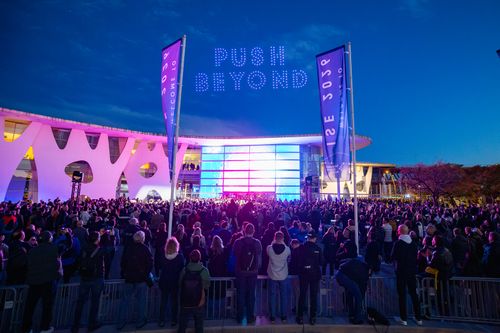 Spanning all eight halls at Fira de Barcelona Gran Via, ISE 2026 delivered four days of record-breaking energy, creativity, and innovation.
-
 The initiative will create new opportunities for talent development, innovation and community projects across the sector
-
 The Facts & Figures report for ISE 2026 is available to download.
-
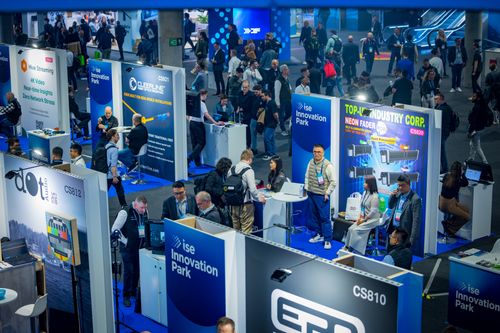 Bringing together startups, investors and industry leaders, the expanded show feature offers a strong platform for visibility, networking, and commercial opportunity.
-
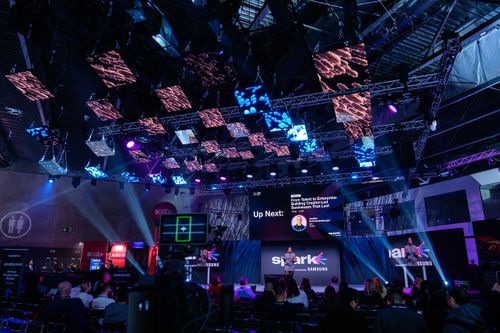 This new type of event brings together end users, creators and production specialists from broadcast, live events, advertising and gaming, combining creative showcases, editorial programming and netwo ...