
Session: The creator economy after the follower: where attention went and who wins
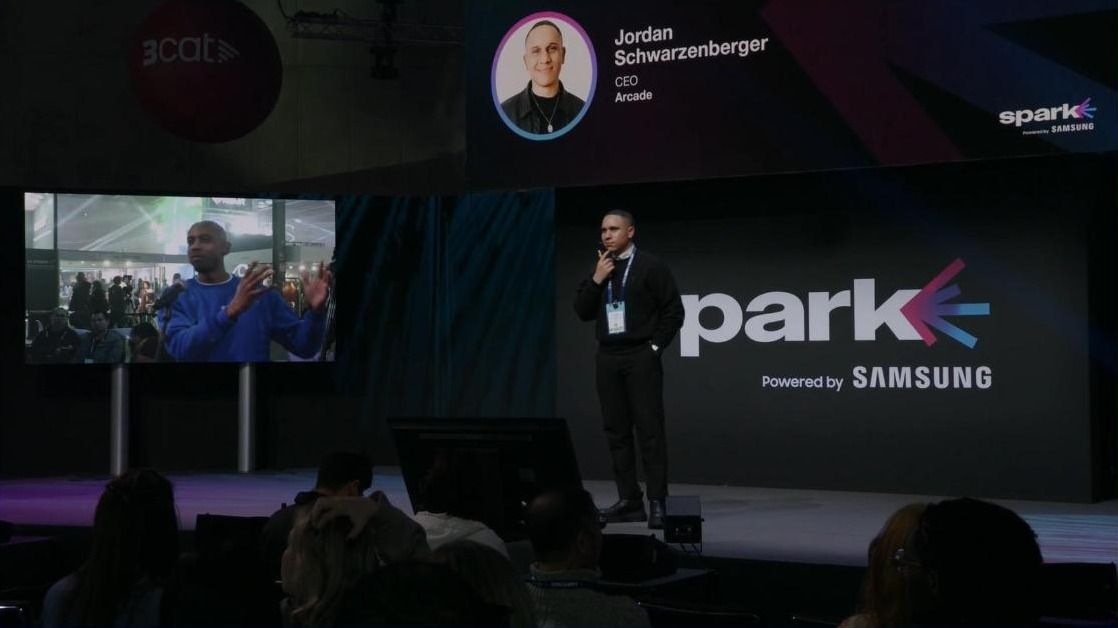
How the creator economy has shifted, why followers no longer count and how brands and producers can build lasting businesses, from Arcade at ISE 2026.
- Event: ISE 2026
- From session: Spark 2026: Keynote - From Talent to Enterprise: Building Creator-Led Businesses That Last
- Speaker: Jordan Schwarzenberger, CEO and Founder, Arcade
- Estimated read time: 8 minutes
- Watch the full session
Quick read summary
- The creator economy no longer rewards follower counts: consistent reach, owned communities and a clear story now decide who builds a business that lasts.
- Gen Z viewing of linear TV has fallen by 75 per cent in 10 years, with attention moving to YouTube and Netflix.
- Smaller creators who know their audience can outperform much bigger ones on brand work by 10 to 30 times.
- The defence for producers and brands alike is to own the audience: channels, email lists, memberships and WhatsApp groups.
"But attention has moved, and we have to follow it." Jordan Schwarzenberger, CEO and Founder of Arcade, said it on the Spark stage at ISE 2026. The man who manages the Sidemen, Europe’s largest YouTube collective, set out how the creator economy has changed since 2020: where the audience went, why the follower lost its worth and who gains.
Attention is now easy to win once and hard to keep. The businesses that last, he argued, turn passing attention into something they own.
How big has the creator economy become?
The creator economy now operates at broadcaster scale, and the Sidemen are his proof. Their main channel has 20 million subscribers, and the group drew two billion global YouTube views in the last 365 days, with 57 million hours of watch time each month. He said one in every two Gen Z viewers in the UK subscribes to the main channel.
That audience has paid for a business empire. When Arcade began managing the group in 2021, there was one employee and a clothing line. Five years on, there are 55 to 60 people in the entertainment team and six businesses, including the Side+ membership club and XIX Vodka.
Supply has flooded the market, and pay per creator is falling
The first shift he described is oversaturation. TikTok removed the old barrier to entry and let anyone reach an audience at scale. The result is a creator economy devalued per head. A rich top 1 per cent does well, while the rest of the money is spread across millions of creators, and he said brands are paying less.
Brands have the money, and so the power. With algorithms serving content on merit, many now make their own rather than rent someone else’s audience, and creator-led brands are the result.
Gen Z has left linear TV for good
Gen Z left linear television for YouTube and Netflix, and Schwarzenberger does not expect it back. He said Gen Z viewing of linear TV has fallen by 75 per cent in the last 10 years, and that traditional linear is now held up by viewers aged 65 and over. He was candid about the cost: two dominant platforms raise hard questions for the economics of production companies, and he warned of real problems for the creative industries.
ISE’s own coverage of why broadcasters have a revenue problem makes a similar case from the broadcaster side.
Why does a big following no longer prove reach?
A big following no longer proves reach because algorithms now decide who sees each video, not the follow button. TikTok, Instagram Reels and YouTube Shorts serve content to the people most likely to watch it, so a strong video from an unknown account can find an audience. In his words, "the follower is no longer the mark of value."
The new measure is whether you can create attention in every piece of content, again and again. He has seen accounts with 20 million followers get 1,000 likes on a video. In Arcade’s own brand work, smaller creators with a clear sense of their audience often outperform big ones by a factor of 10 to 30. His warning to anyone commissioning creators: do not overpay for followers.
Behind all of this, he said, is the "defining challenge of our time": the end of the monoculture. Your For You page looks nothing like the one belonging to the person beside you, so for a brand there is no single cultural moment left to buy into.
Who is winning in a splintered market?
The winners are the brands and creators that play a long game, own a community and give people a story to follow.
The first is patience. He said Clint, founder of the clothing brand Corteiz, turned $5,000 into a business with $58 million in annual sales, built on content and his personal brand.
The second is to build a community rather than chase an audience. His test is simple: if you held a pop-up, how many people would actually come?
Build a community, not an audience. I think, again, audience is vanity now because audiences are almost engineered for your content by the algorithms.
The third is brand storytelling. Ryan Trahan set his audience a public goal for his sweets brand, the top spot in Target, took them on the journey and reached it.
Above all three sits what he called the north star of north stars: think like a creator. He said the brands that are really winning already work this way.
Master the algorithm, then move the audience somewhere you own
The winners master the algorithm by testing constantly, then move their audience somewhere they own. Volume comes first: "Focus on quantity. The more you produce, the better you’ll get."
Ownership comes second. The Sidemen launched Side+, a membership club that he said basically doubled their revenue from YouTube. Arcade has gathered about 400,000 to 500,000 email addresses, people who could still be reached if a platform shut down. For community, his favourite tool is WhatsApp.
Analysts, not fans, are winning at social video
Analysts win because they study what works rather than simply enjoying it. Schwarzenberger calls this content engineering, the word he sees defining this era of content creation. His method is a second, inspiration account: save videos that perform well, then ask why, from the hook to the ending. He calls it stop, stay and satisfy, and says it applies on every platform.
Can a traditional production company still compete?
It can, he said, but only by becoming a creator rather than a service provider. A delegate from Media Cymru in Wales asked about established producers moving to digital platforms, and his answer was blunt.
I would say to producers, there’s no excuse for producers not to be owning their own audiences and own assets.
YouTube is free, he pointed out, and a channel with an audience you built is proof you can make content that reaches people. Commissions have dried up, in his view, because commissioners can now work with creators for a fraction of the cost.
Spark itself is growing. ISE has confirmed how Spark is expanding for 2027, and the Spark 2026 creator line-up shows where it started.
FAQ
- Why are smaller creators beating bigger ones on brand campaigns? Smaller creators often know their audience better and make videos that discovery algorithms keep serving. Jordan Schwarzenberger of Arcade said they can outperform creators with millions of followers by 10 to 30 times.
- How can a brand become less dependent on social platforms? A brand can test content constantly, then bring its audience into channels it owns. Jordan Schwarzenberger pointed to the Sidemen’s Side+ membership club, email lists of 400,000 to 500,000 addresses and WhatsApp communities.
- Is linear TV still a route to a Gen Z audience? Increasingly not, according to Jordan Schwarzenberger, who told ISE 2026 that Gen Z viewing of linear TV has fallen by 75 per cent in 10 years.
- Should a traditional production company run its own YouTube channel? Yes, in Jordan Schwarzenberger’s view. An audience a production company has built itself is proof that it can make content people watch. He told producers to switch from service provider to creator.
Own the audience before the platform owns you
The sharpest point in Schwarzenberger’s briefing was not about the Sidemen’s size. It was that size itself has stopped meaning much. A follower count was once an asset you could bank and sell. Now it is a history of attention that algorithms can ignore tomorrow, and a brand that pays for it is often paying for the past.
What holds value instead is a relationship the platform cannot switch off: an email address, a membership, a WhatsApp group, a story people have chosen to follow. The Sidemen are the clearest example. They have sold out Wembley Stadium twice and still treat their email list as insurance.
For the broadcasters, producers and integrators at ISE, his advice is uncomfortable but cheap. Make content in your own name, at volume, and learn from every post. Treat a channel of your own as proof of capability rather than marketing. A production company that cannot show an audience of its own is now competing with creators who can, and he was clear that commissioners have already noticed.
About the speaker
Jordan Schwarzenberger
CEO and Founder, Arcade
Schwarzenberger founded Arcade in 2021 to manage the Sidemen, Europe’s largest YouTube collective, after starting at VICE at 18 and working at LADbible and YMU. He is a Forbes 30 Under 30 and a member of 10 Downing Street’s SME Council.
More for creators at ISE
The creator economy runs through Spark and the wider creative programme.
- Creative tech at ISE: Spark and the creative technology on show.
- The full ISE content programme: Megatrends sessions, summits and free stages across the show.
- New to ISE? Get your bearings with the first-time visitor guide.
Featured Articles
-
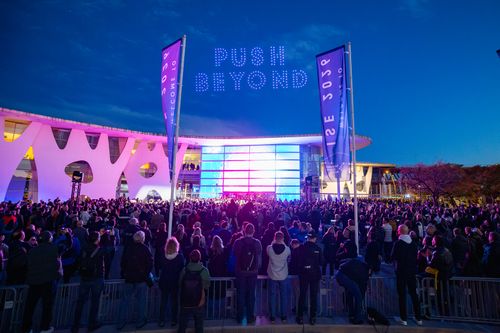 Spanning all eight halls at Fira de Barcelona Gran Via, ISE 2026 delivered four days of record-breaking energy, creativity, and innovation.
-
 The initiative will create new opportunities for talent development, innovation and community projects across the sector
-
 The Facts & Figures report for ISE 2026 is available to download.
-
 Bringing together startups, investors and industry leaders, the expanded show feature offers a strong platform for visibility, networking, and commercial opportunity.
-
 This new type of event brings together end users, creators and production specialists from broadcast, live events, advertising and gaming, combining creative showcases, editorial programming and netwo ...