Session: Classroom technology that stays out of the way: UAL's Gary Keene on 450 teaching spaces
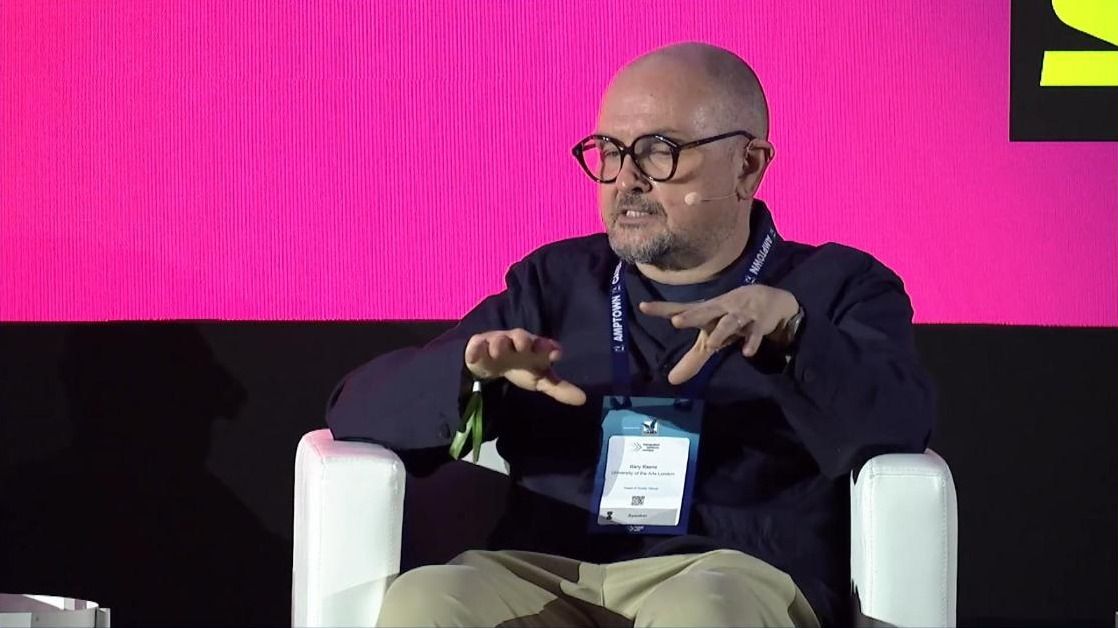
How University of the Arts London sets AV priorities, pilots changes in test rooms, records tutors for AI summaries and measures rooms by asking the day after.
- Event: ISE 2026
- From session: Unlocking Learning Potential
- Speakers:
- Gary Keene, Head of AV, University of the Arts London
- Mick Heys, VP Future of Workspaces and Imaging, IDC
- Estimated read time: 8 minutes
- Watch the full session
Quick read summary
- Classroom technology at University of the Arts London is judged on one test: whether the AV got in the way of teaching.
- UAL’s governance board ranked its design factors and found the top two contradict: stable interfaces, yet teaching that is hard to forecast beyond about three years.
- Every change moves from test rooms to about five rooms, then to a wider rollout, with users polled at each stage.
- A fast-growing test records tutors at students’ tables and uses Microsoft Copilot agents to compare each conversation with course goals.
- Gary Keene asks users about one specific session the day after, and compares satisfaction before and after each change.
Every university AV team knows the bind. Academics want classroom technology that behaves the same way every time they walk into a room. Yet the courses taught in those rooms keep changing, and the rooms have to change with them.
At ISE 2026, Gary Keene, Head of AV at University of the Arts London (UAL), explained how he handles that tension. UAL has about 540 spaces, around 450 of them for teaching, and some 19,000 students. Mick Heys, VP Future of Workspaces and Imaging at IDC, moderated the session as an interview.
A first year spent listening
Keene spent his first year at UAL listening, to avoid bringing in his old sector’s answers too quickly. "I listened for a year" was his short answer to Heys’s first question.
He set up a governance board with members from each of UAL’s five colleges, typically heads of learning environments and heads of learning innovation.
The board then spent about six months on design factors that usually sit unspoken inside any AV design: accessibility, sustainability, a frictionless user experience, reliability and total cost of ownership. With an external consultant in the room, it had to weight and rank them against each other, the trade-off Keene said most organisations never make. ISE has also looked at how strategic AV can amplify learning space versatility.
Two priorities that pull in opposite directions
UAL’s top two priorities contradict each other, and Keene designs for both. The first is that things should not change. User interfaces should change only at a pace the academic community sets, not one set by a software manufacturer’s next upgrade.
The second is that UAL’s teaching does change, and quickly. Keene asked UAL’s head of academic strategy when a forecast of what is taught in a typical room drops below 50 per cent accuracy. The answer was about three years. Rooms therefore need stable controls on the surface and flexibility underneath. For the wider trend, see why classrooms are becoming connected learning environments.
How do you change technology in the classroom without disrupting teaching?
At UAL, change comes in small steps, with the people who teach there testing each one. A change goes into a couple of UAL’s test rooms first. If it works, it scales up to maybe five rooms in one school, gathers more feedback and is iterated. Only then might it move to a larger rollout.
Keene is frank that this slows everything down, because every request comes through him and through testing. His answer is to hand interface decisions back to academics, course by course and room by room.
Our ultimate goal there is when it comes to things like user interfaces, is to give control back to the users.
How is UAL approaching AI in teaching?
UAL is deliberately neutral, so that adoption is driven by academics rather than imposed by senior leadership, technology or manufacturers. Heys steered Keene to a test that has expanded quickly because of its popularity. A room might hold six or seven tables. The academic sets the task, then walks between tables, coaching each group.
Lecture capture matters less at UAL. In Keene’s words, "we do lecture capture, but it’s not a mission critical part of our offering". What matters is the tutor’s conversation at each table.
UAL puts those recordings into Microsoft Copilot, where it has built a set of agents. They summarise each conversation for the academic and each student, check it against course goals and suggest follow-up work where it falls short. There is more on how AI is reshaping education.
Audio, not video, is where the learning happens
Keene rates audio above video because UAL teaches through dialogue. "We teach through talking," he said.
Capturing that talk is the hard part. Following one tutor’s voice through a busy studio is the problem UAL is still working on. Keene asked the audience to imagine sewing machines in place of tables, with many conversations at once. Audio-follows-video systems, with cameras that track an individual and ceiling array microphones that pass the voice along, help, but they are still expensive because they were designed for lecture theatres.
The open question, in Keene’s words, is "how do we know who’s in charge here?"
Can satisfaction scores really measure classroom technology?
Yes, Keene argued, if the questions are about one specific session rather than general opinion. Heys described IDC’s research with Shure on a collaboration quotient, which prices fewer help desk tickets and meetings that start on time into a return on investment. Keene finds models like that crude, because they average out to one perspective. He uses customer satisfaction, or CSAT, while accepting it is often seen as a weak signal.
we see CSAT as sort of being a proxy for, am I getting in the way of you doing the job that you need to do?
His team talks to people who used a space the day before and asks whether the AV team’s work got in the way of their objectives there. With a fresh memory, users answer in concrete terms the team can act on.
Each idea goes into a test room with that user’s CSAT already captured, and is measured again afterwards. Across competing requests, that gives UAL what Keene called "a pedagogical bang for the buck". UAL is not alone in weighing those requests: see how universities decide where to invest in technology.
Five steps from Keene’s approach
- Listen before you apply. Learn what teaching staff need before using what worked in another sector.
- Name and rank your design factors. Use an outside facilitator, and expect the top priorities to clash.
- Ask how long teaching stays predictable. If the answer is three years, design rooms that users can reconfigure.
- Pilot in stages. Move from test rooms to about five rooms, then to a wider rollout.
- Ask about yesterday. Ask users the day after whether the AV got in the way, before and after each change.
FAQ
- How does University of the Arts London test classroom technology before a rollout? University of the Arts London (UAL) first tries a change in a couple of test rooms, then in about five rooms in one school, then more widely. Gary Keene, Head of AV at UAL, said the university never goes live with an untested solution.
- Why does UAL use CSAT rather than a return on investment model? Gary Keene, Head of AV at University of the Arts London, finds return on investment models crude because they average out to one perspective. He treats customer satisfaction (CSAT) as a proxy for whether AV got in the way of teaching, asked about a specific session the day after.
- Can AI in teaching work without being imposed on academics? At University of the Arts London, Head of AV Gary Keene keeps the university neutral on AI so that academics lead adoption. A test records tutors’ conversations at students’ tables, and Microsoft Copilot agents summarise them against course goals.
An AV team with nothing to do
Heys saved his last question for a line from their earlier conversation: Keene’s objective is to have no work to do. Keene said he is slowly getting there, and that the secret is trusting his clients. More and more of what his team does can be handed back to the people who use the rooms.
So his design effort now goes into rooms academics can reconfigure from one teaching need to another, quickly and easily, at their own pace. The alternative is a request to his team, and Keene said UAL’s service level agreement for that is two weeks.
That is the session’s sharpest point for anyone who designs teaching spaces. Each stage of Keene’s method, from the governance board to the day-after question, gives control back to the people in the room. Heys summed it up as being about the people.
An AV team can measure success by how much it delivers, or, as Keene does, by how rarely it is needed. At UAL, the test of any change is whether the tutor, asked the next morning about yesterday’s class, says the AV did not get in the way.
About the speakers
Gary Keene
Head of AV, University of the Arts London
Keene has led AV at UAL for about two and a half years, supporting around 540 spaces across five colleges, after joining from Google.
Mick Heys
VP Future of Workspaces and Imaging, IDC
Heys leads IDC’s research into the smart office and hybrid working in EMEA, including education.
More classroom technology at ISE
Teaching spaces that just work are a big theme for education buyers.
- Collaboration and education tech at ISE: edtech, the Connected Classroom and education sessions.
- ISE’s content programme: where to find the sessions that matter to your role.
- Never been to ISE? Plan your visit with the guide for new attendees.
Featured Articles
-
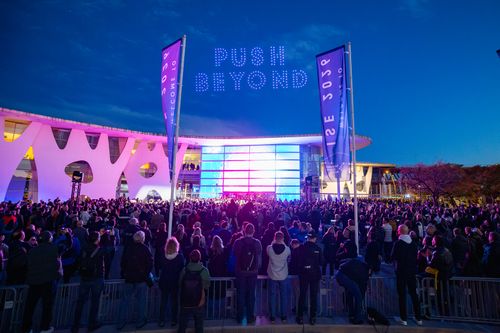 Spanning all eight halls at Fira de Barcelona Gran Via, ISE 2026 delivered four days of record-breaking energy, creativity, and innovation.
-
 The initiative will create new opportunities for talent development, innovation and community projects across the sector
-
 The Facts & Figures report for ISE 2026 is available to download.
-
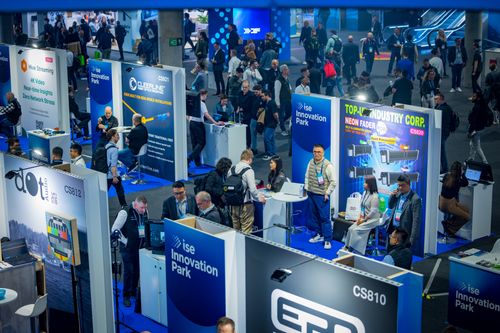 Bringing together startups, investors and industry leaders, the expanded show feature offers a strong platform for visibility, networking, and commercial opportunity.
-
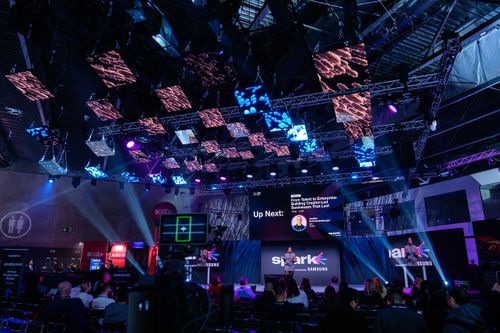 This new type of event brings together end users, creators and production specialists from broadcast, live events, advertising and gaming, combining creative showcases, editorial programming and netwo ...