

How are universities deciding where to invest in technology?
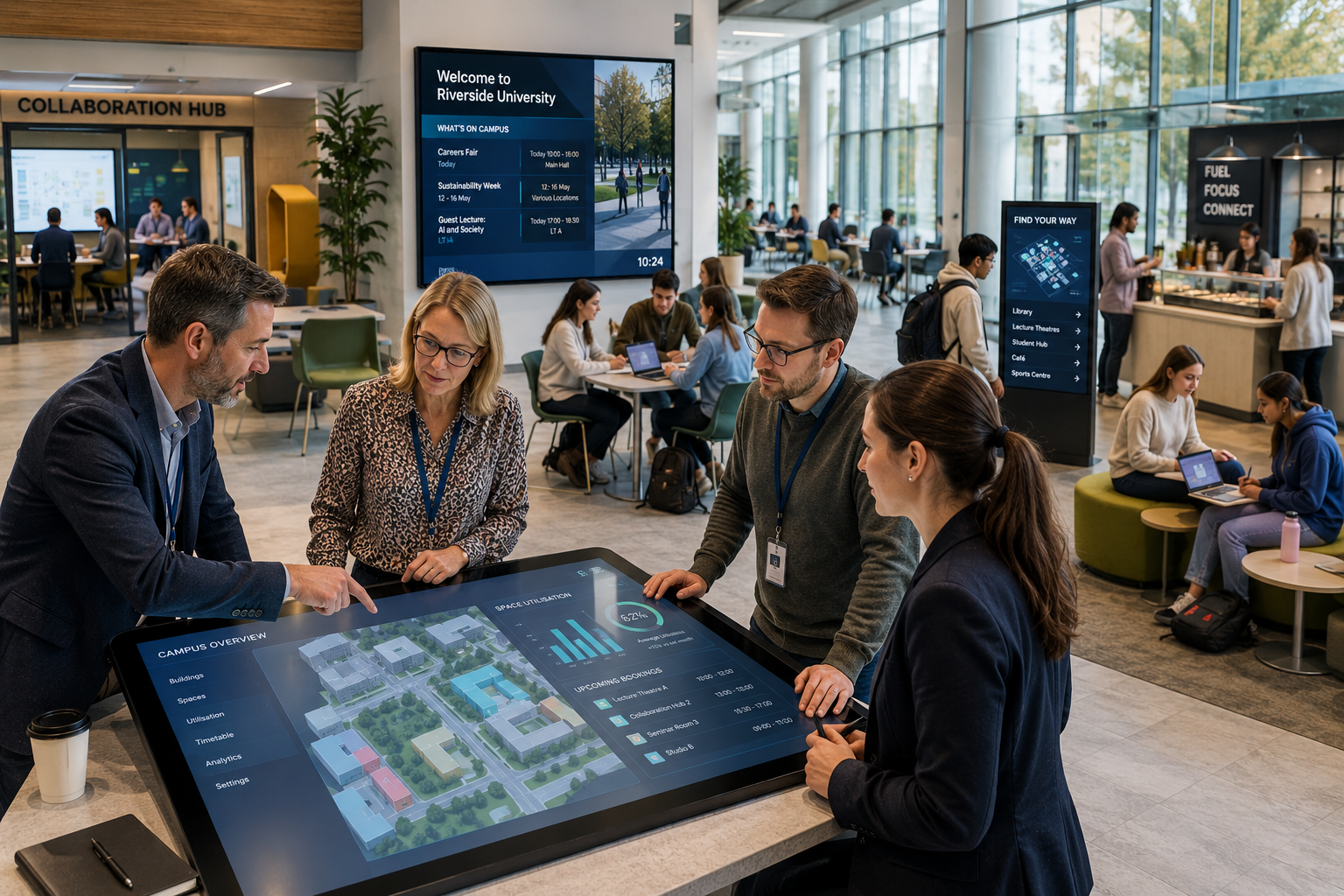
Universities are no longer investing in technology simply to replace ageing equipment or modernise individual teaching spaces. Increasingly, investment decisions are being guided by long-term institutional objectives, with universities looking beyond individual products to the outcomes technology can deliver across the entire campus.
For many years, education technology projects often followed a familiar pattern. A lecture theatre needed upgrading. A new display was installed. An ageing audio system was replaced. Individual departments secured funding for their own priorities, asking, in effect, "What technology do we need?"
The result was frequently a patchwork of systems that worked well in isolation but were difficult to manage, support and scale across an entire university.
Today, universities are asking a different question: "What outcomes are we trying to achieve?"
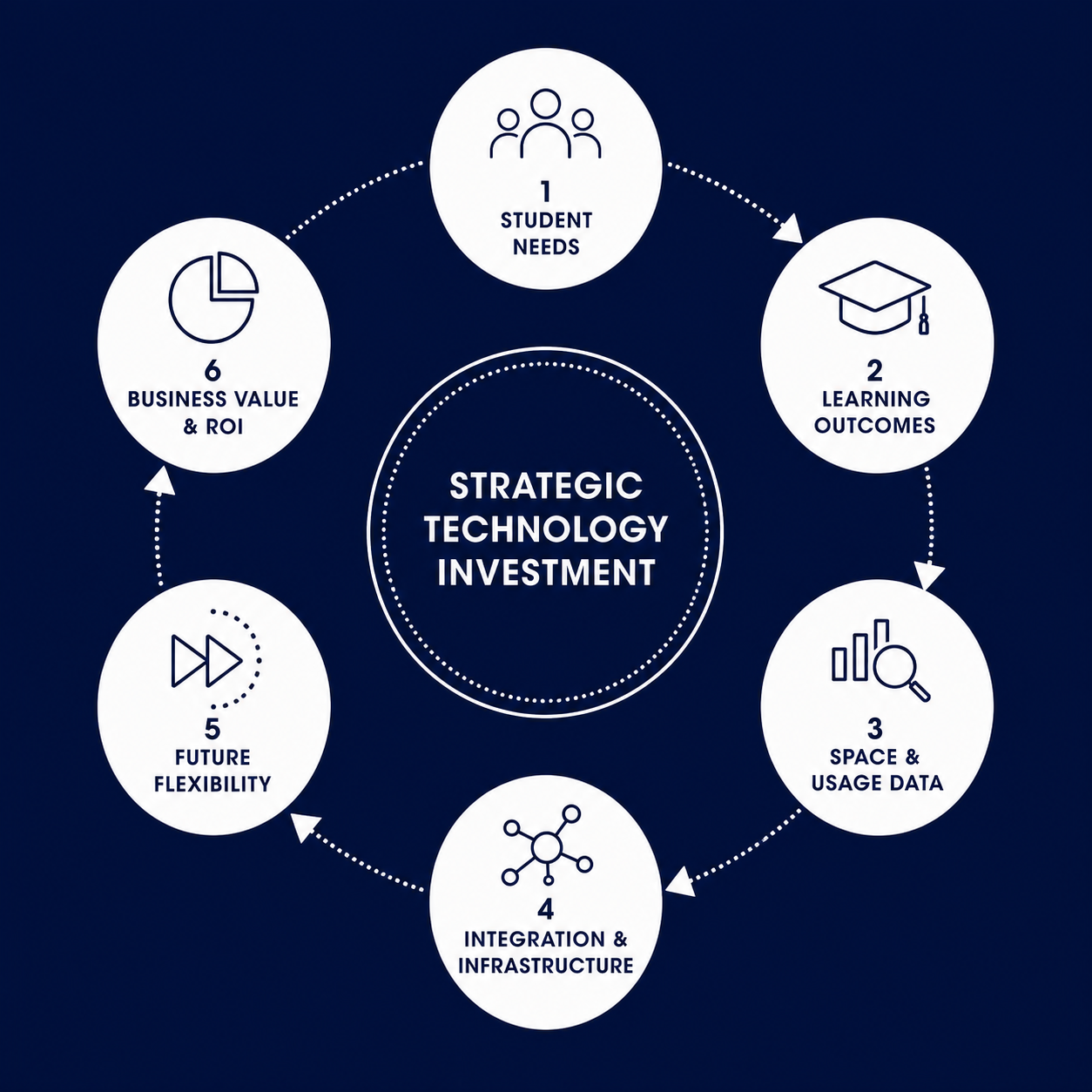
As teaching becomes more flexible and financial pressures continue to grow, technology is increasingly viewed as part of a connected digital ecosystem rather than a collection of individual rooms or projects. Investment is being shaped by goals such as improving learning outcomes, increasing operational efficiency, enhancing the student experience and creating campuses that can adapt to changing educational, technological and business requirements.
Universities are investing where technology delivers measurable value
Every technology investment now competes for limited budgets.
That means universities are placing greater emphasis on measurable outcomes rather than simply acquiring the latest equipment.
Questions increasingly include:
-
Will this improve the student and staff experience?
-
Can it be managed efficiently across multiple buildings?
-
Does it integrate with existing platforms?
-
Will it remain useful over the next five to ten years?
-
Can it support both in-person and hybrid learning?
These considerations are encouraging institutions to prioritise scalable platforms over standalone products. Networked AV systems, cloud-based management, standardised room designs and enterprise-wide monitoring all reduce complexity while improving reliability.
The emphasis is moving from buying technology to investing in capability.
Data is helping universities make better decisions
Another significant change is the growing use of data.
Occupancy sensors, room booking platforms and AV management software are giving estates, IT and academic teams a much clearer understanding of how learning spaces are actually being used.
Rather than relying on assumptions, universities can identify underused rooms, understand peak demand and prioritise investment where it will have the greatest impact.
This evidence-based approach also helps justify spending to senior leadership by linking technology investment to operational efficiency, sustainability and student outcomes.
In many institutions, AV, IT, estates and teaching teams are collaborating much more closely than they did just a few years ago.
A recent example of strategic investment
One example is the Student Hall for Exploration and Development (SHED) at the Rochester Institute of Technology (RIT). Opened as a multidisciplinary learning hub, the project was designed around flexible use rather than fixed teaching spaces. Professional AV, collaboration technology and integrated room management were selected to support a wide variety of learning, creative and community activities, demonstrating how universities are increasingly investing in adaptable infrastructure instead of single-purpose facilities. Technologies from ISE 2027 exhibitors including Crestron and Shure form part of the integrated environment, supporting collaboration across multiple types of space.
Rather than representing a one-off technology upgrade, the project reflects a longer-term investment in flexibility, interoperability and future readiness.
Why this matters for the AV industry
This shift is changing the role of professional AV.
Instead of being viewed as a collection of classroom technologies, AV is becoming an integral part of campus infrastructure that supports teaching, collaboration, communications and space management.
At ISE 2027, exhibitors such as Sony, Crestron and Cisco are showcasing technologies that help universities standardise learning environments, simplify management and build connected campuses capable of evolving alongside changing educational needs.
As higher education continues to evolve, the most successful institutions are unlikely to be those that buy the most technology.
They will be those that invest in technology with the clearest long-term purpose.
 Stay ahead – Stay informed.
As an AV specialist or industry leader, you recognise how crucial it is to keep up with evolving trends, new technologies, and notable happenings within the audiovisual world. That's why we're delighted to invite you to receive exclusive email updates about ISE – the world-renowned tech show for the systems integration and audiovisual industry.
When you subscribe, you'll be kept up to speed with insightful commentary on the freshest developments in AV, get early looks at what's planned for the ISE content schedule – including headline speakers – and benefit from in-depth reporting on the show's standout attractions.
Sign up now to stay at the forefront of audiovisual innovation and expertise.
Frequently asked questions
What drives technology investment in universities?
Universities increasingly base technology investment on strategic outcomes such as improving learning experiences, increasing operational efficiency, supporting hybrid teaching and making better use of campus spaces.
Why are universities adopting standardised technology platforms?
Standardised platforms simplify management, improve reliability, reduce support costs and create a more consistent experience for students and staff across campus.
How does data influence technology investment?
Analytics from room booking systems, occupancy sensors and AV management platforms help universities understand how spaces are used and identify where investment will have the greatest impact.
Why is AV becoming part of long-term campus strategy?
Modern AV systems support far more than teaching. They contribute to collaboration, communications, accessibility and campus-wide digital services, making them an important part of institutional infrastructure.
Further reading
Related articles
- Why classrooms are becoming connected learning environments
- Student experience is becoming the campus competitive advantage
- Why AV and IT are finally becoming one conversation
- Universities have a smart spaces problem
Related Content
-
) Today's students judge a university long before they attend their first lecture. Student experience has become a strategic differentiator.
Today's students judge a university long before they attend their first lecture. Student experience has become a strategic differentiator. -
) Hybrid learning took off as a response to disruption. It is becoming a long-term design challenge.
Hybrid learning took off as a response to disruption. It is becoming a long-term design challenge. -
) Students have changed. And classrooms are changing with them.
Students have changed. And classrooms are changing with them. -
) Education has been asking: How should institutions use AI? But perhaps the more important question is: How should education evolve in a world where AI exists?
Education has been asking: How should institutions use AI? But perhaps the more important question is: How should education evolve in a world where AI exists? -
) Most universities are investing in technology. Far fewer are investing in strategy. That distinction matters.
Most universities are investing in technology. Far fewer are investing in strategy. That distinction matters.
Featured Articles
-
) Spanning all eight halls at Fira de Barcelona Gran Via, ISE 2026 delivered four days of record-breaking energy, creativity, and innovation.
Spanning all eight halls at Fira de Barcelona Gran Via, ISE 2026 delivered four days of record-breaking energy, creativity, and innovation. -
) The initiative will create new opportunities for talent development, innovation and community projects across the sector
The initiative will create new opportunities for talent development, innovation and community projects across the sector -
) The Facts & Figures report for ISE 2026 is available to download.
The Facts & Figures report for ISE 2026 is available to download. -
) Bringing together startups, investors and industry leaders, the expanded show feature offers a strong platform for visibility, networking, and commercial opportunity.
Bringing together startups, investors and industry leaders, the expanded show feature offers a strong platform for visibility, networking, and commercial opportunity. -
) This new type of event brings together end users, creators and production specialists from broadcast, live events, advertising and gaming, combining creative showcases, editorial programming and netwo ...
This new type of event brings together end users, creators and production specialists from broadcast, live events, advertising and gaming, combining creative showcases, editorial programming and netwo ...
)
)

)
)
)
)
)
)
)
)
)
)
)
)
)
)
)
)
)
)
)
)
)
)
)
)
)
)
)
)
)
)
)
)

)
)
)
)
)
)
)

![rAVe [PUBS]](https://cdn.asp.events/CLIENT_Integrat_169E7B04_E6F3_39F6_8BE4DB27C54F731E/sites/ise-2027/media/libraries/partners/rAVe-PUBS-Google-Logo.png/fit-in/500x500/filters:no_upscale())
.png/fit-in/500x500/filters:no_upscale())
)
)
)
)
)
)
)
)
)
)