

Session: Camera robotics has conquered the newsroom. What does it take over next?
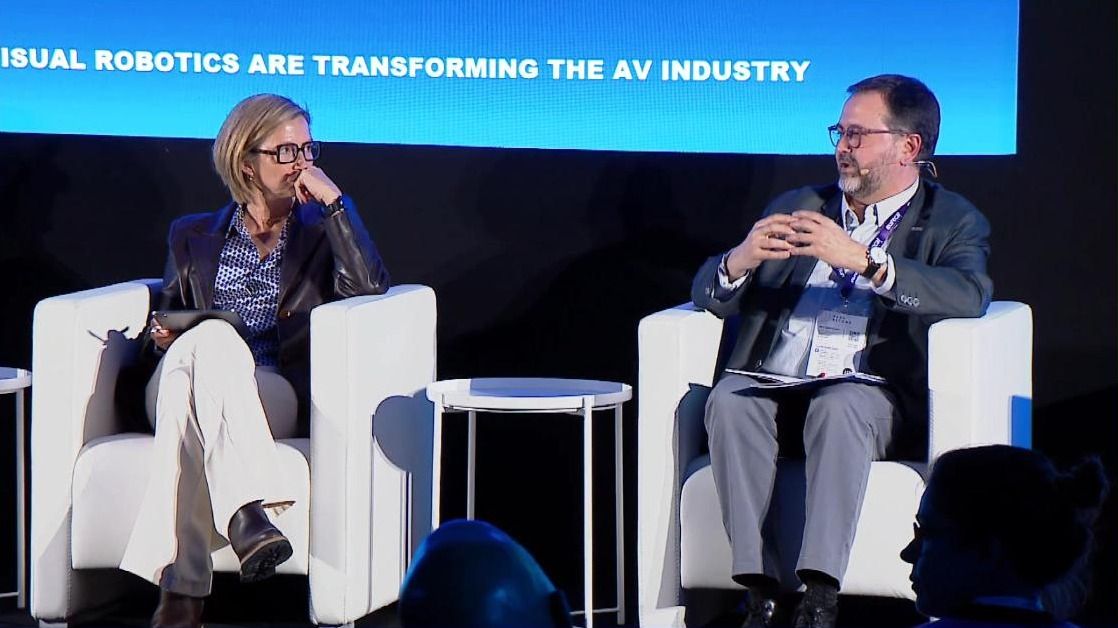
How robots already work in TV studios, what Catalan broadcaster 3Cat uses them for, the barriers that remain and where the value of robotics will come from.
- Event: ISE 2026
- From session: How Audiovisual Robotics are Transforming the AV Industry
- Speakers:
- Carles Gómara Martinez, Innovation and Digital Transformation expert, ACCIÓ
- Joan Rosés, Editor, Observatori Switch
- Natàlia Prats, Director of Digital and Technological Infrastructures, 3Cat
- Joan Guasch, Director of Corporate Affairs and R&I Policies, Eurecat Technology Centre
- Estimated read time: 8 minutes
- Watch the full session
Quick read summary
- Camera robotics is already standard in television news, and the next gains lie in sets, lighting, LED walls and archives.
- A Catalan AV cluster report gathers about 60 use cases and 80 companies and research centres working on audiovisual robotics.
- Seven barriers slow adoption, from missing real-time data and radio noise to battery life, cost and scarce European suppliers.
- The panel expects value to move from single machines to orchestrated systems that combine robotics, AI and automation.
- Humans still set the rules, so operators are becoming supervisors and designers, and training has to catch up.
Eighty-five per cent of television studios already use some form of robotic camera in news production. That figure, from a report by the Catalan AV cluster presented at ISE 2026, shows how quietly camera robotics has become routine. The sharper question is what robots take on next, and what is stopping them.
Joan Rosés, editor of Observatori Switch, presented the findings. Carles Gómara Martinez of ACCIÓ then moderated a panel with Natàlia Prats of the Catalan public broadcaster 3Cat and Joan Guasch of Eurecat Technology Centre.
Camera robotics is changing what a shot can be
Camera robotics is no longer an experiment in broadcast news. It is the default. Rosés said these machines are moving from automated camera supports to tools that widen narrative possibilities, simplify production and capture shots no human operator could manage.
What does the Catalan report cover?
The report is a practical map of where robots already work, not an academic study. It runs to about 100 pages, with about 60 use cases and 80 companies and research centres. Beyond news cameras, it covers cinema, virtual production and robots that build sets, control lighting and manage archives.
AI will widen this. Rosés said new world models will let robots understand three-dimensional spaces and work beside people more safely. His summary was blunt: "If AI turns physical, robots will become intelligent."
How far has one public broadcaster gone?
3Cat uses robots at many points in its production, starting with robotic camera systems in its studios. Its new news set uses a Ross Video system with lidar (laser scanning) and geofencing to build a precise 3D map of the studio. Prats said the installation had been highlighted as the first of its kind in the world.
Robots also move 42 linear metres of LED wall, synchronised with the production. The broadcaster’s archive of roughly 57 to 60 petabytes depends on automated tape libraries.
Why did robots step out of the cage?
Robots left their safety cages because sensors and mechanics became good enough for them to work beside people. A decade ago, Guasch’s group at Eurecat worked on static industrial robots, such as welding arms, which sat inside protective cells.
Better sensors, mechanics and motors then let robots move around sites on their own. That shift created what the industry calls service robots. Eurecat’s work now joins power supply, advanced sensors and AI. For a wider view, read how robotics is taking AV automation into the physical world.
What is still holding robots back?
Seven barriers came up, four from Eurecat’s research and three from 3Cat’s production floor. Sailing or skiing means following an athlete through real uncertainty, Guasch said, and robots lack the real-time digital twins to decide. At a MotoGP circuit, radio noise cut a robot’s link to its surroundings, a risk explored in the future of outside broadcast.
Prats started from what robots are for: "They have to support creativity, not just efficiency." For small broadcasters, she added, robotics still looks like a luxury.
| Barrier | Raised by | What it looks like in practice |
|---|---|---|
| Real-time digital twins | Joan Guasch | Robots cannot follow unpredictable action, such as sailing or skiing, without live data |
| Telecommunications | Joan Guasch | Radio noise at a MotoGP circuit stopped a robot communicating |
| Energy | Joan Guasch | Customers want longer running time between charges |
| Interoperability | Joan Guasch | Data from AI, the robot and the venue is not packaged for other systems to use |
| Capability and scale | Natàlia Prats | Robots must be smarter, safer, more precise and sized for small productions |
| Supplier location | Natàlia Prats | 3Cat’s studio robotics supplier is Canadian, so daily support comes from far away |
| Talent | Natàlia Prats | Operators become supervisors and designers faster than universities adapt |
Read it as a buying checklist: each row is a question a supplier should answer before a contract is signed.
Who wins and who is squeezed?
Broadcasters that move first are shaping the market, while smaller broadcasters and Europe’s supply chain risk falling behind. Gómara Martinez observed that 3Cat, as a first mover, faces problems nobody has faced before, and so is in effect creating the market.
Supply is the weak point. Prats urged Catalan investors to build more robotics industry nearer home. Guasch widened the point to the continent: "We are between the Asian providers and the American providers, and we are there in the middle."
People are the third group affected. Prats expects roles to evolve from operators to supervisors or designers, and wants broadcasters, industry and universities aligned. Gómara Martinez put it plainly: "We need humans behind the machines."
Is cost the wrong place to start?
Yes, in Guasch’s view. After a demonstration of what different robots can do, companies almost always ask what it costs first.
That’s not the right question. The question is, what can this robot do in my daily activity?
Starting from the daily task lets a team find a real solution and judge the robot on the value it creates.
Orchestration is where the value moves
The value of robotics in audiovisual work will come from an orchestration layer that coordinates many machines, not from any single robot. Prats described the shift as moving from controlling devices to coordinating systems.
AI brings understanding while robotics handles the execution.
In 3Cat’s archive, AI creates metadata by recognising faces and voices, and the robot retrieves the content. Guasch agreed that a robot never decides on its own: a human expert, such as a broadcaster, defines the rules it applies. The same argument runs through the case that robotics is quietly becoming the next AV platform.
FAQ
- How common is camera robotics in television news? Camera robotics is now standard in television news. A report by the Catalan AV cluster, presented by Joan Rosés of Observatori Switch, found that 85 per cent of television studios use some form of robotic camera in news production.
- How does 3Cat use robotic camera systems? 3Cat, the Catalan public broadcaster, runs a Ross Video system on its news set that maps the studio in 3D with lidar and geofencing. Robots also move 42 linear metres of LED wall, and automated tape libraries serve an archive of roughly 57 to 60 petabytes.
- Why are service robots different from industrial robots? Industrial robots traditionally work inside protective cells, away from people, on tasks such as welding. Service robots leave the cell and work among people, which depends on advanced sensors and mechanics.
- Which barriers slow robotics in broadcasting? Joan Guasch of Eurecat Technology Centre named real-time digital twins, telecommunications, energy and interoperability. Natàlia Prats of 3Cat added robot capability and scalability for small broadcasters, the distance to suppliers and a shortage of talent.
The machines are ready sooner than the workflows
The striking thing about this session was how little of it concerned the robots themselves. Camera robotics is settled in the newsroom, and the machines that move LED walls and fetch archive tapes are working today. What lags is everything around them: live data, reliable connections, batteries that last, systems that share information and people trained to supervise rather than operate.
That changes where the work sits next. A broadcaster’s edge will come from how well its robots are orchestrated with AI and automation, and how clearly its experts write the rules those machines follow. Smaller broadcasters will only get a way in if suppliers build robots sized for them. Europe’s position depends on whether its creative strength can grow a supply chain caught between Asia and America.
For buyers, Guasch’s reframing is the useful one. Begin with the task a robot would do every day, and only then ask what it costs. In a studio where robots already move the cameras, the walls and the archive, the scarce resource is no longer the machine. It is the person who tells it what matters.
About the speakers
Carles Gómara Martinez
Innovation and Digital Transformation expert, ACCIÓ
Gómara Martinez helps companies adopt new technologies at ACCIÓ and is an independent expert for the European Commission.
Joan Rosés
Editor, Observatori Switch
Rosés presented the observatory’s report on audiovisual robotics for the Catalan AV cluster at ISE 2026.
Natàlia Prats
Director of Digital and Technological Infrastructures, 3Cat
Prats leads the technical team at the Catalan public broadcaster and is a computer and telecommunications engineer.
Joan Guasch
Director of Corporate Affairs and R&I Policies, Eurecat Technology Centre
Guasch is a mechanical engineer with more than 20 years in applied manufacturing research and vice president of the Spanish Association of Robotics and Automation.
Explore AV robotics at ISE
Camera robotics is spreading from the newsroom to every kind of venue.
- Emerging technologies at ISE: robotics and automation across pro AV.
- Broadcast solutions at ISE: the newsroom and studio side of camera robotics.
- Everything on the ISE programme: every summit, keynote and show-floor stage.
- Planning your first ISE? Read the first-time visitor guide before you go.
Featured Articles
-
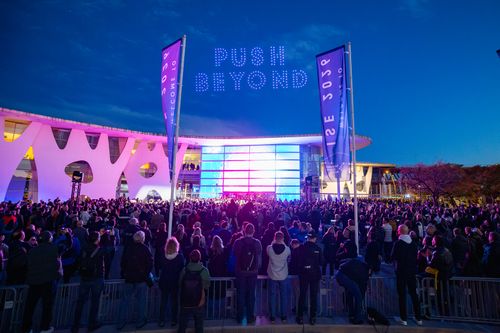 Spanning all eight halls at Fira de Barcelona Gran Via, ISE 2026 delivered four days of record-breaking energy, creativity, and innovation.
-
 The initiative will create new opportunities for talent development, innovation and community projects across the sector
-
 The Facts & Figures report for ISE 2026 is available to download.
-
 Bringing together startups, investors and industry leaders, the expanded show feature offers a strong platform for visibility, networking, and commercial opportunity.
-
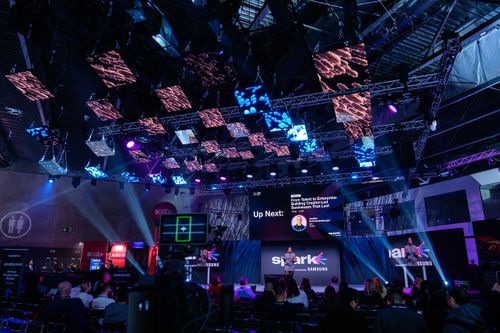 This new type of event brings together end users, creators and production specialists from broadcast, live events, advertising and gaming, combining creative showcases, editorial programming and netwo ...