

Beautiful rooms are no longer designed one system at a time
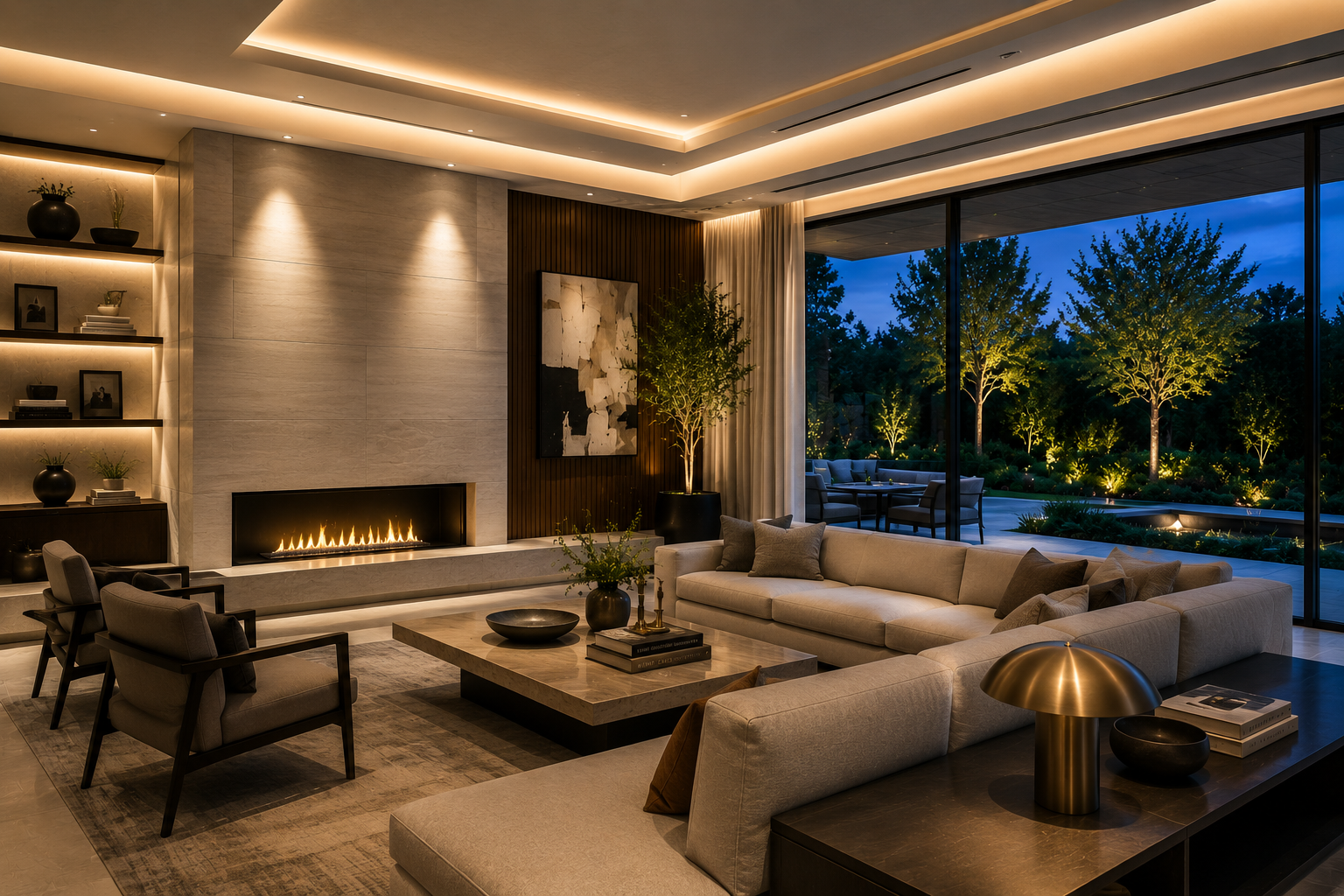
For generations, luxury interior design was largely a visual discipline.
Architects shaped the space. Interior designers selected materials, furniture and finishes. Technology arrived later, often as an unwelcome compromise that had to be concealed as discreetly as possible.
That sequence is beginning to reverse.
Today, some of the most successful luxury residential projects are being designed around experiences rather than objects. Lighting, audio and climate control are no longer independent systems added towards the end of a project. They are becoming fundamental design tools that influence how a home feels from the moment someone walks through the door.
The change reflects a broader shift in client expectations.
Affluent homeowners increasingly compare their homes not with neighbouring properties, but with the world's best hotels, private clubs and wellness retreats. They expect spaces that adapt intuitively throughout the day, creating environments that support relaxation, entertaining, working and sleeping without demanding constant interaction.
Achieving that level of sophistication requires much closer collaboration between disciplines that have traditionally worked independently.
Architects are considering infrastructure much earlier in the design process. Interior designers are thinking about concealed speakers, lighting scenes and shading systems while developing the aesthetic concept. Residential integrators are contributing to conversations about the overall experience rather than simply specifying equipment.
Technology is becoming part of the architecture.
Lighting illustrates this particularly well.
Its role has expanded far beyond illumination. Intelligent lighting now shapes atmosphere, supports circadian rhythms, highlights architectural features and transforms how materials and textures are perceived at different times of day. Rather than acting as a finishing touch, lighting increasingly establishes the emotional character of a space.
Audio is undergoing a similar transformation.
Instead of dedicated listening rooms or visible loudspeakers, clients increasingly expect discreet architectural audio that delivers consistent performance without competing with the interior design. Music becomes part of the ambience, supporting everyday life rather than announcing the presence of technology.
Climate control is evolving too.
Temperature, ventilation and air quality were once regarded primarily as engineering considerations. Today they play a growing role in residential wellbeing, influencing comfort, concentration and sleep quality while remaining almost entirely invisible to the occupants.
Individually, each of these systems is valuable.
Together, they create something much more powerful.
A beautifully designed room can lose much of its appeal if it sounds harsh, feels stuffy or is poorly lit. Equally, outstanding technology rarely creates a memorable experience if it has been considered separately from the architecture and interiors.
This growing emphasis on integrated design is reflected across the residential technology industry.
At ISE, Bang & Olufsen continues to explore how premium audio products can become architectural features in their own right, combining craftsmanship with discreet integration into contemporary interiors. Conversely, Amina Sound remains a leader in invisible loudspeakers, enabling architects and interior designers to deliver immersive sound while preserving clean architectural lines. 2N is increasingly positioning access control as part of the overall residential experience, with elegant entry systems designed to complement modern architecture rather than detract from it, while Legrand AV continues to expand solutions that help integrate AV infrastructure cleanly into high-end residential projects.
The wider industry is responding in similar ways. In recent years, luxury hospitality brands have continued investing heavily in lighting, acoustics and environmental comfort as differentiators, while many high-end residential projects have adopted similar principles. The result is a growing expectation that homes should deliver not only visual beauty but also a consistent sense of comfort and wellbeing.
Perhaps the most significant change is philosophical.
Luxury homes are no longer being judged solely by what people can see.
They are increasingly judged by what people experience.
Integrated Systems Europe has become one of the places where architects, designers, residential integrators and technology manufacturers explore this changing relationship between design and technology. As those conversations continue to evolve, the distinction between architecture, interiors and intelligent systems is likely to become even less pronounced.
Because tomorrow's most successful luxury homes won't simply look beautiful.
They will feel beautiful too.
Stay ahead – Stay informed.
As an AV specialist or industry leader, you recognise how crucial it is to keep up with evolving trends, new technologies, and notable happenings within the audiovisual world. That's why we're delighted to invite you to receive exclusive email updates about ISE – the world-renowned annual tech show for the systems integration and audiovisual industry.
When you subscribe, you'll be kept up to speed with insightful commentary on the freshest developments in AV, get early looks at what's planned for the ISE content schedule – including headline speakers – and benefit from in-depth reporting on the show's standout attractions.
Sign up now?to stay at the forefront of audiovisual innovation and expertise.
Further reading
Related Content
-
) Human centric lighting (HCL) is an approach to lighting design that considers how light affects human health, comfort, mood and performance, rather than simply providing visibility.
Human centric lighting (HCL) is an approach to lighting design that considers how light affects human health, comfort, mood and performance, rather than simply providing visibility. -
) For years, one of the biggest frustrations with smart home technology has been surprisingly simple: not everything talks to everything else. Matter is designed to make that easier.
For years, one of the biggest frustrations with smart home technology has been surprisingly simple: not everything talks to everything else. Matter is designed to make that easier. -
) Why residential technology is moving beyond gadgets.
Why residential technology is moving beyond gadgets. -
) How smart building technology improves resident retention.
How smart building technology improves resident retention. -
) As homes become more connected, technology decisions are beginning to influence much more than entertainment.
As homes become more connected, technology decisions are beginning to influence much more than entertainment.
Featured Articles
-
) Spanning all eight halls at Fira de Barcelona Gran Via, ISE 2026 delivered four days of record-breaking energy, creativity, and innovation.
Spanning all eight halls at Fira de Barcelona Gran Via, ISE 2026 delivered four days of record-breaking energy, creativity, and innovation. -
) The initiative will create new opportunities for talent development, innovation and community projects across the sector
The initiative will create new opportunities for talent development, innovation and community projects across the sector -
) The Facts & Figures report for ISE 2026 is available to download.
The Facts & Figures report for ISE 2026 is available to download. -
) Bringing together startups, investors and industry leaders, the expanded show feature offers a strong platform for visibility, networking, and commercial opportunity.
Bringing together startups, investors and industry leaders, the expanded show feature offers a strong platform for visibility, networking, and commercial opportunity. -
) This new type of event brings together end users, creators and production specialists from broadcast, live events, advertising and gaming, combining creative showcases, editorial programming and netwo ...
This new type of event brings together end users, creators and production specialists from broadcast, live events, advertising and gaming, combining creative showcases, editorial programming and netwo ...
)
)

)
)
)
)
)
)
)
)
)
)
)
)
)
)
)
)
)
)
)

)
)
)
)
)
)
)
)
)
)
)
)
)
)
)
)
)
)
)
)
)
)
)
)
)
)
)
)
)
)
)
)
)
.png/fit-in/500x500/filters:no_upscale())
)
)