
How should organisations design AV systems for content production?
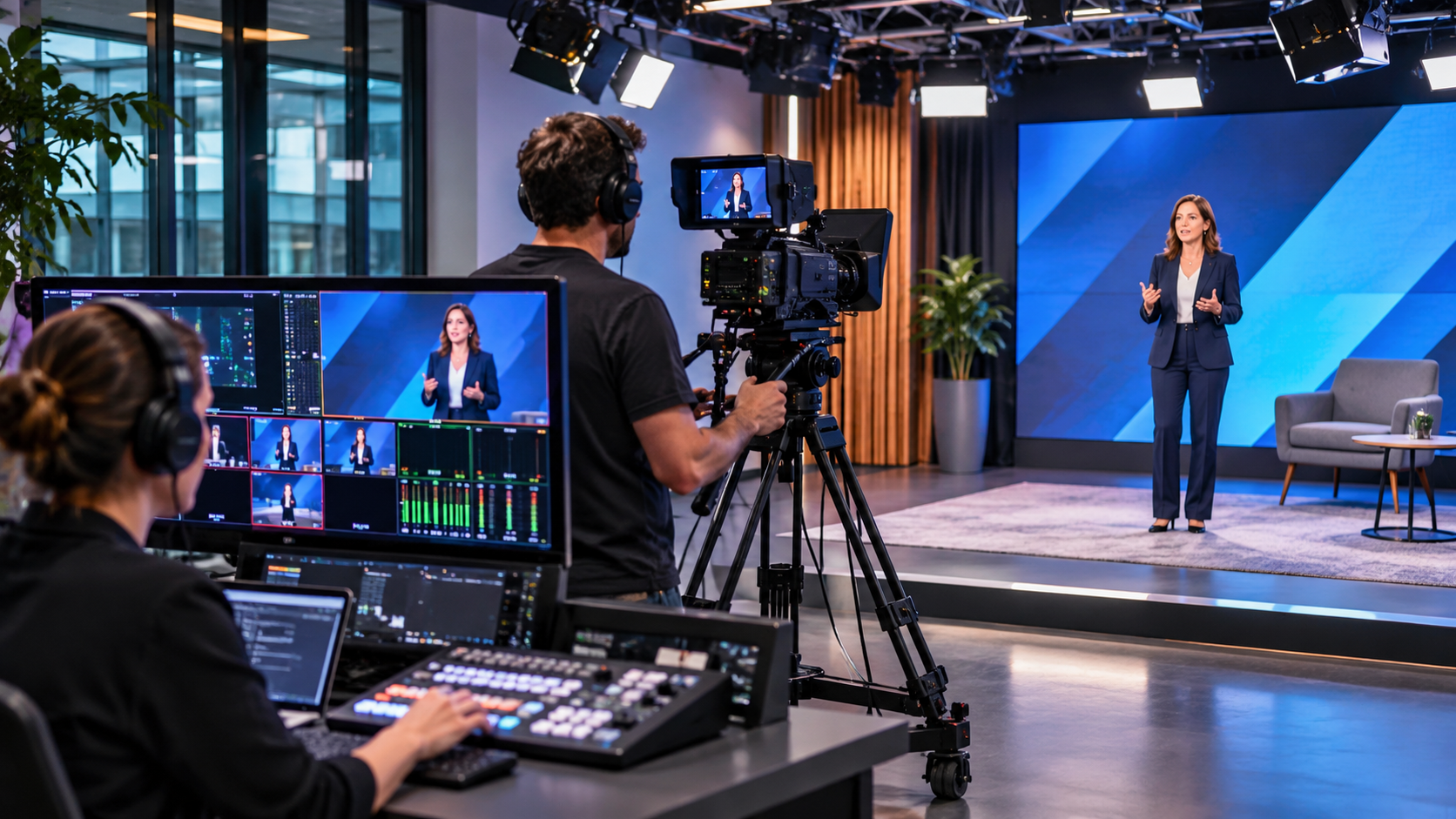
Enterprise production systems need to balance creative ambition with operational reality. The challenge is designing an environment that can support today’s requirements while remaining flexible enough to accommodate new formats, workflows and production demands.
By James McKeown
As organisations expand their in-house video capabilities, the scale of that environment can vary enormously. For some, the priority may be adapting an existing meeting or event space for regular broadcasts; for others, it may mean developing a dedicated studio capable of supporting high-volume production. In either case, the design process starts with understanding what the organisation actually needs the facility to do.
AV consultant Faye Bennett advises that establishing the business case before technology choices begin is key. “Understanding the needs and requirements is fundamental to success,” she says. “It sounds basic but I'm still seeing technology decisions coming first and ‘how will we use, operate and get our value back’ conversations coming second.”
Those motivations can vary considerably. An organisation may be trying to reduce spend on third-party venues and travel, extend the use of an existing boardroom or event space, or bring a growing volume of production in-house. Bennett argues that asking why the investment is being made in the first place helps establish what success should look like over the lifetime of the system.
Start with the production calendar
Ben C Roth, CEO and founder of creative technology integrator Original Syndicate (OGS), takes a similarly use-led approach, but starts with the production schedule.
“I'd rather see a production calendar than an equipment list at the first meeting,” he says. “Name the moments that can't fail, like the CEO town hall, earnings week or a crisis update, and design and rehearse for those first.”
The volume and type of production can change the brief significantly. Roth points to the difference between a studio expected to support 200 production days a year across training, internal communications and outside rentals, and one used primarily for a quarterly town hall. Control positions, scheduling and network policies may all need to be approached differently.
That breadth is also reflected in the way enterprise production environments are evolving. ISE has highlighted the growing convergence of pro AV and broadcast around IP-based architectures, particularly across enterprise studios, higher education, corporate live events and hybrid production spaces.
Ciaran Doran, CEO of M2A Media and former chair of ISE’s Broadcast AV Summit, sees the same range of possibilities. “Start with what your content platform needs to achieve,” he says. “At one end you have a camera, a light, a microphone and a story you can focus on 100%. At the other you have a full television facility with green screen, augmented reality and a team producing hundreds of pieces a day.”
For Doran, the underlying design principles remain consistent across that spectrum: “Whichever end you're at, build it IP based, cloud ready and designed for ease and speed.”
Build around what already exists
A new production capability does not necessarily require a new facility. Roth notes that many organisations are working with spaces and technology they already own, making an audit of existing infrastructure an important early step.
“Whether a studio is new, a year old or overdue for an audit, start by auditing what you own,” he says. “Much of it can be connected and run differently, which is how the investment starts paying for itself.”
That also brings the network team into the design process. As AV and production systems move onto enterprise networks, decisions around bandwidth, security, access and cloud connectivity increasingly shape what the production environment can do. AVIXA has identified security and deeper AV/IT convergence among the major considerations for networked AV systems in 2026.
Roth recommends involving network specialists from the outset. “A remote speaker kit that fails the corporate security policy is just a kit sitting on a shelf.”
Operational simplicity matters too. A technically ambitious system can still underperform if it is difficult for the people using it every day. Doran's emphasis on “ease and speed” reflects a production environment in which enterprise teams may need to turn around content quickly without the staffing levels of a traditional broadcaster.
Choosing the integration partner
The same focus on requirements extends to selecting external partners. Bennett recommends looking beyond whether an integrator can supply the required technology to whether it has the capability and capacity to support the organisation's objectives.
“When looking for an integration provider, I'd always advise looking at proven capability, capacity and understanding of the technology in alignment with what the business is setting out to achieve,” she says.
Roth suggests looking beyond handover as well. “Ask how their last few systems were performing six months after handover, and who is running them.”
That also shifts the focus beyond installation to how the system will actually perform in use. A production environment may need to accommodate changing formats, new distribution channels, remote contributors or increased output over time. The decisions made during the brief therefore affect both what the facility can do on launch day and how readily it can adapt afterwards.
For organisations weighing their next investment, the insight detailed in this article points to a common starting point: establish what needs to be produced, how often and for whom; understand the infrastructure already available; and design around the people who will operate it. The technology choices then have a much clearer job to do.
About the author
James McKeown is an independent B2B content specialist who has covered AV and media technology since 2014 and is the current Editor of the ISE Daily. He has spent more than two decades in B2B publishing, most recently as Group Content Director at Future plc, where he oversaw titles including the IBC Daily, TVBEurope and Installation.
Connect with him on LinkedIn.
Stay ahead – Stay informed.
As an AV specialist or industry leader, you recognise how crucial it is to keep up with evolving trends, new technologies, and notable happenings within the audiovisual world. That's why we're delighted to invite you to receive exclusive email updates about ISE – the world-renowned tech show for the systems integration and audiovisual industry.
When you subscribe, you'll be kept up to speed with insightful commentary on the freshest developments in AV, get early looks at what's planned for the ISE content schedule – including headline speakers – and benefit from in-depth reporting on the show's standout attractions.
Sign up now to stay at the forefront of audiovisual innovation and expertise.
Further reading
Featured Articles
-
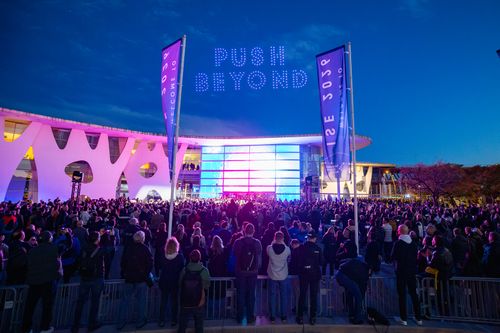 Spanning all eight halls at Fira de Barcelona Gran Via, ISE 2026 delivered four days of record-breaking energy, creativity, and innovation.
-
 The initiative will create new opportunities for talent development, innovation and community projects across the sector
-
 The Facts & Figures report for ISE 2026 is available to download.
-
 Bringing together startups, investors and industry leaders, the expanded show feature offers a strong platform for visibility, networking, and commercial opportunity.
-
 This new type of event brings together end users, creators and production specialists from broadcast, live events, advertising and gaming, combining creative showcases, editorial programming and netwo ...