Session: Digital signage security: is the real risk hiding in the mid-market?
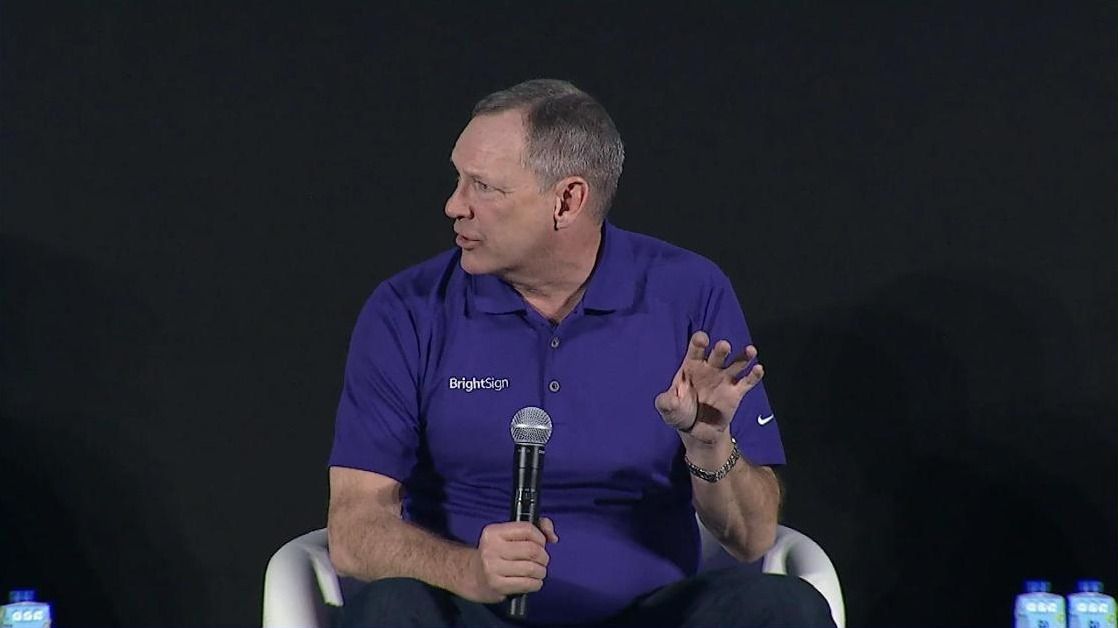
What a BrightSign, Intel, Signagelive and invidis panel at ISE 2025 said about signage risk, signed operating systems, IoT devices, AI alerts and supply chains.
- Event: ISE 2025
- From session: Cybersecurity Panel - Navigating cybersecurity risks in digital signage
- Speakers:
- Florian Rotberg, Managing Director, invidis consulting
- Jason Cremins, Founder and CEO, Signagelive
- Jeff Hastings, Chief Technology Officer, BrightSign
- Christopher Timmins, Director of Marketing & Partnerships, Intel Corporation
- Estimated read time: 8 minutes
- Watch the full session
Quick read summary
- Digital signage security now outweighs product features in large RFPs, with buyers asking for NDAs and penetration test results up front.
- Jeff Hastings of BrightSign puts the greatest risk in mid-sized deployments on wide open networks, not in large enterprises.
- After the CrowdStrike outage, fleets with strong remote management recovered quickly, while one US airline sent staff out to restart screens.
- On supply chain security, Hastings argued that control of the technology matters more than where a device is made.
Somewhere in most estates is a screen nobody can reach without a lift, running on a network the AV team did not set up. If it fails or is hijacked, someone has to travel out to it. At ISE 2025 the moderator of a panel on digital signage security opened with a blunt complaint: much of the market still does not take the problem seriously.
Florian Rotberg, Managing Director of invidis consulting, put that complaint to three vendors at different layers of the same screen. Jeff Hastings, Chief Technology Officer at BrightSign, builds the player. Christopher Timmins, Director of Marketing & Partnerships at Intel Corporation, works on the silicon. Jason Cremins, Founder and CEO of Signagelive, supplies the software.
Is the bigger risk in AV teams or in mid-sized companies?
The bigger risk sits with mid-sized companies, Hastings argued, not with any one profession. Rotberg had framed the question as IT people against AV people. Hastings put the dividing line at deployment size instead: "the biggest thing I see is deployments by size is where the risk is."
Large enterprises send massive forms. Small customers simply put the screens up. In between are fairly big companies running players on wide open networks without realising how much risk they are taking on. AV grew up on physical connections such as an HDMI cable, secure more or less by definition, and those habits do not carry over to a corporate network.
CrowdStrike showed that signage belongs to enterprise IT
The 2024 CrowdStrike outage showed signage is part of enterprise IT. Timmins said digital signage should never be treated as a siloed function, because it is now an extension of every other IT asset in the enterprise. Companies with robust remote manageability of their screens recovered quickly. One US airline took days, because it had to send people out to power cycle the screens by hand.
Hastings drew a different lesson: cybersecurity keeps adding layers of software on top of problems instead of fixing them, and the industry’s next move is to take the problem down the stack. ISE’s guide to how digital signage remote device management works covers keeping a locked-down fleet reachable.
How far down the stack does the attack surface start?
The attack surface starts at the operating system and the hardware, Hastings and Timmins argued. Consumer systems such as Windows, Mac and Android are built for users to add applications, and a device that accepts an application will accept a rogue one. BrightSign’s player works differently, Hastings said: "It’s running one application, it’s a signed operating system, you can’t change it." For banking and military customers, BrightSign also makes physical connections such as USB inoperable.
Timmins described security as built from the bottom up, from Intel’s chip-level technologies to BrightSign’s player to Signagelive’s software. Cremins cannot choose the screens his customers buy, so Signagelive, which has implemented ISO 27001, recommends compatible hardware and challenges customers on how their networks are set up. ISE’s explainer on how digital signage software works sets out what the CMS layer does.
Why is digital signage security now ranked above features?
Customers now rank security above product features, Cremins said, and they are writing that into tenders. He dated the swing to the previous 12 to 18 months and called security table stakes. Rotberg remembered tenders 10 years ago, when security meant a few check marks on an Excel sheet; today customers’ cyber insurers are looking at it too. Signagelive signs NDAs and provides penetration test results up front.
Do thousands of connected devices make the job impossible?
A bigger fleet does not make the job impossible, Hastings said, provided the core security is right. In his words: "It doesn’t because actually at the core level, if you’re implementing the right security, whether you have one device or a thousand devices, it’s secure."
The trouble starts when hackable IoT devices go on the internet with no firewall, often by accident. Basic IoT security, a firewall and a secure network, cuts attacks from outside dramatically, and a signage player is an IoT device too. Timmins pointed buyers to open standards rather than one maker’s own scheme.
Rotberg was less reassured: he finds client networks unbelievably open, with end users plugging in a little Amazon stick. Cremins named a more basic gap: a staggering number of organisations, including big ones, still let users into their software without simple two-factor authentication.
AI helps defenders sort alerts, and helps attackers too
AI will help both sides, and nobody on the panel claimed defenders would win the race. Cremins called AI no silver bullet, but useful for early warning and spotting trends. Another panellist saw the defenders’ gain: AI that sorts a flood of minor alerts and brings the important one forward is a direct answer to alert fatigue. Timmins warned that attackers will have AI agents too, and move faster than defenders.
Should it matter where the hardware is made?
It matters less than who controls the technology, Hastings argued, though buyers increasingly ask. Some RFPs now mandate exclusions by country of origin on security grounds and require suppliers to disclose origins. Hastings, who has been building devices for almost 40 years, said politics clouds the question.
The irony of it is that bad can come from anywhere and it’s really related to the technology and the control of the technology.
Timmins said large partners worry more about being cut off from supply if politics worsens. For buyers, supply chain security is a question about control rather than a flag on a map.
A security checklist built from the panel
Four checks follow from what the panel said. For a separate ISE 2025 session on the same theme, see 7 essential cybersecurity insights every pro AV professional should know.
| Check | Why the panel raised it |
|---|---|
| Is every player behind a firewall on a secure network? | Devices left open to the internet are attacked for fun |
| Does every CMS user log in with two-factor authentication? | Many large organisations still do not require it |
| Can every screen be restarted without a site visit? | Fleets with robust remote management recovered fastest after CrowdStrike |
| Is the tender pack ready? | Large RFPs ask for NDAs and penetration test results up front |
FAQ
- Is digital signage secure by default? Digital signage is only as secure as its weakest layer: the player, the software, the network and the people using it. Jeff Hastings of BrightSign said a player locked to one application on a signed operating system naturally reduces the attack surface, but a secure player on a wide open network is still exposed.
- How should an RFP test a signage supplier’s security? An RFP should ask how the player is locked down, how users access the CMS and what evidence the supplier can share. Jason Cremins of Signagelive said large RFPs now ask for NDAs and penetration test results up front, and weigh security above features.
- Can AI make signage networks safer? AI can help by sorting large volumes of security alerts and spotting trends early, Jason Cremins of Signagelive said, though it is no silver bullet. Christopher Timmins of Intel Corporation warned that attackers will use AI agents too.
The screen nobody owns is the open door
The panel never settled on one answer, and Rotberg proposed running the debate again next year. Its sharpest point came from Hastings, and it was not about AI or geopolitics. The weak spot is the fairly big company that put its players on an open network, because the screens came from an AV world where a cable was secure by definition.
That company is about to feel pressure from two directions. Large buyers have already moved security above features, and cyber insurers are now looking too. Those expectations will travel down the market through integrators and the next round of tenders.
The vendors on stage described the fixes in plain terms: a player that runs one signed application, ports that are switched off, a firewall, two-factor log-ins and remote recovery that works without a lift. None of it needs a new product category. It needs someone to own the screens as IT assets.
Hastings’s design rule doubles as a test for buyers. If a player can install an application, it can install a rogue one, and on an open network somebody will try.
About the speakers
Florian Rotberg
Managing Director, invidis consulting
Rotberg moderated the panel and brought a consultant’s view from the many end-user clients invidis works with.
Jason Cremins
Founder and CEO, Signagelive
Cremins founded Signagelive, a digital signage software platform, and takes part in large enterprise RFPs.
Jeff Hastings
Chief Technology Officer, BrightSign
Hastings has been building devices for almost 40 years and helped design BrightSign’s single-application players.
Christopher Timmins
Director of Marketing & Partnerships, Intel Corporation
Timmins works with Intel’s signage partners on the security technologies Intel delivers in hardware.
More on AV security at ISE
Security now shapes how signage networks are specified and run.
- Emerging technologies at ISE: cybersecurity alongside AI and other emerging tech.
- The CyberSecurity Summit: sessions on securing AV systems.
- Digital signage and DooH at ISE: the signage networks this risk applies to.
- The full ISE content programme: Megatrends sessions, summits and free stages across the show.
- Visiting ISE for the first time? Start with the first-time visitor guide.
Featured Articles
-
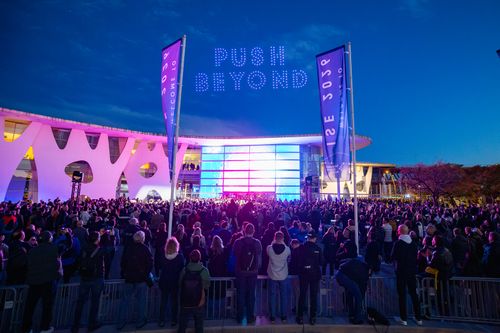 Spanning all eight halls at Fira de Barcelona Gran Via, ISE 2026 delivered four days of record-breaking energy, creativity, and innovation.
-
 The initiative will create new opportunities for talent development, innovation and community projects across the sector
-
 The Facts & Figures report for ISE 2026 is available to download.
-
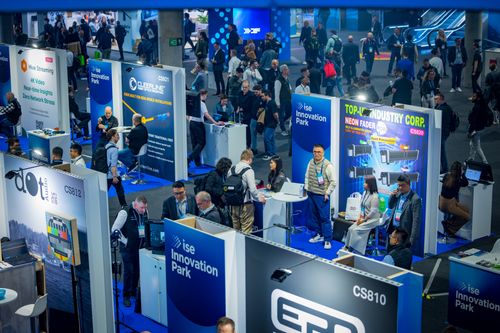 Bringing together startups, investors and industry leaders, the expanded show feature offers a strong platform for visibility, networking, and commercial opportunity.
-
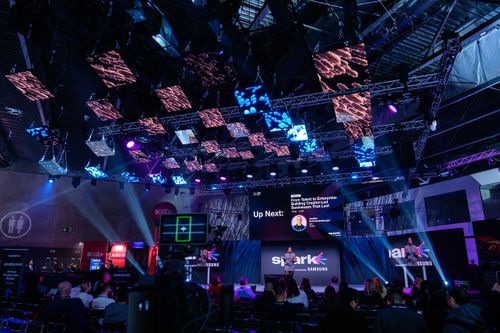 This new type of event brings together end users, creators and production specialists from broadcast, live events, advertising and gaming, combining creative showcases, editorial programming and netwo ...