Session: The AI revolution has no playbook, and Brian Solis says that is the opportunity
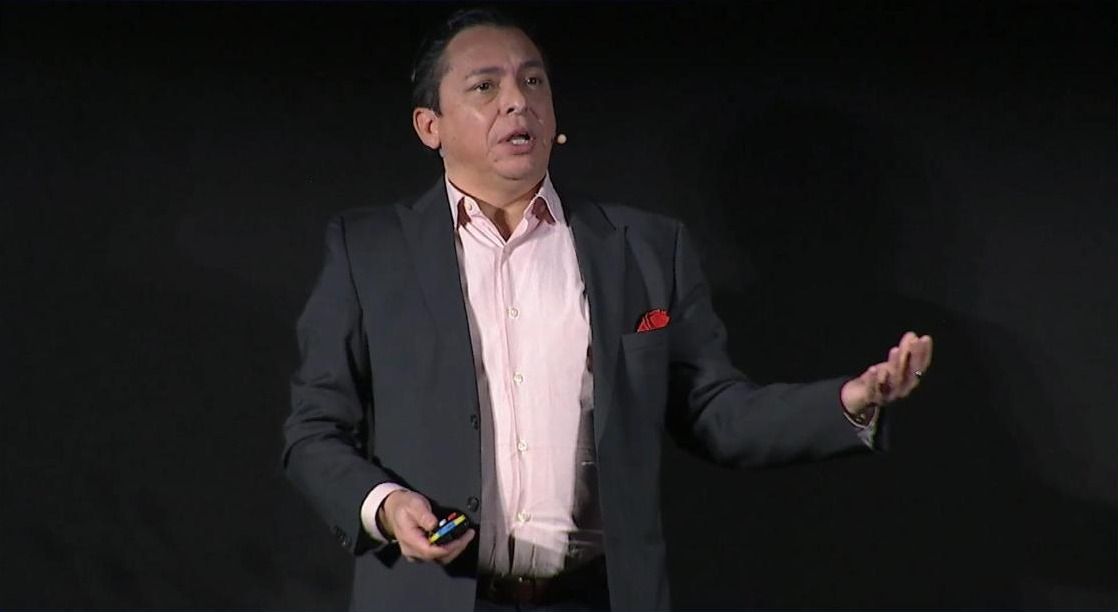
Brian Solis of ServiceNow on the AI revolution: why automation alone shows little impact, how IKEA found new revenue and where a business should start.
- Event: ISE 2025
- From session: AI is Eating the World: Why the AI Revolution is Good for Business
- Speaker: Brian Solis, Head of Global Innovation, ServiceNow
- Estimated read time: 9 minutes
- Watch the full session
Quick read summary
- The AI revolution rewards businesses that use AI to do new things, not only to make yesterday’s work cheaper and faster.
- Brian Solis of ServiceNow splits AI work into two buckets: iteration, which improves today’s work, and innovation, which creates new value.
- IKEA automated first-line customer service, then retrained agents as interior designers in a business that generated 1 billion euro in its first year.
- His first steps: challenge core assumptions, chase quick wins, prompt AI to explore rather than confirm, and count the return on ignorance.
"If we’re waiting for someone to tell us what to do, we’re on the wrong side of innovation." Brian Solis, Head of Global Innovation at ServiceNow, repeated that line in his ISE 2025 keynote. Most organisations, he argued, are treating the AI revolution as one more efficiency tool, and waiting for someone else to explain what it means.
His claim was simple. AI pays off when a business pairs iteration, which makes today’s work better, with innovation, which does what it could not do before. Only the second changes a company’s trajectory.
Why does the AI revolution have no playbook?
The AI revolution has no playbook because AI does not fit any category a business already has. Solis said every earlier disruption was eventually placed in the box of business as usual. AI is the first technology with no box, and organisations are still trying to force it into one.
Half of business executives around the world, Solis said, are dissatisfied with their progress on upskilling teams, while most employees wait for training. His conclusion: people have to become the leaders they are waiting for. For a wider view, ISE has tracked who is using AI, and how.
Automating yesterday’s work is the trap, not the prize
Using AI only to automate the work a business already does keeps it on a straight line. Solis said most leaders treat AI the way they treated every earlier technology wave: they use it to make yesterday’s work faster, better, cheaper and more scalable.
He showed a headline from The Economist noting that the AI revolution had made almost no impact so far. AI is mostly a cost takeout tool, he said, and that is why so much AI transformation has shown so little. Cost savings are not wrong. They are iteration, and copilots enhance what you already know how to do.
You can’t build the business of tomorrow with yesterday’s thinking.
Solis called it a control alt delete moment. He passed on a line from Dharmesh Shah, co-founder of HubSpot: you compete with AI. The point, Solis said, was to use AI to compete differently, doing what you could not do yesterday.
How is innovation different from iteration?
Innovation does new things that create new value, while iteration improves what already exists. Solis gave both a place in strategy and asked organisations to allocate resources to each.
The way I define innovation is just doing new things that create new value.
The combination, he said, leads to the good kind of disruption. "Disruption is doing new things that make the old things obsolete." Netflix was his example. Co-founder Marc Randolph told Solis how Netflix abandoned its core business at the height of each wave, from mailed DVDs to e-commerce to streaming. Iteration sees out a current life cycle, Solis said, and innovation jumps to the next one.
His practical test was to sort every idea on a roadmap into two buckets. Is it something you do today, but better tomorrow? Or is it something new?
Why do experts make poor guides to AI?
Experts make poor guides because an expert’s mind can only improve what it already knows. Solis’s latest book, Mindshift, argues that this moment needs a beginner’s mind. Experts come to the table with experiences, failures and responsibilities, so every idea is rooted in what they know.
His example was Steve Jobs and the iPhone. When his inner circle proposed the industry’s best phone developers, Solis said, Jobs refused them "because we’re not building a phone".
Solis now asks one question before every decision, under his own hashtag WWAID: what would AI do? Prompting AI with an expert’s mind, he argued, produces linear growth, while an AI mindset that starts from not knowing unlocks exponential opportunities.
The deeper problem is one executives cannot see. Solis drew the comfort zone as rings: what we know, what we know we don’t know, and outside both, what we don’t know we don’t know. Most executives sit in that outer ring. "They do not know what they do not know." Asked to decide, they lean on what they do know, and the business stays in a cycle of iteration.
Can an AI first company be built on digitised silos?
No, because AI needs data from across the organisation, and silos keep it apart. Solis said almost every company went through some kind of digital transformation over the last 15 years, but few really transformed. They digitised things within their silos, and now they are automating those investments.
For the AV channel this is concrete. Data from meeting rooms, displays and the service desk only helps AI if other teams can reach it, the same logic behind digital transformation in smart buildings.
What did IKEA gain by choosing AI augmentation over cuts?
IKEA gained a new business by using what automation taught it to augment its people. Solis said the retailer introduced an AI chatbot called Billy for customer service, which deflected about 57 per cent of first-round enquiries.
With an expert’s mind, the next step would be to cut the workforce. IKEA instead studied the calls the chatbot could not deflect, and found that customers wanted help designing their homes or offices with IKEA furniture. So the retailer "re-skilled those agents into interior designers", and that business generated 1 billion euro in its first year.
Solis called it saving money and augmenting expertise to create net new revenue, the point where AI moves from artificial intelligence to augmented intelligence. ISE has covered how AI is reshaping customer engagement along similar lines.
Five first steps, starting at the core of the business
Solis recommends starting with the core of the business and working in both buckets at once. His advice on AI for business drew partly on a Gartner strategy model and partly on his own Harvard Business Review article on rewiring your brain for AI.
- Challenge your core assumptions. Ask whether your services, processes and work deliver the best value to employees and customers.
- Put different people on each bucket. Give iteration and innovation separate owners, and lead the early innovation work yourself.
- Start with quick wins. Use them to win support and resources, then invest in differentiated use cases.
- Prompt to explore, not to confirm. Prompt AI to challenge your thinking, chain one prompt into the next and try role play.
- Count the return on ignorance. In every business case, show decision makers the cost of not doing new things.
FAQ
- Why has the AI revolution had so little impact so far? Brian Solis of ServiceNow told ISE 2025 that most organisations use AI as a cost takeout tool, automating the work they already do. The impact comes when AI is also used to do new things.
- How is AI augmentation different from automation? Automation uses AI to make existing processes faster and cheaper, while augmentation helps people do work they could not do before. Brian Solis’s example was IKEA, which automated first-round customer service and then retrained agents as interior designers.
- Does an AI first company need a new data strategy? Yes, according to Brian Solis, because AI needs data from across the organisation rather than from one department. Most digital transformation only digitised work inside silos, so data has to be connected across teams.
- Should a business pay for AI tools to experiment? Brian Solis recommends a paid version of at least one AI service, because it gives access to more recent data and more power. He pays for Perplexity and OpenAI, about $40 a month for both.
The question to ask before the next AI project
The sharpest point in Solis’s keynote was not about technology. It was about who decides what AI is for. Leaders who wait for a playbook will use AI to do yesterday’s work at lower cost, and the market will deliver the disruption to them.
His alternative asks something harder of each professional: to admit what they do not know and treat that as the place to start. That makes it a leadership test before it is a technology project.
IKEA is the proof he chose. The same chatbot that could have justified job cuts revealed a demand nobody had planned for, and the people it freed built a business that generated 1 billion euro in its first year. That outcome came from asking a different question about the same data.
For AV businesses, the next step is small and immediate. Take one AI project already under way and ask whether it is iteration or innovation. If it is iteration, give someone the job of finding its innovation twin. A service manager celebrating a deflection rate should study the enquiries the AI cannot handle, as IKEA did, before cutting a single role. The cost of not doing it is the return on ignorance Solis warned about.
About the speaker
Brian Solis
Head of Global Innovation, ServiceNow
Solis is a Silicon Valley author and futurist who studies how technology changes work and business, and his latest book is Mindshift.
Keep exploring AI at ISE
AI is reshaping how the whole AV industry works, not only its products.
- AI, robotics and more at ISE: where AI, robotics and new tech meet the show floor.
- Summits, keynotes and stages at ISE: from ticketed summits to free stages on the floor.
- First time at ISE? The new visitor guide shows you where to start.
Featured Articles
-
 Spanning all eight halls at Fira de Barcelona Gran Via, ISE 2026 delivered four days of record-breaking energy, creativity, and innovation.
-
 The initiative will create new opportunities for talent development, innovation and community projects across the sector
-
 The Facts & Figures report for ISE 2026 is available to download.
-
 Bringing together startups, investors and industry leaders, the expanded show feature offers a strong platform for visibility, networking, and commercial opportunity.
-
 This new type of event brings together end users, creators and production specialists from broadcast, live events, advertising and gaming, combining creative showcases, editorial programming and netwo ...