Session: The smart workplace is held back by how AV sells, not what it sells
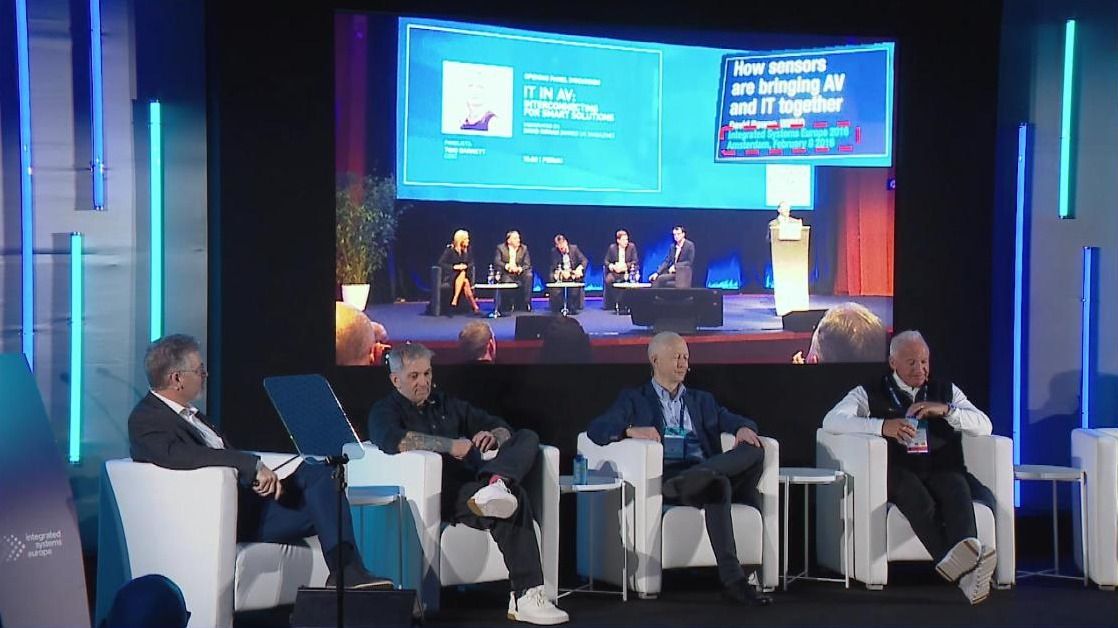
Why an ISE 2026 panel says the smart workplace depends on how AV firms sell and deliver, and what integrators, consultants and end users can do about it now.
- Event: ISE 2026
- From session: Smart Spaces Panel: From abstract potential to actionable progress
- Speakers:
- Byron Tarry, Founder & Chief Transformation Officer, NEXXT
- Julian Phillips, Senior Vice President, AVI-SPL
- Jon Sidwick, Chief Storyteller, Blue Touch Paper
- Rich Mulholland, Founder, Missing Link
- Estimated read time: 8 minutes
- Watch the full session
Quick read summary
- The smart workplace is held back less by technology than by an AV business model built for slower customers, an ISE 2026 panel argued.
- Julian Phillips of AVI-SPL said the sector is good at starting new things and awful at stopping old ones.
- Phillips described customer projects that now take six to 10 weeks, against a quote and install cycle of around three months.
- Jon Sidwick of Blue Touch Paper expects resellers to split between high-touch experience work and meeting spaces sold as a service.
Most of the AV industry still talks as if the smart workplace is waiting for the next generation of kit. A smart spaces panel at ISE 2026 on 3 February argued the opposite. The technology arrived years ago, and what holds the smart workplace back is the way AV firms sell, quote, install and stay relevant.
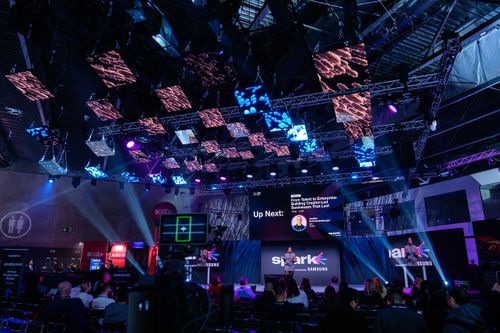
The moderator, Byron Tarry of NEXXT, called it an un-panel and asked the speakers to red team their own trade. He showed a photo of a panel stage from 2016 and asked how different his own stage looked, ten years on.
Is the problem the kit or the people using it?
The problem is the people using it, said Rich Mulholland of Missing Link. "I think we dramatically underutilized technology."
Manufacturers, he argued, talk to the tech crews and staging companies. They rarely talk to the client at the bank who is actually running the conference. The result is that AV deals in novelty and falls short on utility: screens get bigger and brighter, then carry a 16:9 image and a row of chairs.
Jon Sidwick of Blue Touch Paper, who has spent 30 years in the industry, took the point further. Technology, he argued, is now mostly an excuse for people to meet.
Growth without relevance is the trap
Julian Phillips of AVI-SPL put the panel’s sharpest charge into one phrase. He runs XDG, a business set up inside AVI-SPL, and said he gets funded for growth with relevance. In his view, neither now works without the other.
The danger is a habit the whole sector shares. It prides itself on the latest technology and is very good at launching it.
We’re absolutely awful at stopping doing the old things. And when you can’t stop doing the old things, you don’t give the new things a chance to succeed.
The old things, Phillips said, are not only products. They are internal processes too, and integrators keep running some poor ones. XDG itself was built as a startup inside the larger business because the whole company could not be turned at once.
Where did the panel split?
The panel split over how much change to plan for. Phillips framed the opportunity as a better business model for communication. The customer’s real problem, he said, is communication that helps an organisation change and engage its staff. In his words: "It’s not about building the best technology in a meeting room. It’s how do we become better communicators?"
Sidwick then withdrew his own earlier answer, saying the panel was presupposing iteration: talking to the same people, in a slightly different way. A contact had told him that some large companies are now asking every employee to teach AI to do their job, and to do it better than they do. If clients no longer have purchasing, HR or IT departments, he asked, who will an AV firm sell to?
How quickly do customers now expect suppliers to move?
Customers now expect projects in weeks, not months, and Phillips used Walmart to show it. In his account, Walmart is removing middle management and linking leadership directly to agile teams. A project that used to take a year to 18 months now takes six to 10 weeks.
Phillips then played out the sales call. The supplier offers great AV technology, needs four to five weeks to survey and quote, then seven weeks to install. By then the customer has moved on. As Phillips put it: "If you become a barrier to that, you are irrelevant to them."
Integration now reaches far beyond the meeting room
Integration, Phillips argued, now means joining up AV, IT, corporate real estate, space and design. Installing equipment and making it work together is, in his phrase, "the problem from way gone by".
The modern AV integrator, in his view, joins up security, access control and real-time collaboration services around how people actually use a building. If AV firms do not do it, two other groups will: IT companies that already sell everything as a service, and startups with no legacy. Firms miss the warning, he said, because they are busy being busy, so growth hides the question of relevance.
Will resellers split in two?
Resellers are already starting to split, according to Sidwick, whose consultancy talks to hundreds of them worldwide. The old model, selling a product with a markup and coming back five years later to replace it, is dividing into two.
One side is specialised, high-touch experience work of the kind Phillips described, margin rich and protected because it is niche. The other is the volume business around meeting rooms. It is moving to an AI-led, data-driven platform: meeting spaces as a service, because hybrid work demands that technology moves as fast as the organisation does.
Blue Touch Paper is its own test case, still the two people it started with three years ago. Sidwick added: "But we have 12 agents that we’ve created to do a load of tasks in our business." Those agents, he said, let the firm outperform its competitors on market intelligence.
Who is the smart workplace being designed for?
The smart workplace is being designed for people who have not yet arrived, and Sidwick argued that changes the brief. Large companies he spoke to want graduates precisely because they have not learned the old ways of working. Designing only for the staff in the building today, he suggested, means designing for the past.
End users, meanwhile, want smart spaces that remove the work around the work. A panellist from corporate real estate, who joined for the second half, said the office exists for in-person connection. A good workplace, he said, behaves like a good host, anticipating needs such as who else is in the building today. ISE has explored how the future workplace will be designed by data, why the best workplace technology is invisible and why universities have a smart spaces problem.
FAQ
- Why is the smart workplace taking so long to arrive? Panellists at ISE 2026 argued that the technology is largely ready and the delay lies in how suppliers sell and deliver it. Julian Phillips of AVI-SPL said the sector keeps doing old things alongside new ones, which stops the new ones succeeding.
- How does a faster customer change an AV project? Julian Phillips of AVI-SPL described Walmart projects that once took a year to 18 months now taking six to 10 weeks. A supplier that needs four to five weeks to quote and seven to install becomes a barrier, and a barrier is irrelevant to the customer.
- Which skills does a modern AV integrator need? Julian Phillips of AVI-SPL said the role now spans AV, IT and corporate real estate. It means integrating security, access control and real-time collaboration services around how people use a building, rather than simply installing equipment.
- Should AV resellers move to meeting spaces as a service? Jon Sidwick of Blue Touch Paper said the volume meeting room business is moving to an AI-led, as-a-service platform model. Specialised experience work remains a separate, higher-margin route.
Relevance is now measured in weeks
The panel never disagreed about the technology. Everyone accepted that the screens, sensors and software for a smarter workplace already exist. The disagreement was about how far the change would go. Sidwick’s retraction set the stakes: if clients redesign their own jobs out, the buyers AV firms know may not be there to buy.
Phillips made the case hardest to dismiss, because it came with a stopwatch. A customer that moves from idea to delivery in six to 10 weeks will not wait 12 weeks for a quote and an install. What matters is whether the supplier can match the customer’s pace and join up AV, IT and real estate on the customer’s terms.
That is a harder question than which display to specify, and it starts inside the business. It means choosing which old process to stop, not which new one to add. It also means asking whether the firm is growing because it is relevant or simply because it is busy. The firms that answer it honestly in 2026 will be the ones still in the room when the next panel photo is taken in 2036.
About the speakers
Byron Tarry
Founder & Chief Transformation Officer, NEXXT
Tarry moderated the panel and framed it as a red team exercise on the industry.
Julian Phillips
Senior Vice President, AVI-SPL
Phillips runs XDG, a business set up as a startup inside AVI-SPL to focus on integrated experiences.
Jon Sidwick
Chief Storyteller, Blue Touch Paper
Sidwick has spent 30 years in the industry, and Blue Touch Paper advises resellers across the AV channel.
Rich Mulholland
Founder, Missing Link
Mulholland gave a keynote at ISE 2026 and joined the first half of the panel.
Explore smart workplaces at ISE
Smart spaces are as much about how AV is sold as what it does.
- Smart spaces at ISE: smart building and workplace tech in Barcelona.
- The Smart Building Summit: the summit on getting value from smart buildings.
- The ISE content programme: the talks worth planning your days around.
- Never been to ISE? Plan your visit with the guide for new attendees.
Featured Articles
-
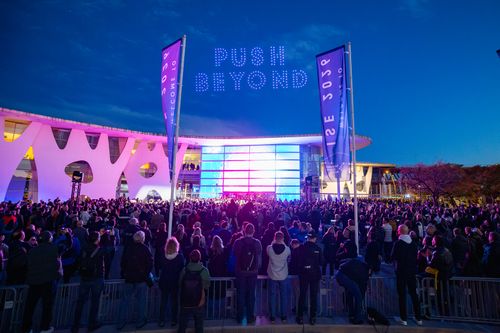 Spanning all eight halls at Fira de Barcelona Gran Via, ISE 2026 delivered four days of record-breaking energy, creativity, and innovation.
-
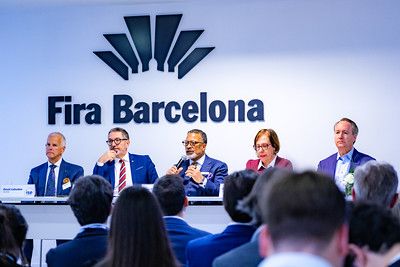 The initiative will create new opportunities for talent development, innovation and community projects across the sector
-
 The Facts & Figures report for ISE 2026 is available to download.
-
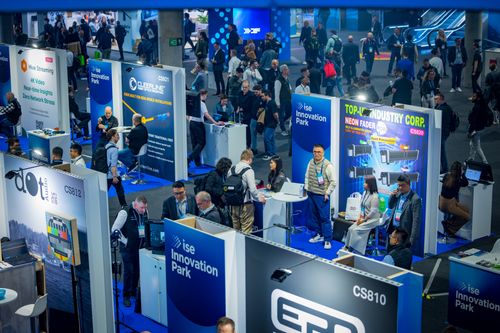 Bringing together startups, investors and industry leaders, the expanded show feature offers a strong platform for visibility, networking, and commercial opportunity.
-
 This new type of event brings together end users, creators and production specialists from broadcast, live events, advertising and gaming, combining creative showcases, editorial programming and netwo ...