

Smart building trends: the new rules for working in the built environment
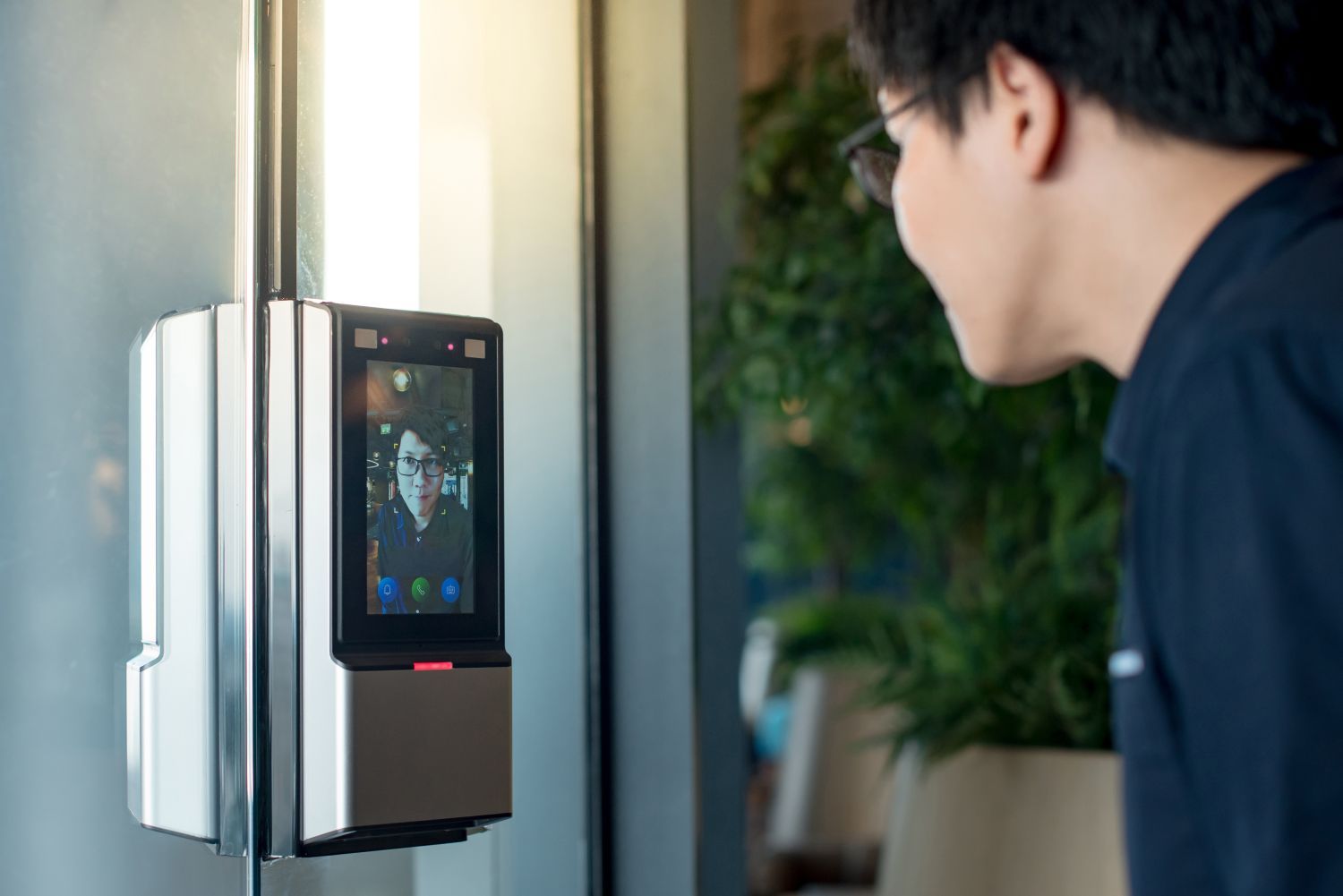
What makes a building smart?
The answer is no longer simply the number of connected systems inside it. A building can contain sensors, automation, lighting controls, HVAC systems and connected security and still fail to deliver much value for the people who own, operate or use it.
Updated 28 August 2026
The more important question is what the building can do with all that technology and data.
That shift is changing the smart building conversation. Integration, energy performance, occupancy data, cybersecurity and measurable business value are becoming just as important as the individual technologies installed.
Integration is the foundation
The traditional building contains multiple technology systems, often designed and managed independently. Lighting, HVAC, security, access control and AV may all work effectively on their own, while sharing relatively little information.
Smart buildings create an opportunity to connect those systems.
Integrating building technologies through common digital infrastructure can provide operators with a more complete view of what is happening across a property. Data from different systems can then be used to inform decisions about energy, space, maintenance and the occupant experience.
That makes interoperability crucial.
For integrators, the challenge is no longer simply installing individual technologies. It is creating an environment in which different systems can communicate and data can be turned into useful actions.
The next challenge is using the data
Modern buildings can already generate enormous quantities of operational data. The challenge is extracting value from it.
A June 2026 article from the European Commission's BUILD UP portal argues that many buildings already collect extensive data through building automation and energy-management systems. The opportunity is to use that information to identify misconfiguration, compare actual operation with design intent and improve building performance.
Occupancy data provides a good example.
Knowing whether spaces are actually being used can help building systems respond more intelligently. A 2025 study of meeting-room occupancy published in the journal Building and Environment found that a multi-modal detection approach could reduce energy waste by 12.8% and idle space by 21.78% in the rooms studied.
For building owners and corporate real-estate teams, this points towards a different definition of a smart building: one that can understand how it is performing and adapt accordingly.
Energy performance is becoming harder to ignore
Sustainability is also moving from ambition towards requirement.
According to the European Commission, roughly 75% of buildings in the EU have poor energy performance, while only around 1% undergo energy renovation each year.
The revised Energy Performance of Buildings Directive is designed to accelerate that process. For non-residential buildings, minimum energy performance standards will target the 16% worst-performing buildings by 2030 and the 26% worst-performing buildings by 2033.
Digital technology is only one part of that challenge – insulation, heating systems and renewable energy are also fundamental – but connected controls can help buildings use energy more intelligently.
Lighting and HVAC, for example, can respond to occupancy rather than fixed assumptions about how a space is being used. Building-management systems can provide data that helps operators identify waste and understand where improvements are having an effect.
The business case for smart buildings is therefore becoming increasingly connected to the energy case.
Smart buildings have to work for people too
Efficiency is not the only measure of a building's performance.
Owners and occupiers also need workplaces and other environments that support the people using them. That can mean appropriate lighting and temperature, good indoor environmental conditions, straightforward access to spaces and technology that responds to how a building is actually occupied.
The goal is not simply to collect more data about occupants. It is to use the right data to make buildings more responsive while taking privacy and security seriously.
That distinction matters. Recent research into occupancy-monitoring technologies highlights not only opportunities for better energy efficiency and automation, but also the need to address data security, anonymisation and user trust.
A building that becomes more intelligent at the expense of its occupants' trust is not necessarily becoming smarter.
Cybersecurity becomes a building issue
Connecting more systems also creates another challenge.
As operational technology, IoT devices, building-management systems and IT infrastructure become more interconnected, cybersecurity can no longer be considered solely an IT concern.
The issue featured prominently at the ISE 2026 Smart Building Summit, which explored AI, Big Data, cybersecurity, sustainability and smarter workplaces. A dedicated session, Cybersecurity: Cornerstone of Building Value, examined the need for a secure digital foundation as buildings become more data-rich and prepare for greater use of AI.
For owners and integrators, this changes the conversation around integration. Connecting systems can create value, but those connections also need to be resilient and secure.
From smart technology to building value
Perhaps the biggest change in the smart building market is therefore not a particular technology.
It is the question being asked.
Instead of “What smart technology can we put into this building?”, owners, operators and integrators increasingly need to ask “What value should this building deliver?”
That might mean lower energy use. Better utilisation of expensive space. Easier maintenance. Greater resilience. A better occupant experience. Or, more likely, a combination of them.
That was also the central theme of the ISE 2026 Smart Building Summit: Unlocking Smart Building Value. The programme examined how automation, IoT, analytics and energy optimisation can translate technology investment into outcomes for owners, tenants and landlords.
This is where the role of the integrator becomes particularly important. Every building has different users, systems, constraints and objectives. The opportunity lies in connecting the right technologies and turning their data into outcomes that matter.
Eventually, that may make the word smart itself unnecessary.
When buildings routinely understand how they are being used, optimise their resources and connect their systems intelligently, we may simply go back to calling them buildings.
Stay ahead – Stay informed.
As an AV specialist or industry leader, you recognise how crucial it is to keep up with evolving trends, new technologies, and notable happenings within the audiovisual world. That's why we're delighted to invite you to receive exclusive email updates about ISE – the world-renowned annual tech show for the systems integration and audiovisual industry.
When you subscribe, you'll be kept up to speed with insightful commentary on the freshest developments in AV, get early looks at what's planned for the ISE content schedule – including headline speakers – and benefit from in-depth reporting on the show's standout attractions.
Sign up now?to stay at the forefront of audiovisual innovation and expertise.
Further reading
Find out more about smart homes and buildings at ISE.
Related articles
- The future workplace will be designed by data – Discover how workplace analytics are helping organisations make smarter decisions about space, energy and employee experience.
- Smart offices are changing corporate real estate forever – Explore how connected workplaces and occupancy insights are changing the way organisations think about the value of office space.
- The network is becoming the most important AV device – Find out why robust connectivity is becoming the essential foundation for increasingly integrated, data-driven AV environments.
Related Content
-
) Edge computing is the processing of data close to where it is created and used, rather than sending it to a distant data centre or cloud platform.
Edge computing is the processing of data close to where it is created and used, rather than sending it to a distant data centre or cloud platform. -
) These days, the value of office space is determined less by how much of it you have, and more by how effectively people use it.
These days, the value of office space is determined less by how much of it you have, and more by how effectively people use it. -
) The organisations creating the best employee experiences are not overwhelming people with technology. They are removing friction.
The organisations creating the best employee experiences are not overwhelming people with technology. They are removing friction. -
) The companies making the strongest case for returning to the office are not simply telling people to come back. They are giving them a reason to want to be there.
The companies making the strongest case for returning to the office are not simply telling people to come back. They are giving them a reason to want to be there. -
) Artificial intelligence is changing AV by enabling systems to interpret what is happening in a space and respond automatically.
Artificial intelligence is changing AV by enabling systems to interpret what is happening in a space and respond automatically.
Featured Articles
-
) Spanning all eight halls at Fira de Barcelona Gran Via, ISE 2026 delivered four days of record-breaking energy, creativity, and innovation.
Spanning all eight halls at Fira de Barcelona Gran Via, ISE 2026 delivered four days of record-breaking energy, creativity, and innovation. -
) The initiative will create new opportunities for talent development, innovation and community projects across the sector
The initiative will create new opportunities for talent development, innovation and community projects across the sector -
) The Facts & Figures report for ISE 2026 is available to download.
The Facts & Figures report for ISE 2026 is available to download. -
) Bringing together startups, investors and industry leaders, the expanded show feature offers a strong platform for visibility, networking, and commercial opportunity.
Bringing together startups, investors and industry leaders, the expanded show feature offers a strong platform for visibility, networking, and commercial opportunity. -
) This new type of event brings together end users, creators and production specialists from broadcast, live events, advertising and gaming, combining creative showcases, editorial programming and netwo ...
This new type of event brings together end users, creators and production specialists from broadcast, live events, advertising and gaming, combining creative showcases, editorial programming and netwo ...
)
)

)
)
)
)
)
)
)
)
)
)
)
)
)
)

)
)
)
)
)
)
)
)
)
)
![[inst]ALLICHT](https://cdn.asp.events/CLIENT_Integrat_169E7B04_E6F3_39F6_8BE4DB27C54F731E/sites/ise-2027/media/libraries/partners/Inst_Allicht_Logo.png/fit-in/500x500/filters:no_upscale())
)
)
)
)
)
)
)
)
)
)
)
)
)
)
)
.png/fit-in/500x500/filters:no_upscale())
)
)
)
)
)
)
)
)
)
)
)