
Who should own and run enterprise video in the organisation?
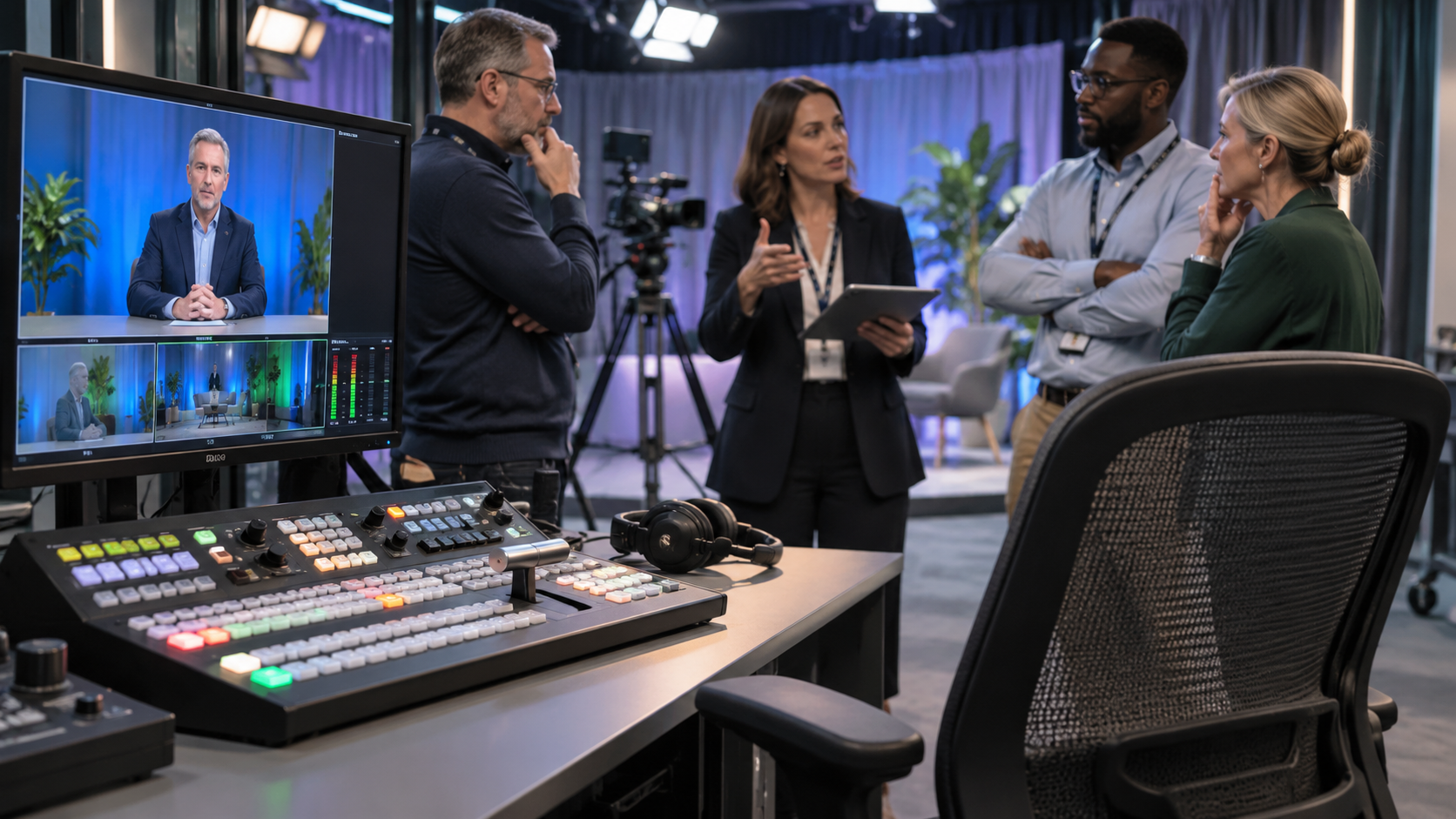
Organisations are investing in more sophisticated video production capabilities, with responsibility for their operation often stretched across several departments. With content strategy, production technology, budgets, staffing and day-to-day operations all in play, where should ownership ultimately sit?
By James McKeown
As enterprise video has become more sophisticated, the question of where ultimate responsibility for it should sit has become harder to answer. The IT department may control the network and security, AV teams the production technology, while the physical space may sit with facilities management while communications or marketing oversee the content itself. In some organisations, those responsibilities may already sit comfortably together; in others, they may be spread across teams with very different priorities.
That makes deciding who runs a production environment after installation just as important as deciding who buys it. Meeting-room AV has increasingly moved under IT, and production technology is beginning to follow, but a modern studio also needs editorial direction, operational support, specialist skills and an ongoing budget if it is to deliver value over time.
That convergence between AV and IT is already well established. Recent analysis from AVIXA describes modern AV systems as increasingly dependent on enterprise networks, cloud platforms, centralised management, cybersecurity and APIs.
For AV consultant Faye Bennett, that makes it difficult to identify a single ownership model that will work for every organisation. “I think this depends on the organisational structure,” she says. “With a lot of meeting room AV now sitting firmly under IT, it follows that broadcast production technology will move the same way.”
Ciaran Doran, CEO of M2A Media and former chair of ISE’s Broadcast AV Summit, looks instead at the purpose of the video operation. “Video is a communication method, so unless its main job is something else, it belongs under marketing,” he says. “The answer depends on what the video is for, but it’s the business that ultimately sets the communication goals.”
The distinction is significant. While responsibility for the technology may have a natural home within IT, ownership of what the organisation is trying to communicate – the content strategy – can sit elsewhere.
Bringing the technology under IT therefore does not resolve the wider operational question. Even a dedicated in-house production department would still need to work across the organisation, with other teams contributing to content, governance and approval workflows.
Where IT does take responsibility for the technology, Bennett argues that its role has to extend beyond infrastructure alone. “The IT department [needs] to appreciate both the technology stack and the operation and support mechanisms for using the technology successfully,” she says.
Who owns the audience?
Ben C. Roth, CEO and Founder of Original Syndicate (OGS), approaches ownership from a different starting point. OGS designs, builds and operates communications infrastructure for control rooms, campuses, studios, virtual production stages and show-critical environments.
“Ownership of enterprise video too often gets decided by whoever signed the purchase order,” says Roth. “It belongs with whoever answers for the audience, usually communications, with engineering, facilities and IT each owning a clear part of the operation.”
In other words, the team setting the purpose for enterprise video may not be the same team responsible for keeping the production operation running.
Roth has seen what can happen when that handover is not defined. OGS was called in to address a studio that AV and IT had engineered and handed to a marketing team without operators or an established production workflow.
His test is straightforward: “If your CEO called a global broadcast tomorrow, who would push the first frame, and who would say ‘we’re live’? If nobody can answer quickly, ownership isn’t settled.”
Learning from digital signage
Bennett sees a useful precedent in another area where technology, content and physical infrastructure have often crossed departmental boundaries.
“We learnt a lot from ownership of, or sometimes lack of, digital signage: will IT own, will internal comms produce content, will facilities adopt?” she says, adding that these decisions need to be addressed before the technology is selected.
“There [is] a need for real inter-department conversations about the technology strategy, roles and responsibilities, and operational strategy, ideally before budgets are allocated and technology procured.”
The same production infrastructure may ultimately support executive communications, training, marketing, live events or external content, bringing different stakeholders and requirements into the same operation.
Who runs the operation?
Some organisations are building production capability internally, while others are extending relationships with integrators and managed service providers to include production and event services. Bennett says this is creating “an increasingly urgent need for AV to upskill in broadcast/production hardware and software”.
Production also brings specialist demands that may not sit naturally within an existing AV or IT team.
“It’s a specific skillset and not one that’s acquired by existing resources and training so easily,” Bennett says. “Production tech won’t run itself.”
Organisations therefore need to decide whether that expertise should sit internally, with an external specialist, or across a combination of the two. Bennett also highlights resilience, particularly where a small number of people hold the knowledge required to run critical productions.
“Weighing up the need for a specialist outsourced partner, or in-house team – perhaps a blend – is key to establishing the model,” she says.
Roth describes that balance as “hire for the rhythm and partner for the spikes”. Where production takes place every week, he argues that the editorial voice and daily operation are better retained in-house, while specialist requirements such as virtual production or large live events can be brought in when needed.
He also recommends tiering productions by complexity: a short briefing may require one operator, while a multi-location event with live audience interaction or a bespoke production requires additional crew.
Doran identifies a different capability gap. “The skill most lacking in technology organisations is storytelling,” he says. “Hire experienced broadcast storytellers. Putting the tech together to create and stream is the easy part. A story that makes people want to know more about you is the hard part.”
Roth points to the working practices broadcast teams routinely apply to live production, including written runbooks, rehearsals, named responsibility when problems occur and reviews afterwards. Training is also part of the operating model. At LifeWave’s Welcome Center in Draper, Utah, OGS designed the content architecture before selecting hardware and trained the company’s own team to update content, supported remotely under a 24/5 agreement.
Whatever structure is chosen, Roth argues that running costs need to be considered alongside the initial investment.
“Fund the operating budget in the same conversation as the capital budget,” he says. “A studio nobody can afford to run becomes a monument within a year.”
The contributors’ perspectives point to different models according to an organisation’s structure, purpose and production needs. Responsibility may stretch across content strategy, technology, infrastructure, space, staffing and daily production, with some capabilities kept in-house and others provided by external partners.
Clear lines of responsibility become particularly important once the technology is installed. Knowing who sets the communication goals, who operates the production environment and where specialist support comes from can determine whether an enterprise video facility becomes part of everyday business operations or remains an underused investment.
About the author
James McKeown is an independent B2B content specialist who has covered AV and media technology since 2014 and is the current Editor of the ISE Daily. He has spent more than two decades in B2B publishing, most recently as Group Content Director at Future plc, where he oversaw titles including the IBC Daily, TVBEurope and Installation.
Connect with him on LinkedIn.
Stay ahead – Stay informed.
As an AV specialist or industry leader, you recognise how crucial it is to keep up with evolving trends, new technologies, and notable happenings within the audiovisual world. That's why we're delighted to invite you to receive exclusive email updates about ISE – the world-renowned tech show for the systems integration and audiovisual industry.
When you subscribe, you'll be kept up to speed with insightful commentary on the freshest developments in AV, get early looks at what's planned for the ISE content schedule – including headline speakers – and benefit from in-depth reporting on the show's standout attractions.
Sign up now to stay at the forefront of audiovisual innovation and expertise.
Further reading
Related Content
-
 Enterprise production systems need to balance creative ambition with operational reality.
Featured Articles
-
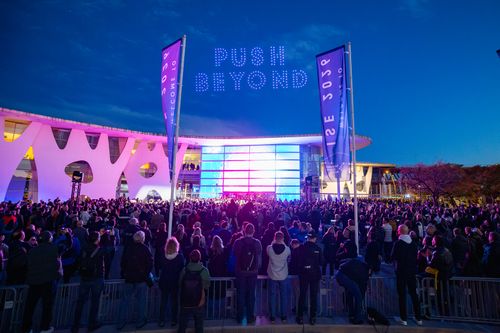 Spanning all eight halls at Fira de Barcelona Gran Via, ISE 2026 delivered four days of record-breaking energy, creativity, and innovation.
-
 The initiative will create new opportunities for talent development, innovation and community projects across the sector
-
 The Facts & Figures report for ISE 2026 is available to download.
-
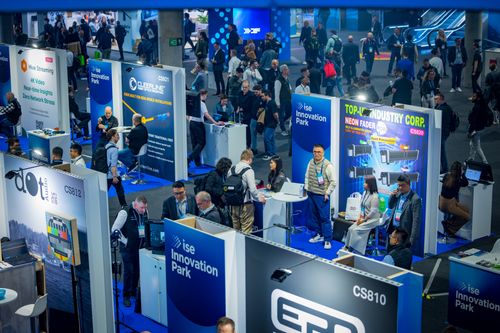 Bringing together startups, investors and industry leaders, the expanded show feature offers a strong platform for visibility, networking, and commercial opportunity.
-
 This new type of event brings together end users, creators and production specialists from broadcast, live events, advertising and gaming, combining creative showcases, editorial programming and netwo ...