
Session: Real-time rendering for live shows: how to build systems, not files
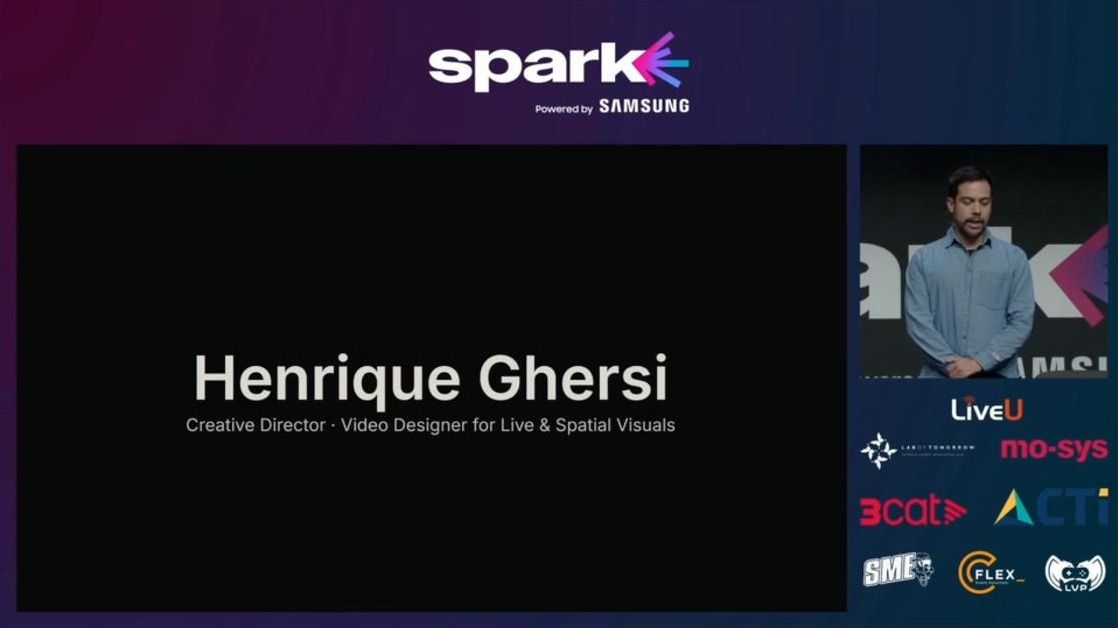
How real-time rendering changes the way show visuals are made, from an Unreal beach world on tour to Coachella and a Hong Kong tower, with first steps to take.
- Event: ISE 2026
- From session: Spark 2026: Real-Time Design & Workflows
- Speaker: Henrique Ghersi, Creative Director, Henrique Ghersi Studio
- Estimated read time: 8 minutes
- Watch the full session
Quick read summary
- Real-time rendering lets live show teams build visual systems that generate content, rather than one-off files handed down a pipeline.
- Start every project as a hybrid, choosing real-time, rendered or both by touring schedule, changeover time and access for testing.
- Expose a short list of controls early, so several artists can work at once and the art direction holds.
- Feed set, lighting and camera data into the screens so they keep pace with late changes on stage.
- The tools, AI included, should never do the thinking. Intention outlasts spectacle.
"It’s not that the tools are changing, what’s changing is how we’re thinking about it." That was how Henrique Ghersi, Creative Director at Henrique Ghersi Studio, framed real-time rendering for his audience at ISE 2026. Ghersi is a video designer for concerts, theatre, installations and architectural screens. The software has been around for years, he said, but the way teams plan, build and deliver show visuals around it has changed.
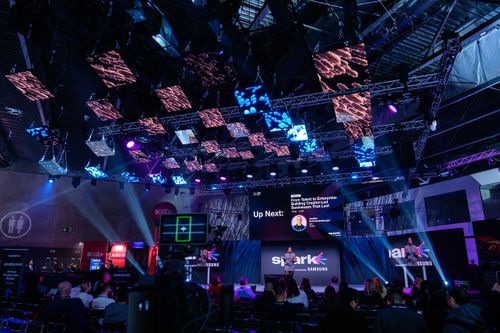
He spoke at Spark, ISE’s programme for creativity and technology, and walked through three projects from 2025: an arena tour built in three weeks, a festival show at Coachella and a tower in Hong Kong. All three followed one method.
Why does a linear visuals pipeline struggle with live shows?
A linear pipeline struggles because every change sends the work back several steps, and live shows change constantly. Ghersi described the old model as a relay: the creative set, then video design, animation, the render, the programmer and finally the show build. A late change to choreography or lighting meant going back three or four steps.
Real-time tools change the order of the work, not only its pace. Concept, test renders, previews and output for each screen can now run side by side.
It’s not just about speed, it’s not just about being able to do things faster, it’s really changing the structure about how we create these projects.
How does real-time rendering turn show visuals into a system?
Real-time rendering lets a team build the world, its behaviour and its camera views as separate parts that different people work on at once, controlled by an agreed set of parameters. As a video designer, Ghersi said, his process is now about generating systems, not files.
Every project starts as a hybrid. A touring show might be built in real-time, then rendered, or intricate rendered visuals might be adapted to each screen with real-time methods. Permanent sites face the same choice, as ISE’s feature on real-time content production inside venues shows.
Three benefits follow:
- Scale: the same system can produce new scenes, formats and surfaces later, without starting again.
- Consistency: the art direction lives in the system, so it holds when several artists work through it.
- Collaboration: set designers, lighting designers and programmers can feed their data into the visuals.
Worked example: a beach world built in three weeks
Danny Ocean’s arena tour shows the whole method on one project. The Venezuelan artist toured arenas in Latin America in 2025, and Ghersi had three weeks to make the content, produce it and put a team together.
- Question the brief. The production planned to use stock footage. Ghersi pushed back: unique stock footage is hard to find, and making it work from every arena sightline takes time.
- Find the meaning. Danny Ocean’s album Babylon Club celebrated tropical beaches. For Ghersi, also Venezuelan, the beach stood for a diaspora’s nostalgia for home.
- Build the parts in parallel. In Unreal Engine, one group built the world, others its water, wind and birds, others its cameras and colour.
- Test the output early. Render tests ran while the world was still being built.
- Expose a small set of controls. The team agreed in advance which variables could change, so every song could be dressed from the same world.
| Control | What it changed |
|---|---|
| Water | Movement and choppiness, timed to the musical beat |
| Wind | How strongly the palm trees moved |
| Wildlife | How often birds or dolphins appeared |
| Time of day | Where the show sat in a 24-hour cycle, which carried its story |
Because it was a touring show, the output was rendered video, but building it as a system is what made that much content possible in three weeks. It also outlives the tour, which is the real lesson for Unreal Engine live events work: new landscapes or surfaces can be rendered quickly from the same world.
How can live visuals use data from the rest of the stage?
Live visuals can take in set positions, lighting data and camera feeds, so the screens respond to the stage rather than run beside it. The show Ghersi made for the artist Arca premiered at Coachella in 2025 and used all three.
Six towers with embedded cameras surrounded her, and a scripted plug-in cut between them automatically, edited in advance to the music, with an operator able to override it.
The lighting programmer’s DMX data, the control signal for the stage lights, drove virtual fixtures in Unreal. Instead of an animator copying a lighting render, Ghersi said, the visuals took the data directly and could respond quickly to change.
When is detailed previs worth the effort on a media facade?
Detailed previs is worth it when screens are woven into a working building, where every surface, material and viewing distance is different. Ghersi worked on the Henderson Building in Hong Kong for 59 Studio, creating visuals for the facade and interior.
Inside, the visuals had to survive close viewing in lift lobbies, yet be almost imperceptible. Previs used to be cumbersome and tied to one or two camera views, Ghersi said. Here the team studied the light falling on each screen, and the client checked the design in a VR preview. The exterior LED strips, with little night-time access for testing, ran live in Notch through Pixera.
Which traps catch teams moving to real-time?
The traps Ghersi named are about judgement, not software:
- Letting the tools think. His words: "Really important to not let these tools do the thinking for us, and that can be real-time, it can be AI."
- Using unproven tools on a short schedule. Unless there is time for R&D, he told an audience member, use tools the team is confident will deliver.
- Rehearsing the new part last. Arca’s camera script was new, so it was tested in a London studio first.
- Working in silos. Agree early how set, lighting and choreography data will reach the visuals.
These technologies can do some really impressive things, but intention is more memorable than spectacle.
The video designer’s job is shifting too. "We’re really becoming more of integrators now," Ghersi said. A screen producer weighs real-time when pitching, and the designer weighs scope when choosing tools. For AV integrators, that moves the technical conversation to the pitch, not the final week.
FAQ
- When should a touring show render its visuals instead of running them live? A touring show should render when there is no time to generate visuals live each night. Henrique Ghersi of Henrique Ghersi Studio built Danny Ocean’s 2025 arena tour content in a real-time Unreal Engine world, then rendered it as video for the road.
- Why build show visuals as a system rather than a set of files? A system can generate new content later and keeps the art direction consistent when several artists work on it. It also lets set, lighting and camera data feed the visuals, while a set of rendered files has to be remade whenever the brief changes.
- Can real-time rendering reduce risk on a short production schedule? Real-time rendering can reduce risk when the team already knows its tools will deliver at the scale and in the time needed. Henrique Ghersi advises keeping untested tools for projects with time for research and development, and testing any new script in a studio before tech rehearsals.
Space, system, story
Ghersi closed on three words, "space, system, story", and they work as a test for any project that reaches for real-time tools. Space gives the visuals form. The system gives structure amid all the shifting parts of a production. The story gives meaning. A team that can answer all three before choosing software is unlikely to build the wrong thing.
His sharpest point was that a system protects the work under pressure. Three weeks for an arena tour leaves little room to protect the look and the quality. On Danny Ocean’s tour, the art direction lived in the world rather than in individual clips, so it held, and that world can still become something else.
For AV and production teams, the next step is an earlier conversation. Decide at the pitch which parts of a show should be a system and which should be rendered. Agree which departments will feed it data, and when the team can test on site.
Then hold every choice against the intent. A beach world built in three weeks still worked because, for a Venezuelan artist and the Venezuelan diaspora, the beach meant home.
About the speaker
Henrique Ghersi
Creative Director, Henrique Ghersi Studio
Ghersi is a Venezuelan creative director and video designer working across concerts, theatre, installations, architectural displays and live broadcast. His session introduction credited him with projects for Coldplay, Beyoncé and J Balvin and for the stage musicals Back to the Future and We Will Rock You.
Explore real-time workflows at ISE
Real-time pipelines link creative studios with live production.
- Design and creative technology at ISE: real-time rendering, content and immersive tools.
- Talks and summits across ISE: keynotes, summits and free-to-attend stages in one place.
- Coming to ISE for the first time? The first-time visitor guide covers the essentials.
Featured Articles
-
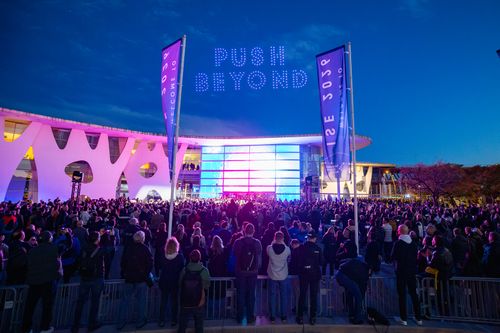 Spanning all eight halls at Fira de Barcelona Gran Via, ISE 2026 delivered four days of record-breaking energy, creativity, and innovation.
-
 The initiative will create new opportunities for talent development, innovation and community projects across the sector
-
 The Facts & Figures report for ISE 2026 is available to download.
-
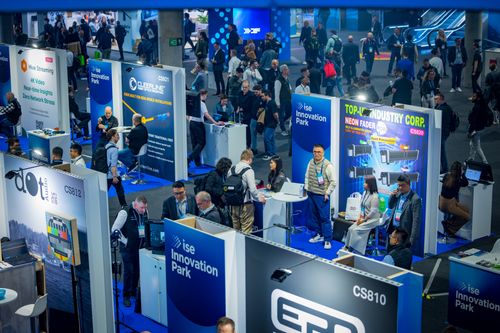 Bringing together startups, investors and industry leaders, the expanded show feature offers a strong platform for visibility, networking, and commercial opportunity.
-
 This new type of event brings together end users, creators and production specialists from broadcast, live events, advertising and gaming, combining creative showcases, editorial programming and netwo ...