
How should organisations manage video assets to maximise their value?

Investment in enterprise production does not end with the studio, cameras and editing systems. Decisions around storage, metadata, rights, access and reuse need to form part of the original strategy if the content created is to retain its value over time.
By James McKeown
A new production facility can begin generating large volumes of content almost immediately, from executive broadcasts and training videos to marketing material, live events and social clips. Without a clear plan for how those assets will be stored, described, governed and retrieved, that growing library can quickly become difficult to manage. Asset management therefore needs to be considered at the same stage as the production environment itself.
AVIXA’s guide to digital asset management (DAM) for video production describes centralised, searchable libraries, metadata, version control and permissions as core elements of an effective DAM environment. Those decisions become increasingly important as production volume grows and more departments begin drawing on the same material.
Planning for the archive
Ben C. Roth, CEO and Founder of creative technology integrator Original Syndicate (OGS), suggests that the foundations of a useful library are laid during production rather than afterwards. “Decisions that make the archive useful happen at capture,” he says. “AI can rebuild descriptive info later, but not rights and consent.”
That means recording who appears in the content, what it covers, the rights and consents attached to it and any expiry dates while those details are still readily available. Without that context, material can become difficult to reuse even if the underlying media remains accessible.
AV consultant Faye Bennett agrees. “This should absolutely be part of the planning strategy,” she says. “The media library is part of the value proposition alongside any distributed live content.”
She warns that allowing the archive to grow without a clear management model can quickly create problems. “Left to manage reactively, as libraries are growing and storage eaten up, the task can become overwhelming. When understanding ROI, how to create on-going value with media is essential.”
Responsibility for managing the library also needs to be defined. “Understanding if this will be managed internally or as part of an outsourced managed service is key, and raises questions about security, on-going cost and content/asset management.”
Those considerations become increasingly important as content moves between platforms. Recent ISE coverage of multi-platform distribution has highlighted the role of metadata in helping organisations identify, locate, adapt and distribute material efficiently.
Making content discoverable
Ciaran Doran, CEO of M2A Media and former chair of ISE’s Broadcast AV Summit, sees discoverability as fundamental to the value of an archive. “There’s no shortage of cloud or on-prem storage, archive and discovery platforms. There’s an old saying that if you can’t get at it because it’s stuck on a tape, you don’t really own it.”
Doran argues that the same principle applies to a modern media library: content needs to be accessible if it is going to retain its value. “Make old content rapidly discoverable and use it to make ‘new-stalgia’, new content built from old material, which also shows off your pedigree,” he says.
Roth offers a similarly practical test. “Judge the MAM by the time it takes to find a usable clip,” he says. “If it takes half a day, you’re paying to produce the clip twice.”
That also makes structure part of the production workflow rather than an administrative task to address later, as Roth advises: “Agree the taxonomy and retention policy before choosing the platform.”
From library to content engine
Once content can be found and its usage rights are clear, the archive can become a resource for future production.
Roth argues that organisations should plan those future uses before the original shoot. “Most companies plan content as a one-time event and judge it by views, and on those terms it will always look expensive,” he says. “The value comes from deciding every way it will be used before you shoot, including the short cuts, the internal and localised versions, and the transcript that feeds search and training.”
Bennett makes a similar point. “‘Multi-functional’ content will continue to provide value long after production,” she says. That could mean repurposing material from a live event for subsequent internal communications, recaps or other uses across the organisation.
Visibility and access are central to that process. Bennett asks “how can HR, Facilities, Internal Comms and Management make use of the COO’s broadcast video on operational strategy to ensure alignment between their function and the rest of the business? This again relies on intra-department collaboration and inclusion to get most value across the business.”
Doran adds that extending the life of content also means thinking about where it will be seen and what it is expected to achieve. “It all depends on the strategy,” he says. “The goal might be brand awareness, hooking interest to draw viewers into a sales process, or education and training that builds a stronger brand through thought leadership.
“Set the measurement at the start, as you would for any marketing campaign. Then make the content discoverable through many channels, preferably not just your own.”
Roth also favours practical measures of value. “Check how long people actually watch before you decide how long to run,” he says. “Rather than streaming a three-hour event in full, clip the strongest sessions and get them out within 24 hours, then keep them in an always-on library.”
He argues that measurement should reflect what the organisation is trying to achieve rather than relying on views alone. “Did the message go out on time, did every location get it at once, how long did it take to get from camera to screen, and did people remember it?”
As we’ve learnt, the business case for enterprise production extends beyond the ability to create more video. Organisations also need a plan for what happens to that video once it has been made. Treating asset management, metadata, rights and discoverability as part of the initial production strategy creates the conditions for content to be reused, repackaged and distributed long after its first appearance.
For organisations considering investment in new production facilities, that lifecycle belongs in the consideration phase. The value of a studio will be determined not only by what it can produce on day one, but by how effectively the organisation can manage and use everything it produces afterwards.
About the author
James McKeown is an independent B2B content specialist who has covered AV and media technology since 2014 and is the current Editor of the ISE Daily. He has spent more than two decades in B2B publishing, most recently as Group Content Director at Future plc, where he oversaw titles including the IBC Daily, TVBEurope and Installation.
Connect with him on LinkedIn.
Stay ahead – Stay informed.
As an AV specialist or industry leader, you recognise how crucial it is to keep up with evolving trends, new technologies, and notable happenings within the audiovisual world. That's why we're delighted to invite you to receive exclusive email updates about ISE – the world-renowned tech show for the systems integration and audiovisual industry.
When you subscribe, you'll be kept up to speed with insightful commentary on the freshest developments in AV, get early looks at what's planned for the ISE content schedule – including headline speakers – and benefit from in-depth reporting on the show's standout attractions.
Sign up now to stay at the forefront of audiovisual innovation and expertise.
Further reading
Discover broadcast solutions at ISE
Related Content
-
 Organisations are investing in video production capabilities, with responsibility for their operation often stretched across several departments. Where should ownership ultimately sit?
-
 Enterprise production systems need to balance creative ambition with operational reality.
Featured Articles
-
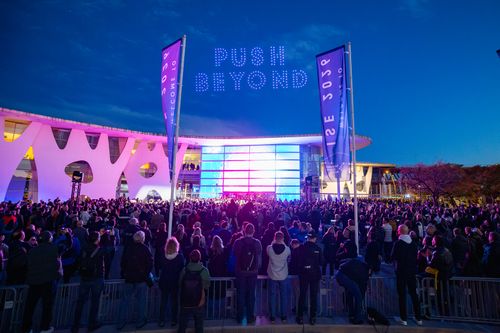 Spanning all eight halls at Fira de Barcelona Gran Via, ISE 2026 delivered four days of record-breaking energy, creativity, and innovation.
-
 The initiative will create new opportunities for talent development, innovation and community projects across the sector
-
 The Facts & Figures report for ISE 2026 is available to download.
-
 Bringing together startups, investors and industry leaders, the expanded show feature offers a strong platform for visibility, networking, and commercial opportunity.
-
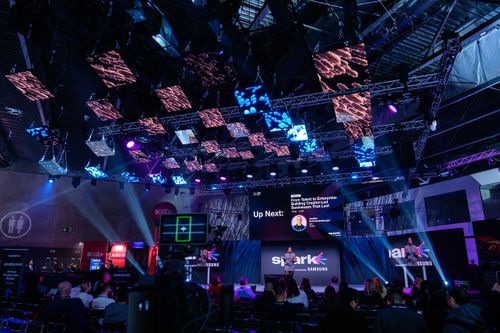 This new type of event brings together end users, creators and production specialists from broadcast, live events, advertising and gaming, combining creative showcases, editorial programming and netwo ...