

The next broadcast revolution may be invisible to viewers
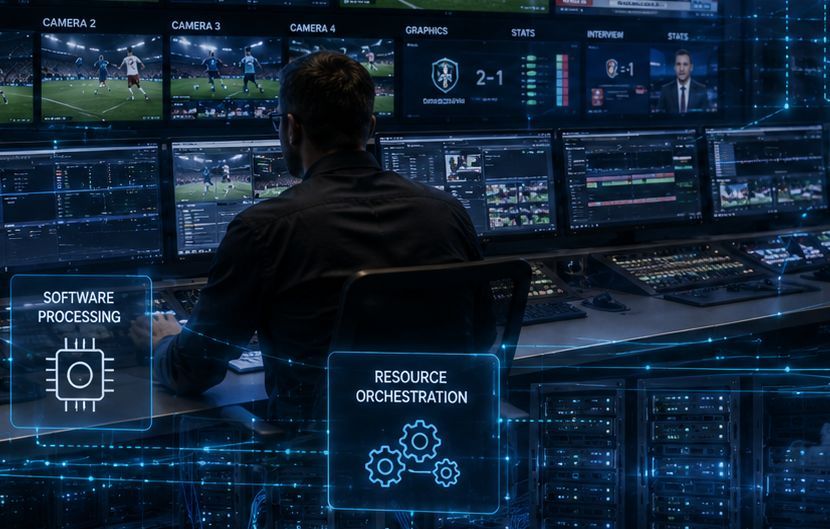
While audiences focus on content, broadcasters are increasingly focused on infrastructure. Across the industry, a major transformation is taking place behind the scenes as traditional hardware-centric environments give way to software-defined architectures. The shift is not as visible as 4K, HDR, or AI-generated content, but its impact may prove more significant.
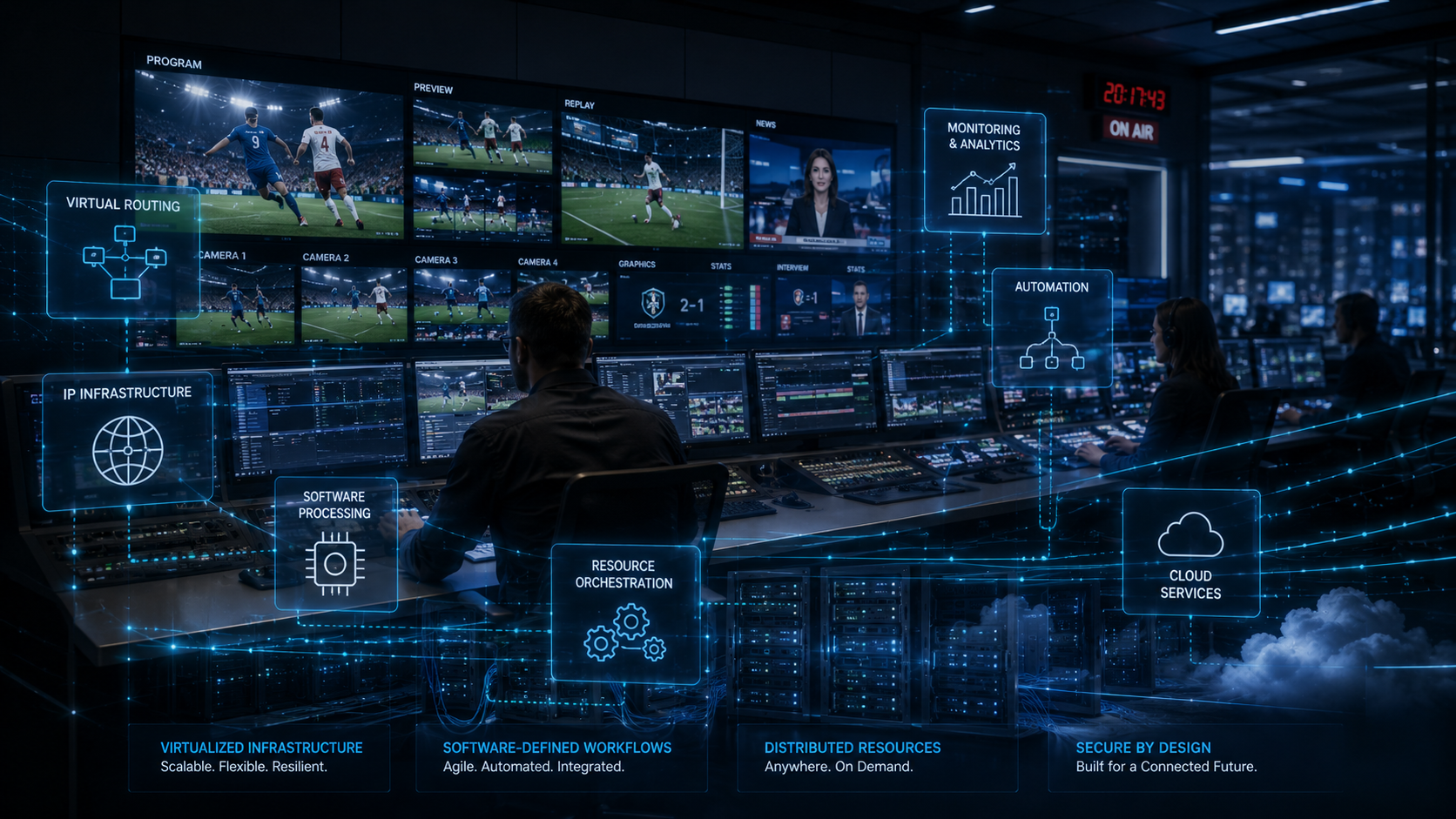 Historically, broadcast facilities were built around dedicated hardware. Every production, routing, processing, monitoring, and playout function typically required purpose-built equipment. These systems delivered reliability but often lacked flexibility and could be expensive to upgrade or scale.
Today, broadcasters operate in a vastly different environment. Audiences expect content to be available across multiple platforms, devices, and business models. Production teams need greater agility. New channels and services must be launched quickly. Cloud adoption is accelerating. Remote production continues to grow.
Meeting these demands with traditional infrastructures is becoming increasingly difficult. Software-defined broadcasting offers an alternative. By virtualising functions that were once tied to physical hardware, broadcasters can deploy resources more flexibly, scale capacity according to demand, and respond more rapidly to changing business requirements.
The benefits extend beyond cost savings.
Software-defined environments can improve operational efficiency, support faster innovation, and simplify the management of increasingly complex workflows. They also enable closer integration between production, distribution, analytics, and cloud-based services.
However, the transition introduces new challenges. Broadcasters must rethink infrastructure design, operational processes, cybersecurity strategies, and workforce development. Engineering teams require different skills. Vendor relationships evolve. Reliability must be maintained while embracing greater flexibility.
The organisations moving most successfully are not treating software-defined infrastructure as a technology project alone. Instead, they are viewing it as a business transformation initiative that affects operations, workflows, talent, and long-term strategy.
Integrated Systems Europe exhibitors including Lawo continue leading the development of software-defined production and distribution infrastructures that help broadcasters transition away from hardware-dependent environments. Meanwhile, EvertzAV is expanding IP-native ecosystems that allow organisations to deploy resources more dynamically across production and delivery workflows, while Cisco is helping media companies build highly connected operational environments that support increasingly flexible, virtualised, and cloud-enabled broadcast operations.
As broadcasting becomes more software-centric, the industry's future may depend less on individual technologies and more on how effectively organisations can integrate them into cohesive operational strategies.
That is one reason software-defined broadcasting is becoming an increasingly important discussion at Integrated Systems Europe, where broadcasters are exploring the infrastructure models that will shape the next generation of media operations.
Stay ahead – Stay informed.
As an AV specialist or industry leader, you recognise how crucial it is to keep up with evolving trends, new technologies, and notable happenings within the audiovisual world. That's why we're delighted to invite you to receive exclusive email updates about ISE – the world-renowned tech show for the systems integration and audiovisual industry.
When you subscribe, you'll be kept up to speed with insightful commentary on the freshest developments in AV, get early looks at what's planned for the ISE content schedule – including headline speakers – and benefit from in-depth reporting on the show's standout attractions.
Sign up now to stay at the forefront of audiovisual innovation and expertise.
Related Content
-
) A digital twin is a live virtual model of a real‑world space, system or workflow, continuously updated with data so it behaves like its physical counterpart.
A digital twin is a live virtual model of a real‑world space, system or workflow, continuously updated with data so it behaves like its physical counterpart. -
) IPMX and ST 2110 both transport professional media over IP networks but differ mainly in who they serve.
IPMX and ST 2110 both transport professional media over IP networks but differ mainly in who they serve. -
) How do venues improve the fan experience? By removing friction at every stage.
How do venues improve the fan experience? By removing friction at every stage. -
) Broadcast TV isn't growing in the traditional sense. But instead, the definition of broadcasting is expanding.
Broadcast TV isn't growing in the traditional sense. But instead, the definition of broadcasting is expanding. -
) Edge computing is the processing of data close to where it is created and used, rather than sending it to a distant data centre or cloud platform.
Edge computing is the processing of data close to where it is created and used, rather than sending it to a distant data centre or cloud platform.
Featured Articles
-
) Spanning all eight halls at Fira de Barcelona Gran Via, ISE 2026 delivered four days of record-breaking energy, creativity, and innovation.
Spanning all eight halls at Fira de Barcelona Gran Via, ISE 2026 delivered four days of record-breaking energy, creativity, and innovation. -
) The initiative will create new opportunities for talent development, innovation and community projects across the sector
The initiative will create new opportunities for talent development, innovation and community projects across the sector -
) The Facts & Figures report for ISE 2026 is available to download.
The Facts & Figures report for ISE 2026 is available to download. -
) Bringing together startups, investors and industry leaders, the expanded show feature offers a strong platform for visibility, networking, and commercial opportunity.
Bringing together startups, investors and industry leaders, the expanded show feature offers a strong platform for visibility, networking, and commercial opportunity. -
) This new type of event brings together end users, creators and production specialists from broadcast, live events, advertising and gaming, combining creative showcases, editorial programming and netwo ...
This new type of event brings together end users, creators and production specialists from broadcast, live events, advertising and gaming, combining creative showcases, editorial programming and netwo ...
)
)

)
)
)
)
)
)
)
)
)
)
)
)
)
)
)
)
)
)
)
)
)
)
)
)
)
)
)
)
)
)
)
)
)
)
)
)
)
)
)
)
)
)
)
)
)
)
)
)
)
)
)
)
)
)