

What is Matter and why does it matter?
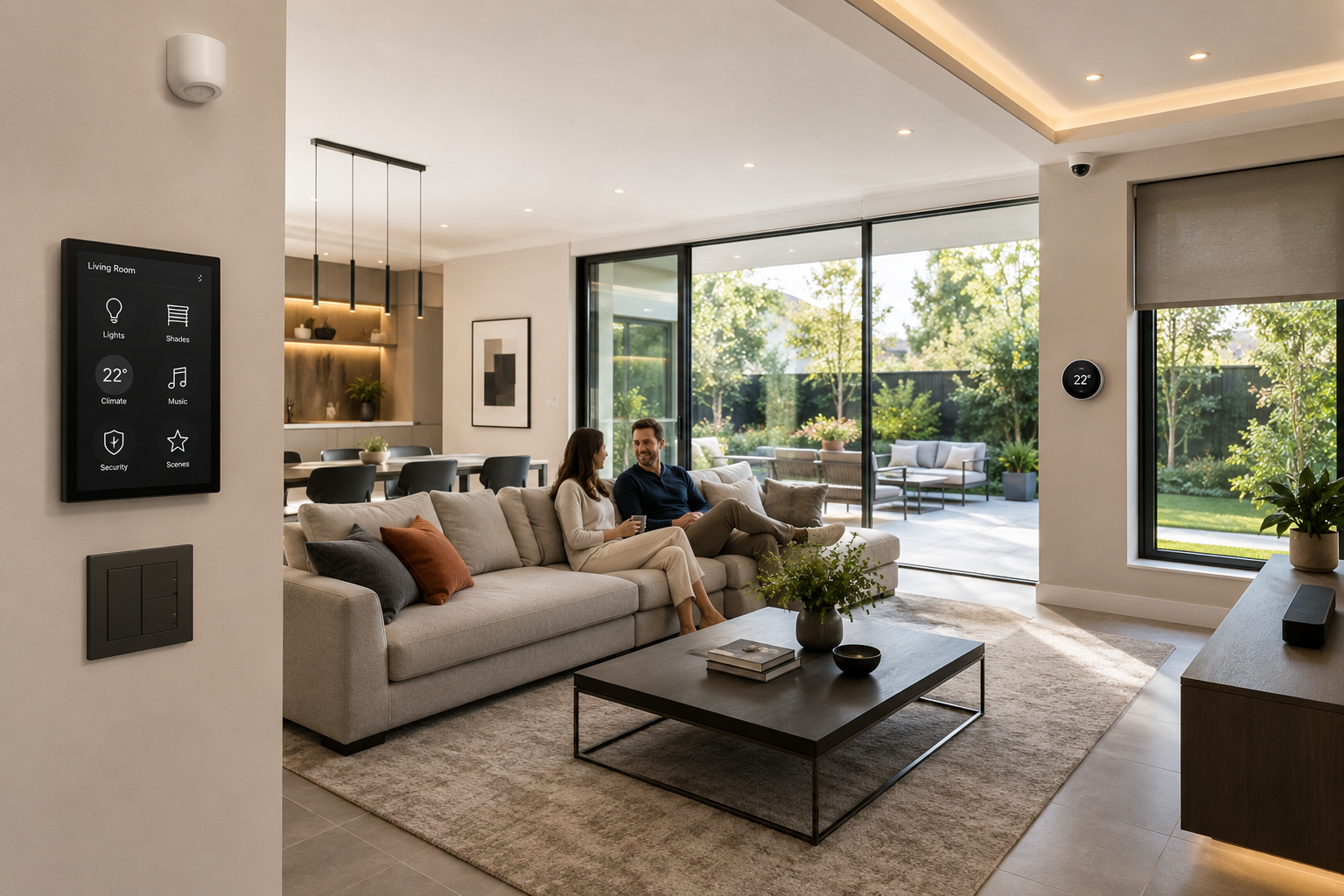
For years, one of the biggest frustrations with smart home technology has been surprisingly simple: not everything talks to everything else.
A smart light might work with one ecosystem, a thermostat with another and a sensor with a third. Homeowners can end up juggling different apps, hubs and compatibility requirements, while integrators have to work out how disparate products can be brought together reliably.
Matter is designed to make that easier.
Developed by the Connectivity Standards Alliance (CSA), Matter is an open, IP-based connectivity standard intended to enable compatible smart home devices from different manufacturers to work together. Instead of every manufacturer creating its own language, Matter gives certified products a common way to communicate.
That sounds technical. The ambition is anything but.
What does Matter actually do?
Matter sits above networking technologies such as Wi-Fi, Ethernet and Thread. Rather than replacing those networks, it provides a common application layer through which devices can communicate.
For homeowners, the potential benefit is greater freedom of choice. A Matter-certified device can potentially be incorporated into different Matter-compatible ecosystems rather than locking the buyer into a single manufacturer's platform.
It also supports local communication, so compatible devices do not necessarily have to send every command via the cloud. That can help make interactions faster and more reliable while reducing dependence on an internet connection.
Thread is particularly important here. Designed for low-power connected devices, it creates a mesh network in which devices can communicate with one another and connects to the wider home network through a Thread Border Router.
Why is Matter important now?
Matter is no longer simply a promising new standard.
It is steadily becoming more capable.
The specification has expanded considerably since its initial release. Matter 1.5 added support for areas including cameras, closures and further energy-management capabilities. In June 2026, Matter 1.6 introduced improvements including NFC-based commissioning and new ways for multiple ecosystems to manage the same devices.
That last development is particularly interesting for professionally designed homes.
A luxury residence may contain dozens or hundreds of connected devices and could be used by different family members who prefer different interfaces. Matter 1.6's Joint Fabric capability provides a standardised approach through which multiple authorised controllers can administer the same Matter environment. The CSA specifically identifies new-build handovers and professionally managed properties among the potential applications.
Does Matter mean everything will work with everything?
Not quite.
The Matter logo does not magically make every function of every product available through every smart home platform. Manufacturers and platforms still decide which Matter versions, device types and capabilities they support, and adoption of new specifications takes time.
Nor does Matter make established professional control platforms redundant.
In a sophisticated residential installation, there is a significant difference between making devices interoperable and creating a beautifully orchestrated home. Programming, user interfaces, networking, system design, commissioning and ongoing support remain essential.
Matter can therefore remove some of the barriers between products and ecosystems, but it should not be confused with complete integration. A truly intelligent home still depends on careful decisions about how its many systems work together.
What does Matter mean for residential integrators?
For residential integrators, greater interoperability presents both an opportunity and a challenge.
Clients may increasingly expect products from different brands to work together easily. Matter can broaden the range of compatible devices available within a project, but it does not remove the need for good system design. If anything, as connected homes encompass more products and services, the network architecture, commissioning and overall user experience become even more important.
Several ISE 2027 exhibitors illustrate how this changing landscape is developing. JUNG (Stand 2D300) provides a particularly tangible example: its battery-powered Matter push-button uses Thread and can control compatible devices from different manufacturers locally, bringing Matter into the physical controls that architects and interior designers can incorporate into a room. JUNG cites compatibility with ecosystems including Apple Home and Samsung SmartThings.
Legrand (2B700, 3L500) has been involved with Matter since its development and continues to advocate greater interoperability between connected products. In August 2026, Legrand representatives highlighted Matter's role in making multi-manufacturer integration easier while maintaining secure connected experiences. Legrand's Steve Kaufer, Director of Engineering, R&D for Lighting Controls, commented: “Matter is providing ease of interoperability. It makes it very easy to bring products into an ecosystem and get interoperability between different manufacturers' products.”
For professional control specialists, meanwhile, Matter represents another technology to incorporate rather than a replacement for sophisticated residential systems. ADI | Snap One + Control4 (2J150) continues to focus on bringing lighting, entertainment, comfort and security together into a coherent whole-home experience, while KNX (2J300) demonstrates that open, multi-manufacturer interoperability has long been an important principle in professional building and home automation.
The distinction is important. Matter can make it easier for individual products to communicate, but communication alone does not create a well-designed smart home. Integrators still need to decide how systems should interact, how they should be controlled and what should happen when something goes wrong.
Matter potentially makes the foundations more interoperable. The integrator still has to create the experience.
So why does Matter matter?
Because the smart home is gradually moving away from isolated products towards connected ecosystems.
Matter does not solve every integration problem, and it does not remove the need for professional design. What it offers is something more fundamental: a common foundation on which manufacturers, platforms and integrators can build.
For homeowners, that could mean more choice and less concern about compatibility. For manufacturers, it offers a more standardised route into multiple ecosystems. And for integrators, it could allow more attention to shift from simply making devices communicate towards creating homes that genuinely work as a whole.
That may ultimately be Matter's most important contribution.
The smartest home isn't the one with the most connected products. It's the one where the technology feels like a single system.
Frequently Asked Questions
Is Matter the same as a smart home platform?
No. Matter is a connectivity standard that helps compatible devices communicate across different ecosystems. Platforms such as Apple Home, Google Home and Amazon Alexa can use Matter to control supported devices.
Do Matter devices need Wi-Fi?
Not always. Matter can operate over Wi-Fi, Ethernet or Thread, depending on the device. Thread is particularly suited to low-power products such as sensors, locks and switches.
Does Matter replace professional smart home systems?
No. Matter can improve device interoperability, but professional systems still provide the design, programming, integration and control needed to create a seamless whole-home experience.
Stay ahead – Stay informed.
As an AV specialist or industry leader, you recognise how crucial it is to keep up with evolving trends, new technologies, and notable happenings within the audiovisual world. That's why we're delighted to invite you to receive exclusive email updates about ISE – the world-renowned annual tech show for the systems integration and audiovisual industry.
When you subscribe, you'll be kept up to speed with insightful commentary on the freshest developments in AV, get early looks at what's planned for the ISE content schedule – including headline speakers – and benefit from in-depth reporting on the show's standout attractions.
Sign up now to stay at the forefront of audiovisual innovation and expertise.
Further reading
Find out more about smart homes and buildings at ISE.
Related articles
- The hidden infrastructure challenge behind smart homes – Explore the networks, cabling and infrastructure that provide the essential foundations for a truly intelligent home.
- Why the future smart home must feel simpler, not more complex – Find out why simplicity is becoming one of the most important measures of smart home success as the number of connected technologies grows.
- The residential integrator's role is changing faster than many people realise – Explore why interoperability is shifting the integrator's value towards system design, trusted advice and long-term support.
Related Content
-
) Human centric lighting (HCL) is an approach to lighting design that considers how light affects human health, comfort, mood and performance, rather than simply providing visibility.
Human centric lighting (HCL) is an approach to lighting design that considers how light affects human health, comfort, mood and performance, rather than simply providing visibility. -
) Why residential technology is moving beyond gadgets.
Why residential technology is moving beyond gadgets. -
) How smart building technology improves resident retention.
How smart building technology improves resident retention. -
) Today, some of the most successful luxury residential projects are being designed around experiences rather than objects.
Today, some of the most successful luxury residential projects are being designed around experiences rather than objects. -
) As homes become more connected, technology decisions are beginning to influence much more than entertainment.
As homes become more connected, technology decisions are beginning to influence much more than entertainment.
Featured Articles
-
) Spanning all eight halls at Fira de Barcelona Gran Via, ISE 2026 delivered four days of record-breaking energy, creativity, and innovation.
Spanning all eight halls at Fira de Barcelona Gran Via, ISE 2026 delivered four days of record-breaking energy, creativity, and innovation. -
) The initiative will create new opportunities for talent development, innovation and community projects across the sector
The initiative will create new opportunities for talent development, innovation and community projects across the sector -
) The Facts & Figures report for ISE 2026 is available to download.
The Facts & Figures report for ISE 2026 is available to download. -
) Bringing together startups, investors and industry leaders, the expanded show feature offers a strong platform for visibility, networking, and commercial opportunity.
Bringing together startups, investors and industry leaders, the expanded show feature offers a strong platform for visibility, networking, and commercial opportunity. -
) This new type of event brings together end users, creators and production specialists from broadcast, live events, advertising and gaming, combining creative showcases, editorial programming and netwo ...
This new type of event brings together end users, creators and production specialists from broadcast, live events, advertising and gaming, combining creative showcases, editorial programming and netwo ...
)
)

)
)
)
)
)
)
)
)
)
)
)
)
)
)
)
)
)
)
)
)
)
)
)
)
)

)
)
)
)
)
)
)
.png/fit-in/500x500/filters:no_upscale())
)
)
)
)
)
)
)
)
)
)
)
)
)
![rAVe [PUBS]](https://cdn.asp.events/CLIENT_Integrat_169E7B04_E6F3_39F6_8BE4DB27C54F731E/sites/ise-2027/media/libraries/partners/rAVe-PUBS-Google-Logo.png/fit-in/500x500/filters:no_upscale())
)
)
)
)
.png/fit-in/500x500/filters:no_upscale())
)
)
)