

What is an immersive experience?
By Adrian Pennington
Understanding immersion
Immersive experiences work by engaging multiple senses at once. Instead of relying on a single screen or static display, they can combine sound, light, movement, and interaction to create environments that feel alive. This can happen in digital spaces, physical rooms, or hybrid environments that blend both. The aim is always the same: to create a strong sense of presence and emotional connection.
Key technologies behind immersive experiences
Modern immersion is powered by a range of technologies that help build responsive, multi-sensory environments:
- Spatial audio – Sound placed in three-dimensional space so it appears to come from specific directions, creating a lifelike acoustic environment.
- Haptics – Tactile feedback such as vibration or pressure that adds a physical dimension to digital experiences.
- Projection mapping – Turning walls, floors, or objects into dynamic visual surfaces.
- Mixed, augmented, and virtual reality – Tools that overlay or replace the physical world with digital content.
- LiDAR and motion tracking – Systems that detect movement and position, allowing environments to react to audience behaviour.
Any mix of these technologies allow creators to build spaces that shift, respond, and evolve in real time.
Key pro AV applications
Immersive experiences are now central to many professional AV environments, transforming how audiences learn, explore, and connect. AVIXA expects immersive experiences to outperform the entire Venues and Events market, which is already growing by as much as 4.6% CAGR.
Exhibitions use interactive displays, spatial audio, and projection to turn static collections into living narratives. Visitors can explore history, art, or science through multi-sensory storytelling.
Artists (including Coldplay) and music festivals (such as Tomorrowland) increasingly use responsive environments, dynamic lighting, and spatial sound to create live performances where audiences feel part of the action.
Immersive rooms support training, presentations, brand and education experiences. They help audiences retain information by engaging them physically and emotionally.
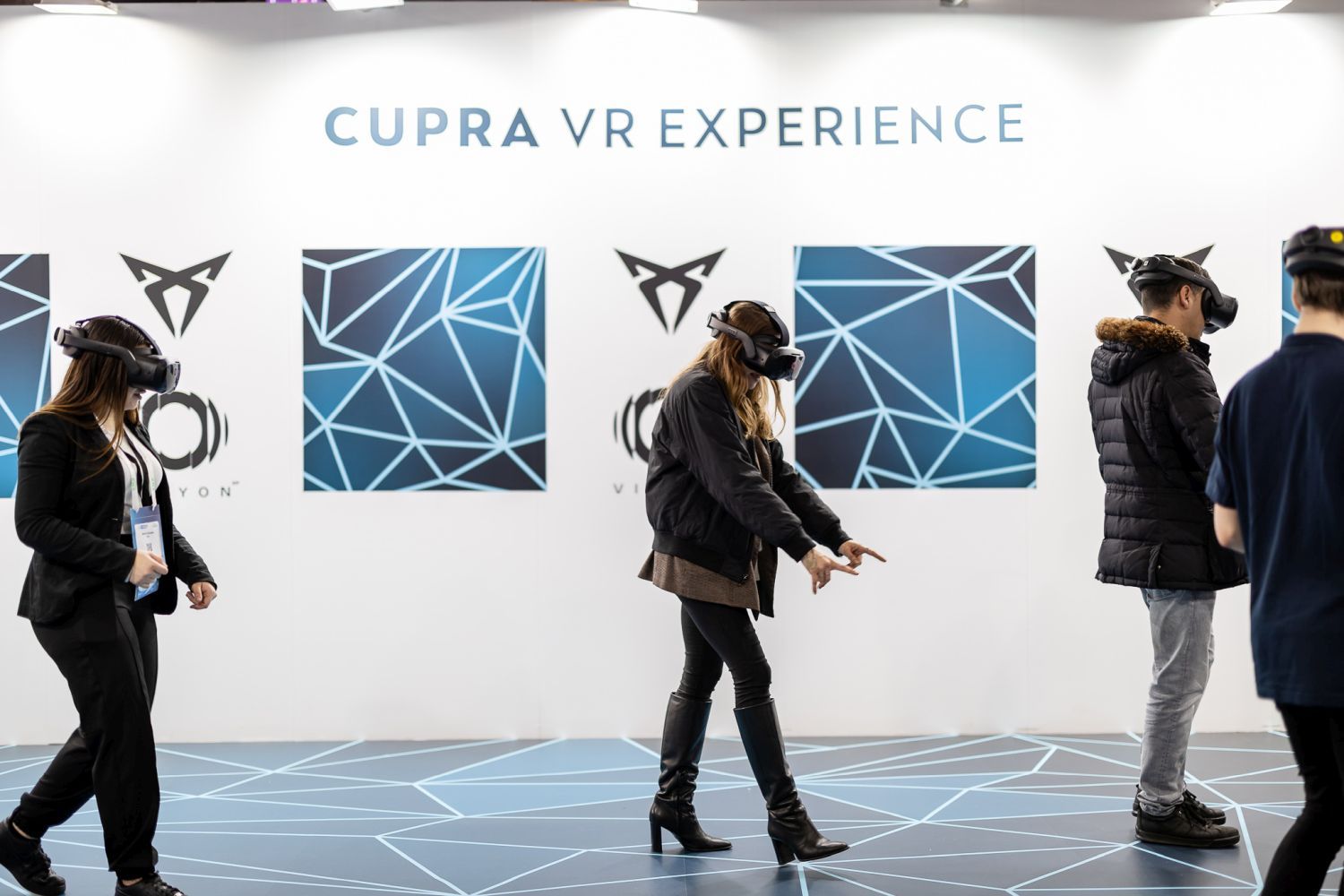
“Immersive technology is rapidly becoming one of the most exciting formats for corporate events,” says Richard Watkins, founder of Immersive Studio, citing free-roam VR experiences, interactive escape rooms and treasure hunts. “Today’s audiences are increasingly looking for experiences rather than presentations. Instead of simply unveiling a product on stage, brands are creating immersive environments where attendees can interact directly with products and services.”
Across these sectors, immersion is used to deepen engagement, improve understanding, and create memorable experiences.
The evolution of immersive experiences
One recent report valued the global immersive entertainment market at $168.5 billion in 2026 and on course to reach over $1000bn by 2033. It found that consumers are moving from passive viewing to active participation and are willing to pay more for interactive, sensory-rich experiences.
What was once expensive, complex, and limited to high-end film or television is now accessible to a wide range of creators and venues. At the same time, new technologies are evolving immersive experiences to include active audience participation.
An example is MASS, a research-led live performance developed through the CoSTAR National Lab. In this project, audiences moved freely through the space, triggering sound and visual effects as they walked. LiDAR sensors tracked their position, while real-time systems translated their behaviour into changes in the environment. As a result, every performance was unique – shaped directly by audience interaction.
This shift – from fixed staging to responsive environments – marks a new phase in immersive design. Experiences are no longer simply shown to audiences; they are co-created with them.
Immerse yourself at ISE
Immersive experiences now span entertainment, education, retail, culture, and corporate communication. They thrive because they offer something people increasingly value: presence, agency, and emotional connection. At ISE 2027 you will see immersivity becoming an even more central part of how we tell stories, share information, and design spaces.
About the author
Adrian Pennington is a journalist, editor and copywriter with over two decades' experience specialising in the production, the technology, the business and the craft of the moving image. Connect with him on LinkedIn.
 Stay ahead – Stay informed.
As an AV specialist or industry leader, you recognise how crucial it is to keep up with evolving trends, new technologies, and notable happenings within the audiovisual world. That's why we're delighted to invite you to receive exclusive email updates about ISE – the world-renowned annual tech show for the systems integration and audiovisual industry.
When you subscribe, you'll be kept up to speed with insightful commentary on the freshest developments in AV, get early looks at what's planned for the ISE content schedule – including headline speakers – and benefit from in-depth reporting on the show's standout attractions.
Sign up now to stay at the forefront of audiovisual innovation and expertise.
Related Content
-
) A digital twin is a live virtual model of a real‑world space, system or workflow, continuously updated with data so it behaves like its physical counterpart.
A digital twin is a live virtual model of a real‑world space, system or workflow, continuously updated with data so it behaves like its physical counterpart. -
) How do venues improve the fan experience? By removing friction at every stage.
How do venues improve the fan experience? By removing friction at every stage. -
) Technology does not automatically make a venue smarter. The real transformation comes when tech is connected to operational and commercial objectives.
Technology does not automatically make a venue smarter. The real transformation comes when tech is connected to operational and commercial objectives. -
) Why connectivity is now the foundation of every modern AV deployment.
Why connectivity is now the foundation of every modern AV deployment. -
) Calling a new venue "future-proof" has always been risky. Today, it is becoming harder still.
Calling a new venue "future-proof" has always been risky. Today, it is becoming harder still.
Featured Articles
-
) Spanning all eight halls at Fira de Barcelona Gran Via, ISE 2026 delivered four days of record-breaking energy, creativity, and innovation.
Spanning all eight halls at Fira de Barcelona Gran Via, ISE 2026 delivered four days of record-breaking energy, creativity, and innovation. -
) The initiative will create new opportunities for talent development, innovation and community projects across the sector
The initiative will create new opportunities for talent development, innovation and community projects across the sector -
) The Facts & Figures report for ISE 2026 is available to download.
The Facts & Figures report for ISE 2026 is available to download. -
) Bringing together startups, investors and industry leaders, the expanded show feature offers a strong platform for visibility, networking, and commercial opportunity.
Bringing together startups, investors and industry leaders, the expanded show feature offers a strong platform for visibility, networking, and commercial opportunity. -
) This new type of event brings together end users, creators and production specialists from broadcast, live events, advertising and gaming, combining creative showcases, editorial programming and netwo ...
This new type of event brings together end users, creators and production specialists from broadcast, live events, advertising and gaming, combining creative showcases, editorial programming and netwo ...
)
)

)
)
)
)
)
)
)
)
)
)
)
)
)
)
)
)
)
)
)
)
)
)
)
)
)
)
)
)
)
)
)
)
)
)
)
)
)

.png/fit-in/500x500/filters:no_upscale())
)
)
.png/fit-in/500x500/filters:no_upscale())
)
)
)
)
)
)
)
)
)
)
)
)