Session: Enterprise AI: the panel that put the process before the model
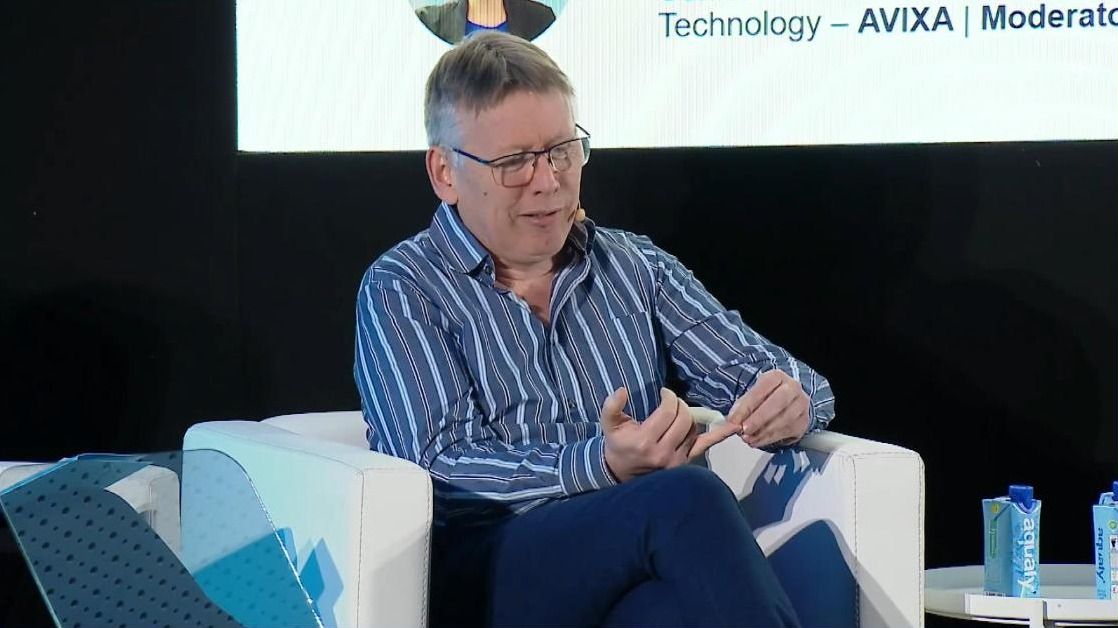
Five experts from Microsoft, AECOM, Wolfram Research, Pleneo and AVIXA on making enterprise AI pay: processes, security, data sovereignty, skills and ROI.
- Event: ISE 2026
- From session: AI Panel: AI for enterprise solutions
- Speakers:
- Irina Dymarsky, Executive Tech Leader and CIO, AVIXA
- Kerry Perez Heffernan, Director of Marketing for Teams, Microsoft
- Richard Morrison, Industry Director, Technology Advisory (Asia Pacific), AECOM
- Jon McLoone, Director of Technical Communication and Strategy, Wolfram Research
- Jim Seretis, Market Development, Pleneo
- Estimated read time: 8 minutes
- Watch the full session
Quick read summary
- Enterprise AI works when it runs on standardised processes, set permissions and prepared data, not when it is bolted onto a broken system.
- AECOM spent about five years standardising engineering work before AI could amplify it, according to Richard Morrison.
- Buyers should ask where a model runs, where its data sits and which external audits the vendor holds.
- The panel split on hype: AECOM sees no hype cycle, while Wolfram Research’s Jon McLoone says the money does not yet add up.
You have seen the enterprise AI demo, and it was magical. Then comes the question every buyer asks next: will it run like that in my own environment? Irina Dymarsky, Executive Tech Leader and CIO at AVIXA, put that gap at the centre of the panel she moderated at ISE 2026 in Barcelona on 3 February 2026.
A demo skips the processes, permissions and data a real organisation runs on. Her panel from Microsoft, AECOM, Wolfram Research and Pleneo agreed on the fix: process first, security from day one, data that knows where it lives. They split on whether the money behind AI makes sense.
Automation makes a bad process fail faster
The panel kept returning to one point: AI magnifies the process it is given. Dymarsky, who has a background in Six Sigma, the quality method built around removing waste, put it plainly.
When you apply automation to a bad process, it produces more waste faster.
Kerry Perez Heffernan, Director of Marketing for Teams at Microsoft, agreed that "AI alone isn’t going to fix a broken system". A Microsoft customer cut the time to produce technical documentation from days to hours because the AI ran inside systems the customer had already set up.
Richard Morrison, Industry Director, Technology Advisory (Asia Pacific) at AECOM, gave the sharpest example. Mapping one engineering discipline across AECOM’s geographies found as many as 200 ways of producing the same output. In his words, "if you’re doing that 200 different ways in your organization, you really can’t automate it".
Standardising took about five years before AI could amplify the work. For anyone planning an AI implementation, that is the timeline that matters.
Security has to be designed in from the first day
Perez Heffernan called security foundational. AI has to work within existing compliance, privacy and security rules, and the data put into it should not train AI systems outside the organisation. She warned that "bringing some new agent into your organization could expose you to a significant amount of risk".
Permissions do double duty. Perez Heffernan described an assistant that flags a document about to be shared with colleagues who lack access. That is human in the loop AI in practical form: the system spots the problem and a person makes the call.
Who decides where the data is allowed to live?
Geography decides first. Morrison said a buyer should ask where a model is actually running, where the data is and where it is being ingested from. If a model cannot run across the enterprise from one location, the answer may be applications built for each geography.
Jim Seretis, Market Development at Pleneo, called data sovereignty the issue Pleneo discovered last year. Countries now expect local data to stay within their borders, so Pleneo runs a local server in Australia.
Why are language models so poor with the numbers that run a business?
Language models are built for context, not for millions of rows. Jon McLoone, Director of Technical Communication and Strategy at Wolfram Research, said they are very good with the words of a meeting and very bad with numbers in a large customer database.
Before anyone can ask how one division’s sales compare with another’s, the data has to be given meaning and put in a form the AI can query.
The meeting room is where the AI meets physics
Seretis took the debate into the room, where physics shapes what AI can do. "Rooms don’t behave the same," he said. Pleneo’s edge device keeps the AI in the room, reads the acoustics and adjusts.
An assistant that summarises a meeting is only as good as the audio it hears, a link ISE has explored in where AI can and cannot help the meeting room experience.
Will people manage AI, or be replaced by it?
They will manage it, McLoone argued, and that is a skill most people were never taught.
We are now all managers and we have to learn management skills.
A manager need not know all of the work, he said. They need to set priorities, judge when work is right and tell when they are being lied to. Morrison stressed what AI cannot replace: human connectivity. Perez Heffernan was the most optimistic voice: "I don’t think AI is suddenly going to replace us all."
Is enterprise AI in a hype cycle?
On the technology, the panel said no. Morrison called this one of the most transformative periods any of them had seen. On the money, McLoone said yes.
The economics do not make sense yet, he said. He compared the moment with the dot-com boom, when a great deal of money went down in flames while Amazon and Google emerged. The tools are real, and some of the spending around them is not. For a wider view of adoption, see ISE’s piece on who is using AI, and how.
Five questions to put to any enterprise AI supplier
Dymarsky closed by telling the audience to pick a process, earn trust through security and data practices, and focus on measurable value.
| Question to ask | Why it matters | Raised by |
|---|---|---|
| Which process will this support, and is it standardised? | Automating a bad process multiplies waste | Dymarsky, Morrison |
| Where does the model run, and where is the data stored? | Data protection law differs by geography | Morrison |
| Can our data train AI systems outside our organisation? | Data put into AI should stay inside | Perez Heffernan |
| Which external audits do you hold, such as SOC 2 or ISO 42001? | Continuous verification beats a certificate | Seretis |
| Is our structured data ready to be queried? | Language models are poor with numbers | McLoone |
FAQ
- What is enterprise AI, in the terms the ISE 2026 panel used? Enterprise AI is AI that works across an organisation’s own people, processes, documents and permissions, rather than a standalone chat tool. Kerry Perez Heffernan of Microsoft said it is most useful when it understands who you work with and what you are working on.
- How does data sovereignty limit where an AI model can run? It ties the model’s location to the country where the data must stay. Jim Seretis of Pleneo said countries now expect local data to remain within their borders, so Pleneo runs a local server in Australia.
- Which certifications should buyers ask an AI vendor about? Jim Seretis of Pleneo named SOC 2 and ISO 42001 at ISE 2026. He described SOC 2 as continuous auditing by an external body, and ISO 42001 as governance for AI.
Five years of groundwork, then the AI
The most valuable advice on this panel was barely about AI at all. Standardise the process. Set the permissions. Know where the data lives and whether it can be queried. Fix the room’s acoustics. None of it appears in a demo, and all of it decides whether enterprise AI pays for itself.
AECOM’s story makes the point in numbers. Five years of standardising came before the firm could use AI to amplify its work. That is not an argument for waiting. It is an argument for starting the unglamorous part now, because it takes longer than the software.
McLoone’s view of the hype cycle adds urgency rather than caution. If the truly new uses of AI have not yet appeared, the organisations ready to adopt them will be the ones whose processes and data are already in order. For more on how the show approached the subject, see AI at ISE 2026.
So start with one process and count how many ways your teams actually run it. If one engineering discipline at a firm of 55,000 people could be done 200 different ways, the number inside your own organisation may be higher than you think.
About the speakers
Irina Dymarsky
Executive Tech Leader and CIO, AVIXA
Dymarsky moderated the ISE 2026 enterprise AI panel and brings a Six Sigma background to questions of automation, trust and value.
Kerry Perez Heffernan
Director of Marketing for Teams, Microsoft
Perez Heffernan works on Microsoft Teams and Copilot, focusing on how AI uses organisational context and permissions.
Richard Morrison
Industry Director, Technology Advisory (Asia Pacific), AECOM
Based in Sydney, Morrison leads AECOM’s Asia Pacific technology consulting practice and teaches engineering at university.
Jon McLoone
Director of Technical Communication and Strategy, Wolfram Research
McLoone has worked in AI for 35 years and speaks on where language models work and where they fail.
Jim Seretis
Market Development, Pleneo
Seretis has worked in audiovisual for 25 years and covers Australia and New Zealand for Pleneo from Adelaide.
More enterprise AI at ISE
The process-first thinking from this panel runs through ISE’s AI content.
- Emerging technologies at ISE: talks, summits and exhibitors putting AI to work.
- Summits, keynotes and stages at ISE: from ticketed summits to free stages on the floor.
- Planning your first ISE? Read the first-time visitor guide before you go.
Featured Articles
-
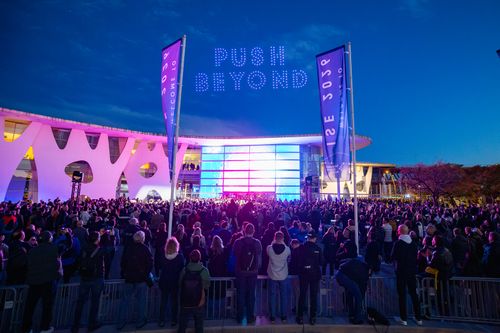 Spanning all eight halls at Fira de Barcelona Gran Via, ISE 2026 delivered four days of record-breaking energy, creativity, and innovation.
-
 The initiative will create new opportunities for talent development, innovation and community projects across the sector
-
 The Facts & Figures report for ISE 2026 is available to download.
-
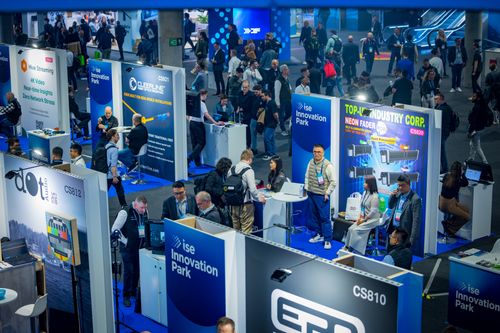 Bringing together startups, investors and industry leaders, the expanded show feature offers a strong platform for visibility, networking, and commercial opportunity.
-
 This new type of event brings together end users, creators and production specialists from broadcast, live events, advertising and gaming, combining creative showcases, editorial programming and netwo ...