
Session: Building operating system in practice: how Trigrr links every smart silo
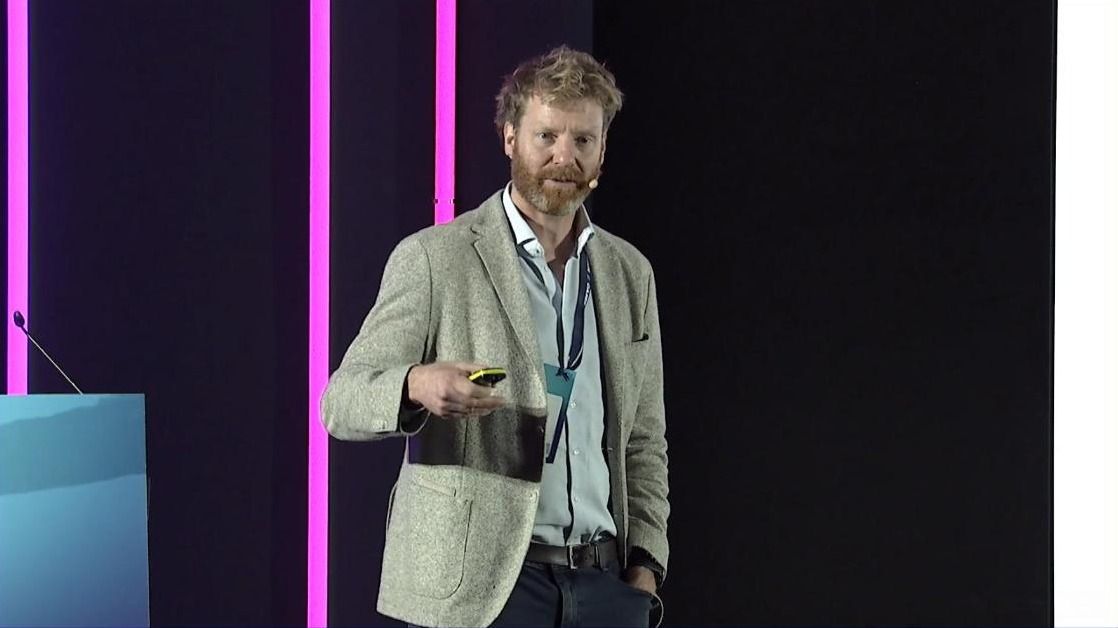
Trigrr CEO Jean-Michel Verhulst on building operating systems: connecting every smart silo, occupancy without new sensors and AI that suggests, not decides.
- Event: ISE 2026
- From session: Building Value with Building Operating Systems
- Speaker: Jean-Michel Verhulst, CEO, Trigrr
- Estimated read time: 9 minutes
- Watch the full session
Quick read summary
- A building operating system is a software layer that joins a building’s AV, lighting, HVAC, lifts and access control so every stakeholder works from the same data.
- Trigrr sells no hardware, and its connector library grows by three to five a day, with any missing connector built free under the licence.
- The platform handles functional control, such as opening a door or raising ventilation, and leaves each system’s own logic in charge.
- Lifts, access control, video bars and wifi can show how a space is used before anyone buys a sensor.
- Trigrr spends half of its R&D time on AI, which proposes changes that the right person accepts or rejects.
Most buildings are full of clever systems that cannot talk to each other. The AV, lighting, HVAC, lifts, access control, solar panels and EV chargers each run their own logic, through their own screens, for their own supplier. The people who depend on the building pay for that every day. Jean-Michel Verhulst, CEO of Brussels-based Trigrr, told ISE 2026 that a building operating system is how his company fixes it.
An occupier reports a lighting fault. The fault sits in one light on the DALI lighting control network, but the ticket just says lighting, so the engineer arrives without knowing what to fix. Verhulst traced problems like this to one cause: systems that were never built to share what they know.
Why does a building full of smart systems still work like a set of silos?
Because each system was bought for one purpose, while the people around it need data that crosses all of them. Verhulst named four groups.
Asset managers and owners want one view of a portfolio and to avoid over-investing each time a trend arrives. ESG managers want to stop hunting for data to build reports. Facility managers need to stop reacting and start anticipating, so a report that names the failed system sends the right engineer with the right part. Occupiers want frictionless journeys through their spaces, and Verhulst put their test in their words.
I just wanna feel that the technology is at my service.
Trigrr chose software over another box
Trigrr’s answer was a fully digital layer with no hardware of its own to sell. It is built from connectors, each speaking the native language of a device, whatever its brand or protocol, so the platform can gather data and control equipment live.
The library grows by three to five connectors a day, and when a new building needs one that does not exist, Trigrr builds it free as part of the licence. Verhulst said that is what makes a building future-proof. If a hologram arrived tomorrow, he would not recode the space around it. "I want to have a plugin with that hologram that adapts with the lighting, with the sound and so on." Nothing else would change.
How does a building operating system understand devices from different brands?
Through an ontology, a shared model built into every connector that describes devices as objects and features. A user configuring Trigrr deals with lifts and what lifts do, not with Otis or any other manufacturer. That abstraction is what lets smart building technology from many suppliers be configured in one place by people who are not specialists in each system.
It also shapes the business model. Trigrr is not the systems integrator for its own product. It trains master systems integrators (MSIs) in a few hours, and Verhulst said that network now covers 40 countries.
Where should the platform stop and building automation take over?
At functional control. Verhulst said Trigrr is mostly used for things a person could do by hand: adjusting the lighting, the microphone volume or the ventilation, opening a door, calling a lift. Anything deeper stays with the system that owns it.
We don’t want to bypass the smartness of a silo.
He tied this to responsibility. If the building management system (BMS), lighting controller or AV processor keeps its own logic, it also keeps clear ownership when something goes wrong. For an integrator, that boundary is worth writing into the specification before anyone connects a platform to a live system.
Can occupancy data come from systems a building already has?
Often, yes. Verhulst listed sources that most offices already contain: the lifts, the access control system, the video bar below a meeting room screen and the wifi antennas, which can count changing MAC addresses.
He did not rule out adding sensors, but asked whether they are useful when the Pareto principle may be enough: existing sources often give most of the value. For AV teams, a video bar is a building data source as well as a meeting room device, and worth specifying with that in mind.
Returns on capital and running costs, by Verhulst’s account
Verhulst claimed returns on both capital spending and operations. On capital cost, a normal meeting room no longer needs a thermostat, two switches and remote controls when one tablet, or an NFC chip on the table, controls everything. In operation he pointed to energy efficiency, less time spent dealing with problems in a space, and occupier retention.
The talk was a pitch, and it had a pitch’s limits. Verhulst named no client building and gave no energy or cost figures, so the savings remain his claim rather than measured results.
How far should AI go in running a building?
Far enough to suggest, not far enough to decide. Verhulst accepted that there is a gimmick AI bubble, but said Trigrr spends half of its R&D time on AI.
In his examples, an agent proposes a set point from the number of people in a room, the next meeting and the weather forecast. An ESG manager asks for three months of energy consumption by tenant, and, when one floor over-consumes, asks the agent to build a scenario that switches it off when empty, ready to review.
A facility manager gets a WhatsApp poll when the fourth floor reaches 1,200 ppm of CO2. Each prompt respects the person’s role and the rules already set in the BMS. Verhulst called it "the type of interaction I would expect to have with my building environment".
Lessons that travel beyond Trigrr
The case is about one vendor, but most of it applies to any project that joins building systems.
| What Trigrr showed | What to do on your next project | Who acts |
|---|---|---|
| Stakeholders need different views of one building | List what each group needs before choosing a platform | Owner and consultant |
| Connectors speak each device’s native protocol | Ask who builds missing connectors and at what cost | Integrator |
| Control stays functional | Write the control boundary into the specification | Consultant and integrator |
| Existing equipment can show how spaces are used | Check lifts, access control, video bars and wifi before buying sensors | Facility manager |
| AI suggests, people decide | Route every suggestion to a named role and require approval before it runs | Facility and ESG managers |
FAQ
- Does a building operating system replace building automation? No. A building operating system sits above the controls in HVAC, lighting and AV systems and leaves their own logic in charge. Trigrr CEO Jean-Michel Verhulst said his platform handles functional control, such as adjusting ventilation or opening a door.
- Does a building need new sensors to collect occupancy data? Not always. Lifts, access control, video bars and wifi antennas already record how spaces are used. Trigrr CEO Jean-Michel Verhulst said sensors can still be added, but asked whether they are needed when existing sources cover most of the value.
- Why should an AV integrator care about a building operating system? AV is one of the systems a building operating system connects, alongside lighting, HVAC and access control. Video bars and room controls become data sources and control points for the whole building.
- How does Trigrr keep people in charge of its AI? Trigrr’s AI makes suggestions rather than decisions. An agent proposes a change by WhatsApp or email, and the right person accepts or rejects it within their role and the rules already set in the building management system.
The building already knows more than anyone asks it
The sharpest point in Verhulst’s talk was not about AI or connectors. It was that most buildings already hold the information their people are missing. The lift knows how many people arrived. The video bar knows whether the room is in use. The lighting controller knows which fitting failed. The problem is that nobody can ask them all at once.
A building operating system is one way to ask. Whether Trigrr’s version is the right one is a buying decision, and his talk gave no measured savings to settle it. But the method stands on its own: connect what is there, leave each system in charge of its own job and send people suggestions they can accept with one tap.
For integrators, the next brief may not ask for more devices. It may ask whether the devices already specified can share what they know. For owners, it is a reason to check the building before buying the next trend. There is more on that question in how smart technology can increase property value, five examples of automation improving sustainability in commercial properties and how AI is changing what makes a building smart.
About the speaker
Jean-Michel Verhulst
CEO, Trigrr
Verhulst leads Trigrr, a Brussels-based company whose building operating system connects AV, lighting, HVAC, lifts and access control in one digital layer, working through a network of integrator partners.
See building operating systems at ISE
Building operating systems are moving from pilot to standard.
- Smart building tech at ISE: the platforms and products that link building systems.
- The Smart Building Summit: the summit on automation, IoT and analytics.
- The wider ISE programme: summits, Megatrends and the free ISE Open stages.
- First time at ISE? The new visitor guide shows you where to start.
Featured Articles
-
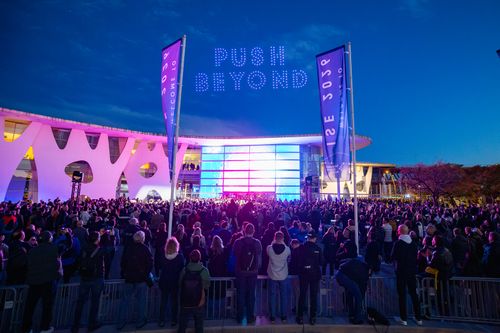 Spanning all eight halls at Fira de Barcelona Gran Via, ISE 2026 delivered four days of record-breaking energy, creativity, and innovation.
-
 The initiative will create new opportunities for talent development, innovation and community projects across the sector
-
 The Facts & Figures report for ISE 2026 is available to download.
-
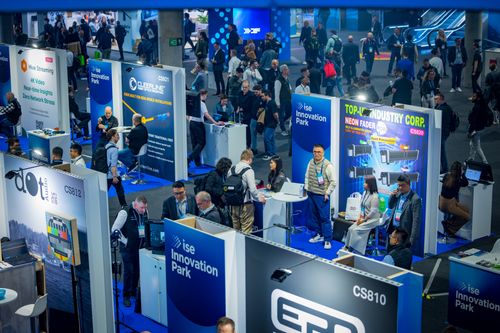 Bringing together startups, investors and industry leaders, the expanded show feature offers a strong platform for visibility, networking, and commercial opportunity.
-
 This new type of event brings together end users, creators and production specialists from broadcast, live events, advertising and gaming, combining creative showcases, editorial programming and netwo ...