
Broadcast television isn't disappearing – it's becoming something much bigger
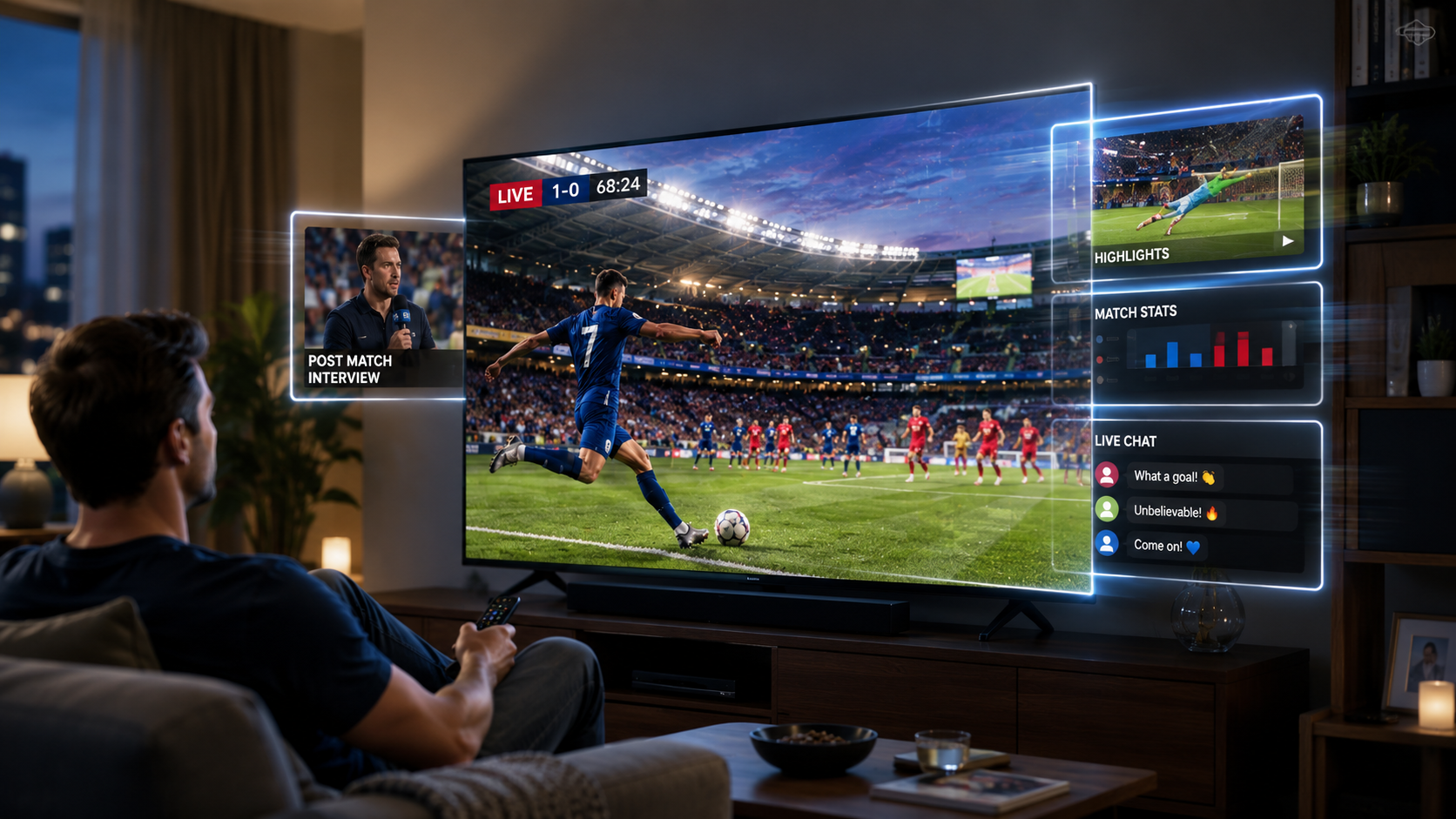
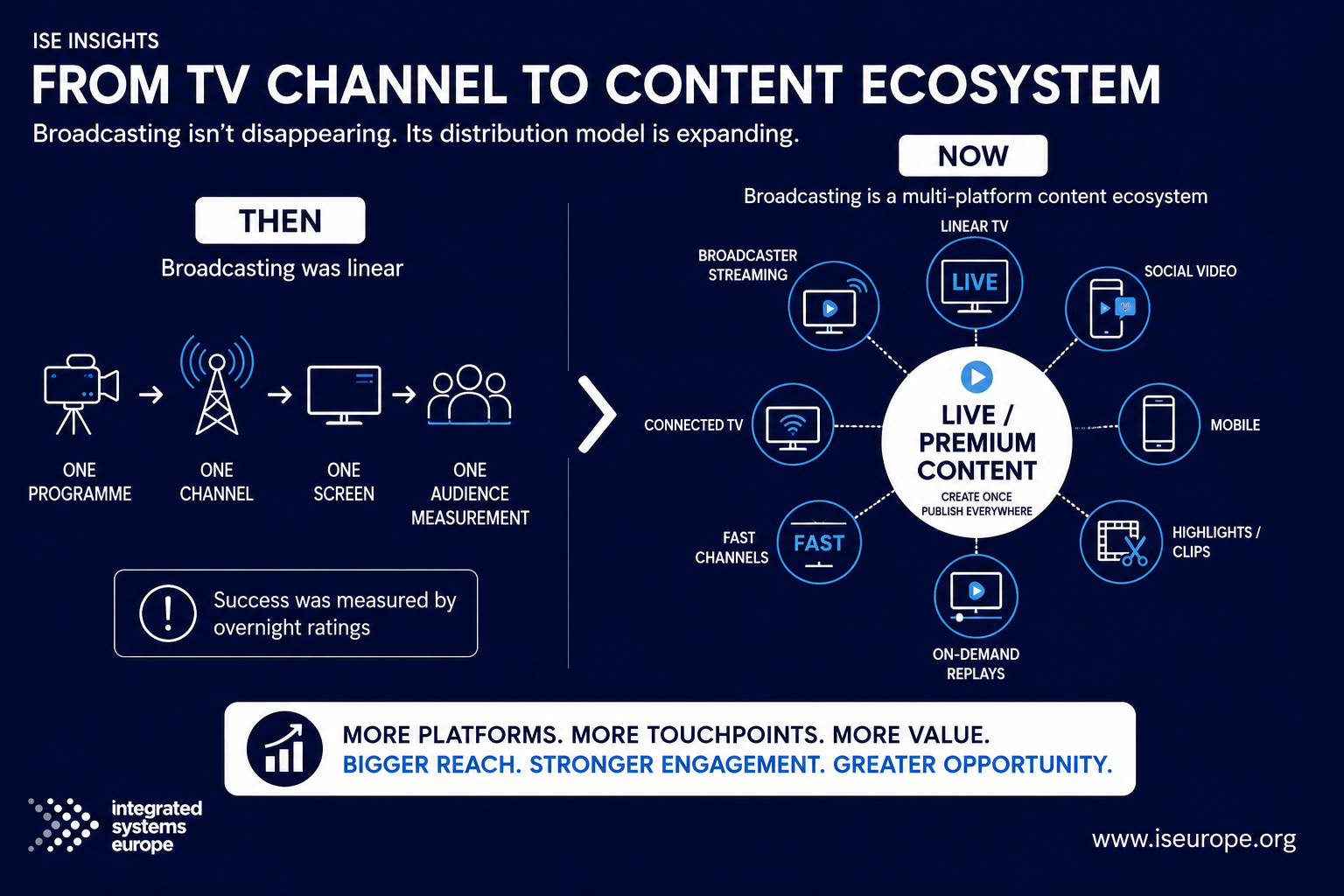
But that does not mean broadcasters themselves are disappearing. Instead, the definition of broadcasting is expanding. The organisations that once built their businesses primarily around scheduled television channels are increasingly becoming multi-platform media companies, creating content that can reach audiences across linear TV, streaming, social media and mobile.
The future of broadcasting may therefore depend less on protecting television viewing and more on making broadcast content work harder wherever audiences choose to watch it.
The audience hasn't disappeared – it has fragmented
The shift is already visible in audience behaviour.
Ofcom's Media Nations 2026 report found that weekly reach of broadcast television continues to decline in the UK. At the same time, viewing of broadcaster-owned on-demand services including BBC iPlayer, ITVX, Channel 4 Streaming and 5 increased by 9% year on year. Broadcaster content also continues to account for the majority of video watched in UK homes.
The television set itself is changing too. YouTube, streaming platforms and broadcaster apps increasingly sit alongside conventional channels on the same screen, blurring the distinction between television and online video.
For broadcasters, this creates a very different competitive environment. A major sports event, news story or entertainment programme no longer has one life on one channel. The live programme can be accompanied by on-demand viewing, highlights, interviews, social clips, analysis and other content designed for different platforms and audiences.
The challenge is no longer simply attracting viewers to a schedule. It is reaching them across an increasingly fragmented media landscape.
Live content still creates shared moments
One area where broadcasters retain particular strength is live content.
Sport, news and major national events can still bring very large audiences together. The European Broadcasting Union reported that Europeans watched an average of three hours and five minutes of television per day in 2025, while half of public service media organisations' main television channels remained market leaders in their countries.
Live programming can also generate value well beyond the original transmission. A sporting event can drive simultaneous viewing on television and streaming platforms, while producing highlights, social conversation and additional digital content before and after the event.
That makes live production an important foundation for a much broader content ecosystem.
Technology makes one production work harder
Supporting that ecosystem requires different infrastructure.
Cloud and software-defined production can make resources easier to deploy across locations and services. IP networking supports distributed production, while cloud playout can make launching additional channels more flexible. AI is already being applied to areas such as transcription and subtitling; for the Milano Cortina 2026 Paralympic Winter Games, for example, Eurovision Sport used AI-driven speech-to-text technology to provide real-time subtitles across live and on-demand coverage.
The commercial opportunity is also changing. European digital video advertising grew by 19.6% in 2025 to reach €34 billion, according to IAB Europe, with connected TV and social video among the areas driving growth.
For broadcasters, the significance is clear. Distribution across more screens is not simply a defensive response to declining linear audiences. It can open up additional ways to reach, understand and monetise audiences.
Warner Bros. Discovery shows the model in action
Warner Bros. Discovery's coverage of the Paris 2024 Olympic Games provides a useful example of how television and streaming can reinforce one another rather than compete.
The company distributed Olympics coverage across Eurosport television channels, free-to-air networks in selected European markets and its Max and discovery+ streaming services. It reported a cumulative European reach of more than 215 million people across its platforms – 23% higher than for Tokyo 2020 – while viewers streamed more than seven billion minutes of Olympics content, six times the level recorded for Tokyo.
Warner Bros. Discovery described the event as its first true “streaming Olympics” in Europe. But importantly, streaming did not replace television. Both were components of the same distribution strategy.
That points towards a more useful way of thinking about broadcasting's future. The question is no longer whether television or streaming wins. Increasingly, successful media companies need both.
Broadcasting is becoming a multi-platform business
This shift has consequences throughout the organisation.
Content needs to be planned for multiple destinations from the outset. Production workflows must make it easier to create different versions and formats. Metadata becomes more important because content has to remain discoverable and reusable, while rights management becomes more complex as material moves across platforms, territories and commercial models.
The technology strategy changes too. Infrastructure designed primarily around a single linear output has to evolve towards an environment capable of supporting television, streaming and digital publishing simultaneously.
These are increasingly important conversations at Integrated Systems Europe, where technologies spanning cloud production, IP networking, software-defined infrastructure, AI and multi-platform distribution reflect the convergence taking place across broadcast, AV and digital media.
Broadcast television is not growing in the way it once did, and pretending otherwise misses the more important story. Broadcasting is becoming bigger than broadcast television.
For media organisations, the opportunity lies in making great content work across every screen, platform and format where audiences choose to engage.
Frequently Asked Questions
Is broadcast television still growing?
Traditional linear television viewing is declining in markets including the UK, but broadcasters are expanding their presence across on-demand, streaming and other digital platforms. The growth opportunity increasingly lies in the combined audience rather than linear TV alone.
Are streaming services replacing broadcasters?
Not necessarily. Broadcasters increasingly operate streaming and on-demand services alongside linear channels, while major events can attract audiences across both television and streaming. The distinction between the two models is becoming less clear.
Why are broadcasters investing in multi-platform distribution?
Audiences now consume video across a much wider range of services and devices. Multi-platform distribution allows broadcasters to extend the reach and life of their content while creating additional advertising and commercial opportunities.
Stay ahead – Stay informed.
As an AV specialist or industry leader, you recognise how crucial it is to keep up with evolving trends, new technologies, and notable happenings within the audiovisual world. That's why we're delighted to invite you to receive exclusive email updates about ISE – the world-renowned tech show for the systems integration and audiovisual industry.
When you subscribe, you'll be kept up to speed with insightful commentary on the freshest developments in AV, get early looks at what's planned for the ISE content schedule – including headline speakers – and benefit from in-depth reporting on the show's standout attractions.
Sign up now to stay at the forefront of audiovisual innovation and expertise.
Further reading
Discover broadcast solutions at ISE.
Related articles
-
OTT didn't kill broadcast – but it did change the rules – Explore why the distinction between traditional broadcasting and streaming is becoming increasingly blurred.
-
FAST channels are creating a new TV gold rush – See why free ad-supported streaming television is opening another distribution and monetisation opportunity for content owners.
-
The next broadcast revolution may be invisible to viewers – Discover how software-defined infrastructure is helping broadcasters build more flexible multi-platform operations.
Related Content
-
) IPMX and ST 2110 both transport professional media over IP networks but differ mainly in who they serve.
IPMX and ST 2110 both transport professional media over IP networks but differ mainly in who they serve. -
) For decades, broadcasters' concerns around operational risk focused primarily on reliability. Today, a different threat is demanding attention: cybersecurity.
For decades, broadcasters' concerns around operational risk focused primarily on reliability. Today, a different threat is demanding attention: cybersecurity. -
) Traditionally, playout has relied on highly specialised hardware operating within tightly controlled facilities. That model is beginning to change.
Traditionally, playout has relied on highly specialised hardware operating within tightly controlled facilities. That model is beginning to change. -
) The technology is impressive. The question is whether audiences value it enough to justify the investment.
The technology is impressive. The question is whether audiences value it enough to justify the investment. -
) Creating content is no longer the biggest challenge facing broadcasters. Distributing it effectively is.
Creating content is no longer the biggest challenge facing broadcasters. Distributing it effectively is.
Featured Articles
-
) Spanning all eight halls at Fira de Barcelona Gran Via, ISE 2026 delivered four days of record-breaking energy, creativity, and innovation.
Spanning all eight halls at Fira de Barcelona Gran Via, ISE 2026 delivered four days of record-breaking energy, creativity, and innovation. -
) The initiative will create new opportunities for talent development, innovation and community projects across the sector
The initiative will create new opportunities for talent development, innovation and community projects across the sector -
) The Facts & Figures report for ISE 2026 is available to download.
The Facts & Figures report for ISE 2026 is available to download. -
) Bringing together startups, investors and industry leaders, the expanded show feature offers a strong platform for visibility, networking, and commercial opportunity.
Bringing together startups, investors and industry leaders, the expanded show feature offers a strong platform for visibility, networking, and commercial opportunity. -
) This new type of event brings together end users, creators and production specialists from broadcast, live events, advertising and gaming, combining creative showcases, editorial programming and netwo ...
This new type of event brings together end users, creators and production specialists from broadcast, live events, advertising and gaming, combining creative showcases, editorial programming and netwo ...
)
)

)
)
)
)
)
)
)
)
)
)
)
)
)
)
)
![rAVe [PUBS]](https://cdn.asp.events/CLIENT_Integrat_169E7B04_E6F3_39F6_8BE4DB27C54F731E/sites/ise-2027/media/libraries/partners/rAVe-PUBS-Google-Logo.png/fit-in/500x500/filters:no_upscale())
)

)
)
)
)
)
)
)
)
)
)
)
)
)
)
)
)
)
)
)
)
)
)
)
)
)
)
.png/fit-in/500x500/filters:no_upscale())
)
)
)
)
)
)
)
)
)