
Are the boundaries between live production disciplines disappearing?
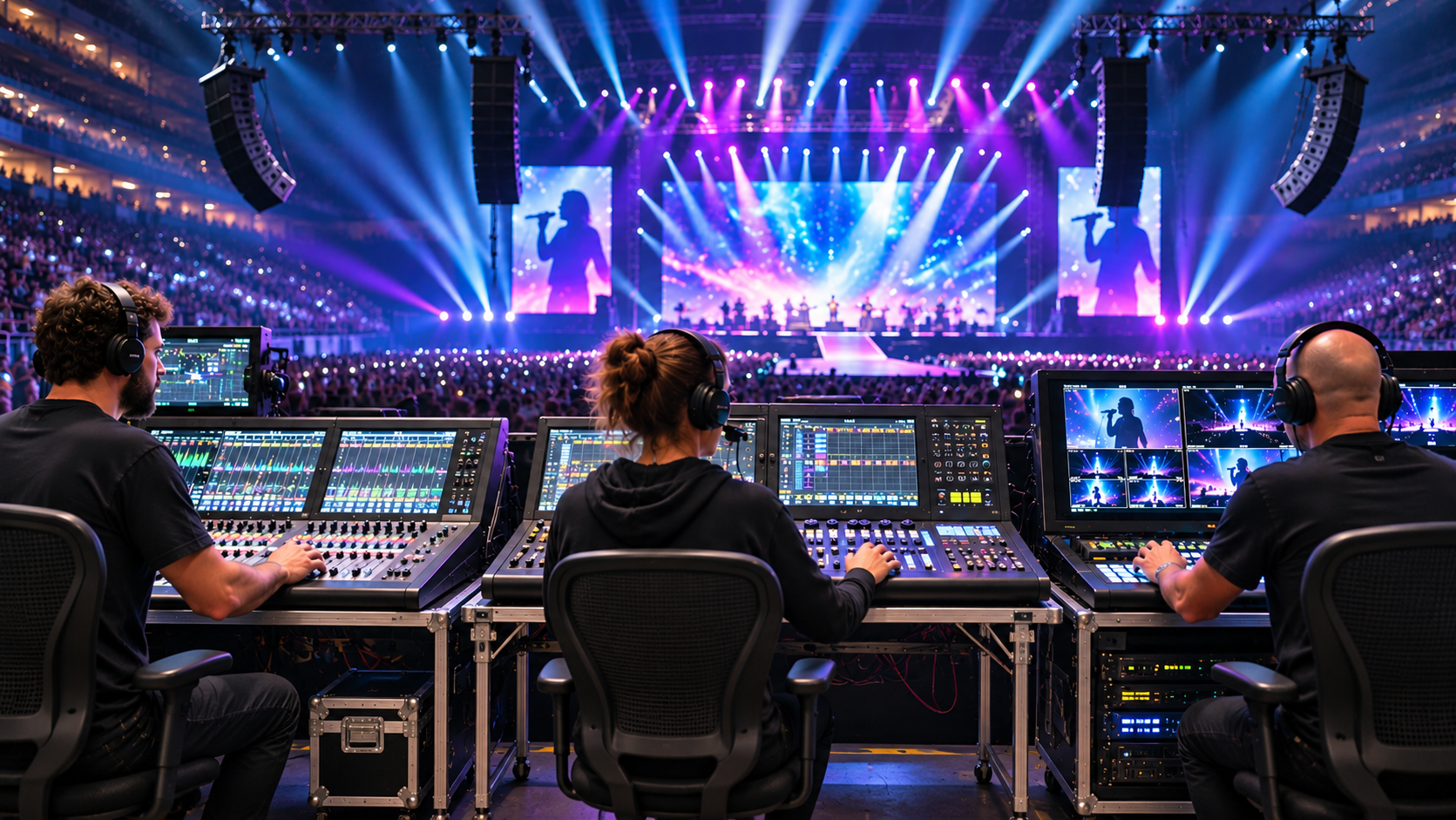
Historically, there has been a clear divide between audio, video and lighting on live productions, but changes in technology and event expectations mean these boundaries are increasingly blurred.
By David Davies
It has been a challenging decade for those touring at a lower or middle level, with rising costs and venue closures among the factors making it increasingly difficult for bands to break even – let alone make a modest profit. But at the upper tier, where acts are bouncing from arena to arena or stadium to stadium, the touring business has experienced substantial growth since the pandemic.
The hugely successful tours of performers such as Taylor Swift and Harry Styles have exemplified a growing level of ambition and complexity in terms of staging, production design and, inevitably, the use of AV. So it’s not surprising that increased collaboration is obligatory in the consistent delivery of elaborate productions that do not vary much from night to night.
Fran Williams, technical commercial director of global technology and experiential environment specialist Diversified, takes a measured view of recent developments. “I’m not sure I’d say the [traditional] silos are disappearing, but they are changing,” he says. “This is partly to do with the competition that you see in live events now, and the extensive use of technology to create unique experiences. As those things have become more ubiquitous across live events, there’s certainly a lot more collaboration needed between different areas of the live production infrastructure.”
Why live production teams need to collaborate more closely
Consequently, it’s advantageous for technicians working on a live production to at least have a working knowledge of other disciplines. Acknowledging that cost factors mean it’s not always possible to have separate support techs, Rob Paul – design director of immersive experiences company LCI Productions – says that there is a need for personnel “to obtain an understanding of lighting, video and audio in terms of how they respond to [issues that may arise]. In a similar way, when we’re building or programming a production, those techs must have an understanding at different levels depending on the jobs they’re doing, as well as having a good understanding of multidisciplinary delivery.”
How technology is driving convergence in live production
On a technological level, the advent of more powerful control systems that can oversee multiple areas of a production has been particularly important in driving change. As a result, systems such as LED displays, projection, cameras, lighting, media servers and graphics can be pulled together to operate within an over-arching visual environment. Maintaining redundancy is vital – you’d be hard-pressed to find anyone who thinks that having an entire production run off one system is advisable – but when presentations are so complex, the appeal of some degree of unification isn’t hard to understand.
A recent example of this convergence is Harry Styles’ 2026 Together, Together Tour. Positional tracking technology from zactrack enabled lighting and video systems to work together to accommodate the performer’s movements across an extensive network of stadium catwalks. The production also used almost twice as many audio inputs as previous Styles tours, illustrating both the growing technical complexity of major touring productions and the importance of collaboration between specialist teams.
As in many other areas of pro AV, IP-based networking has been fundamental to achieving more flexible and easily assembled infrastructures out on the road. It has also been beneficial that LED lighting and displays – so central to many of the middle to upper tier tours now – have become lighter, less expensive and more straightforward to deploy.
Will specialist expertise still be needed?
This pattern of convergence is more apparent in some areas of live production than in others. In particular, theatre continues to adhere to a more siloed approach. “It might be that you have the lighting designer driving the video component, but in general there tends to be more of a stricter structure than in other areas of the live sector,” confirms Paul.
Whilst it is increasingly common for large tours to have overarching production departments, there is a general feeling that experts in individual disciplines will continue to be essential. In the event of a system failure as showtime approaches, you need someone who knows the software inside out.
Ultimately, though, it is the underlying shift in the business itself that is informing live production evolution as much as the technology itself. As Williams observes: “Live shows have changed for a few reasons; touring is where performers make their money so shows have to be really immersive and engaging. This has contributed to audience expectations being a lot higher than they ever used to be.”
About the author
David Davies has been a journalist, editor and copywriter for more than 25 years, specialising in pro AV, broadcast and music technology. He is a frequent contributor to Installation, TVBEurope, IBC 365, SVG Europe, and the ISE and IBC Dailies. Follow him on LinkedIn.
 Stay ahead – Stay informed.
As an AV specialist or industry leader, you recognise how crucial it is to keep up with evolving trends, new technologies, and notable happenings within the audiovisual world. That's why we're delighted to invite you to receive exclusive email updates about ISE – the world-renowned annual tech show for the systems integration and audiovisual industry.
When you subscribe, you'll be kept up to speed with insightful commentary on the freshest developments in AV, get early looks at what's planned for the ISE content schedule – including headline speakers – and benefit from in-depth reporting on the show's standout attractions.
Sign up now to stay at the forefront of audiovisual innovation and expertise.
Further reading
Find out more about live events, audio, lighting and staging at ISE
Related articles
Mega tours are becoming temporary cities
Real-time rendering for live shows: how to build systems, not files
Related Content
-
 For years, 5G was set to revolutionise live events: faster downloads, lower latency, better connectivity, smarter venues. The reality has been more complicated.
-
 The biggest challenge facing arena designers is no longer capacity. It's creating an atmosphere where every fan feels part of the action.
-
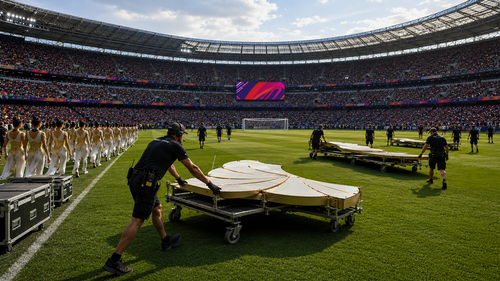 During the FIFA World Cup 2026, billions of viewers will focus on the football. Few will think about the extraordinary challenge of creating the moments around it.
-
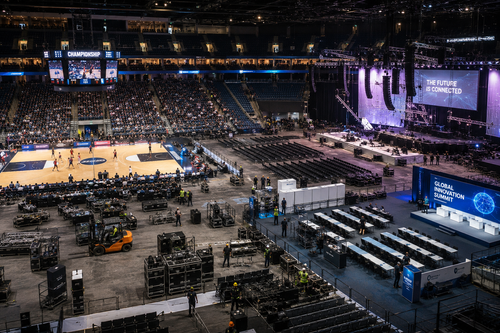 For decades, venues were designed around primary use cases. Today, that approach is becoming increasingly difficult to justify.
-
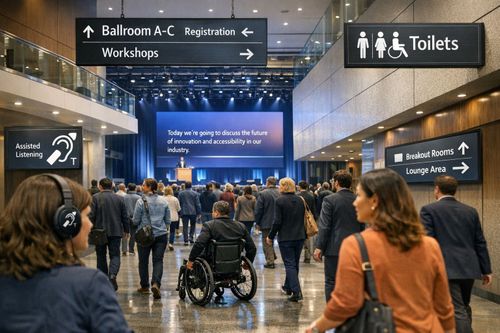 For many venue operators, accessibility has traditionally been viewed through the lens of compliance. But that mindset is rapidly becoming outdated.
Featured Articles
-
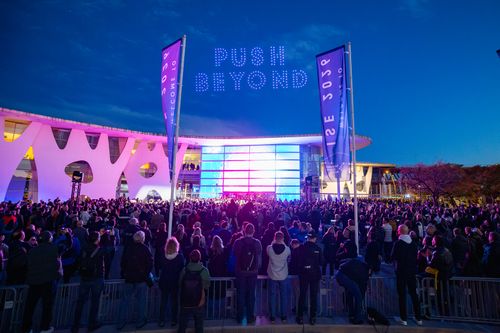 Spanning all eight halls at Fira de Barcelona Gran Via, ISE 2026 delivered four days of record-breaking energy, creativity, and innovation.
-
 The initiative will create new opportunities for talent development, innovation and community projects across the sector
-
 The Facts & Figures report for ISE 2026 is available to download.
-
 Bringing together startups, investors and industry leaders, the expanded show feature offers a strong platform for visibility, networking, and commercial opportunity.
-
 This new type of event brings together end users, creators and production specialists from broadcast, live events, advertising and gaming, combining creative showcases, editorial programming and netwo ...